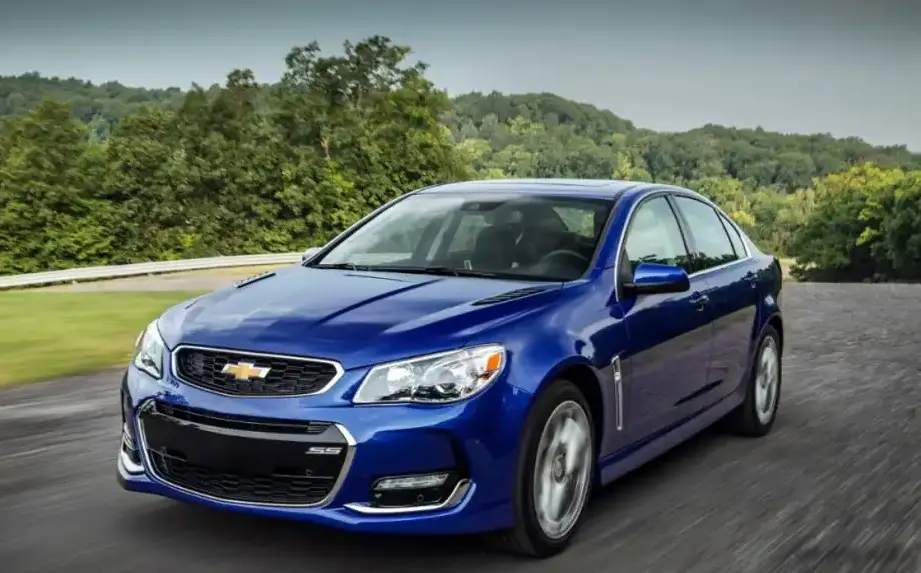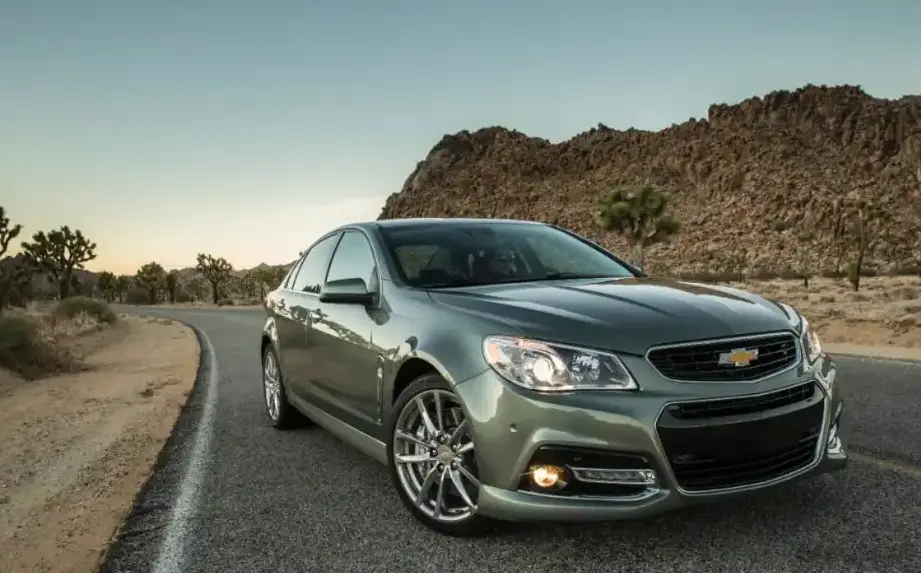
The Chevrolet SS 6.2 V8 (415 Hp) was a rear-wheel drive performance sedan produced by Chevrolet for the 2015 and 2016 model years. Representing a somewhat unexpected return to the SS badge for the American market, this vehicle was essentially a rebadged Holden Commodore VF, a popular performance car in Australia. The SS aimed to offer a compelling blend of American muscle and Australian engineering, filling a niche left vacant by the discontinuation of other rear-wheel drive sedans from US manufacturers. It was positioned as a direct competitor to vehicles like the Dodge Charger and Ford Taurus, offering a more focused driving experience than many of its front-wheel drive rivals.
Technical Specifications
| Brand | Chevrolet |
| Model | SS |
| Generation | SS |
| Type (Engine) | 6.2 V8 (415 Hp) |
| Start of production | 2015 |
| End of production | 2016 |
| Powertrain Architecture | Internal Combustion engine |
| Body type | Sedan |
| Seats | 5 |
| Doors | 4 |
| Fuel consumption (urban) | 15.7 l/100 km (15 US mpg, 18 UK mpg, 6.4 km/l) |
| Fuel consumption (extra urban) | 11.2 l/100 km (21 US mpg, 25.2 UK mpg, 8.9 km/l) |
| Fuel consumption (combined) | 13.8 l/100 km (17 US mpg, 20.5 UK mpg, 7.2 km/l) |
| Fuel Type | Petrol (Gasoline) |
| Weight-to-power ratio | 4.3 kg/Hp, 231.1 Hp/tonne |
| Weight-to-torque ratio | 3.2 kg/Nm, 313.5 Nm/tonne |
| Power | 415 Hp @ 5900 rpm |
| Power per litre | 67.3 Hp/l |
| Torque | 563 Nm @ 4600 rpm (415.25 lb.-ft. @ 4600 rpm) |
| Maximum engine speed | 6600 rpm |
| Engine layout | Front, Longitudinal |
| Engine Model/Code | LS3 |
| Engine displacement | 6162 cm3 (376.03 cu. in.) |
| Number of cylinders | 8 |
| Engine configuration | V-engine |
| Cylinder Bore | 103.25 mm (4.06 in.) |
| Piston Stroke | 92 mm (3.62 in.) |
| Compression ratio | 10.7:1 |
| Number of valves per cylinder | 2 |
| Fuel injection system | Direct injection |
| Engine aspiration | Naturally aspirated engine |
| Valvetrain | OHV |
| Engine oil capacity | 7.6 l (8.03 US qt | 6.69 UK qt) |
| Coolant | 10.5 l (11.1 US qt | 9.24 UK qt) |
| Kerb Weight | 1796 kg (3959.5 lbs.) |
| Trunk (boot) space – minimum | 464 l (16.39 cu. ft.) |
| Fuel tank capacity | 71 l (18.76 US gal | 15.62 UK gal) |
| Length | 4966 mm (195.51 in.) |
| Width | 1897 mm (74.69 in.) |
| Height | 1471 mm (57.91 in.) |
| Wheelbase | 2916 mm (114.8 in.) |
| Front track | 1590 mm (62.6 in.) |
| Rear (Back) track | 1585 mm (62.4 in.) |
| Minimum turning circle (turning diameter) | 11.4 m (37.4 ft.) |
| Drivetrain Architecture | The Internal combustion engine (ICE) drives the rear wheels of the vehicle. |
| Drive wheel | Rear wheel drive |
| Number of gears and type of gearbox | 6 gears, manual transmission |
| Front suspension | McPherson, Independent multi-link suspension |
| Rear suspension | Independent multi-link suspension |
| Front brakes | Disc, 355×32 mm |
| Rear brakes | Disc, 324×22 mm |
| Assisting systems | ABS (Anti-lock braking system) |
| Steering type | Steering rack and pinion |
| Power steering | Electric Steering |
| Front wheel tires | 9J x 19 |
| Rear wheel tires | 275/35 R19 |
| Front wheel rims | 8.5J x 19 |
| Rear wheel rims | 245/40 19 |
Powertrain & Engine Architecture
The heart of the Chevrolet SS was the 6.2-liter LS3 V8 engine. This naturally aspirated powerplant, a member of General Motors’ Small-Block family, was renowned for its robust construction and ample power delivery. The LS3 featured aluminum cylinder heads, a cast iron block, and a 10.7:1 compression ratio. Direct fuel injection contributed to both power and efficiency. The engine produced 415 horsepower at 5900 rpm and 415 lb-ft of torque at 4600 rpm. The sole transmission option was a six-speed manual, emphasizing the car’s performance intentions. The engine’s longitudinal mounting and rear-wheel drive configuration were a departure from the predominantly front-wheel drive offerings in the American sedan market.
Driving Characteristics
The SS delivered a distinctly sporty driving experience. The manual transmission provided precise control, and the rear-wheel drive layout offered balanced handling. While not as nimble as some smaller sports sedans, the SS’s substantial torque allowed for quick acceleration in most situations. The six-speed manual transmission featured relatively close ratios, keeping the engine within its powerband during spirited driving. Compared to hypothetical higher-output versions, the 415 hp LS3 offered a sweet spot between raw power and everyday usability. It was more approachable than a supercharged or turbocharged engine, and the linear power delivery made it easy to modulate throttle inputs.
Equipment & Trim Levels
The Chevrolet SS was relatively well-equipped, though it wasn’t positioned as a luxury vehicle. Standard features included leather upholstery, a touchscreen infotainment system with Chevrolet’s MyLink interface, a Bose premium sound system, and a rearview camera. Available options included a sunroof, navigation, and head-up display. The interior design was functional and driver-focused, with supportive seats and a straightforward dashboard layout. The SS did not offer a wide range of trim levels; it was largely sold as a single, well-equipped model.
Chassis & Braking
The SS utilized a McPherson strut front suspension and a multi-link independent rear suspension, providing a comfortable ride while maintaining good handling characteristics. The chassis was specifically tuned for the American market, with adjustments made to the suspension and steering to suit US road conditions. Braking duties were handled by four-wheel disc brakes with ABS. Front brakes measured 355mm in diameter, while the rear brakes were slightly smaller at 324mm. The SS’s weight distribution was nearly 50/50, contributing to its balanced handling.
Market Reception & Comparison
The Chevrolet SS received generally positive reviews from automotive critics. It was praised for its powerful engine, engaging driving dynamics, and relatively affordable price. However, some reviewers noted its fuel economy was relatively poor, and its interior, while functional, lacked the refinement of some competitors. Compared to the Dodge Charger, the SS offered a more focused driving experience, while the Charger prioritized comfort and space. The SS’s manual transmission was a selling point for enthusiasts, but it also limited its appeal to a broader audience. Reliability was generally good, though the LS3 engine was known to consume some oil over time.
Legacy
The Chevrolet SS represents a unique chapter in Chevrolet’s history. It was a bold attempt to offer a rear-wheel drive performance sedan in a market increasingly dominated by front-wheel drive alternatives. While its production run was short-lived, the SS has gained a loyal following among enthusiasts. Today, well-maintained examples are sought after by collectors and drivers who appreciate its combination of American muscle and Australian engineering. The LS3 engine’s reputation for durability and tunability ensures that the SS will remain a popular platform for modifications and performance upgrades for years to come. The SS serves as a reminder of a time when Chevrolet was willing to take risks and offer something truly different.