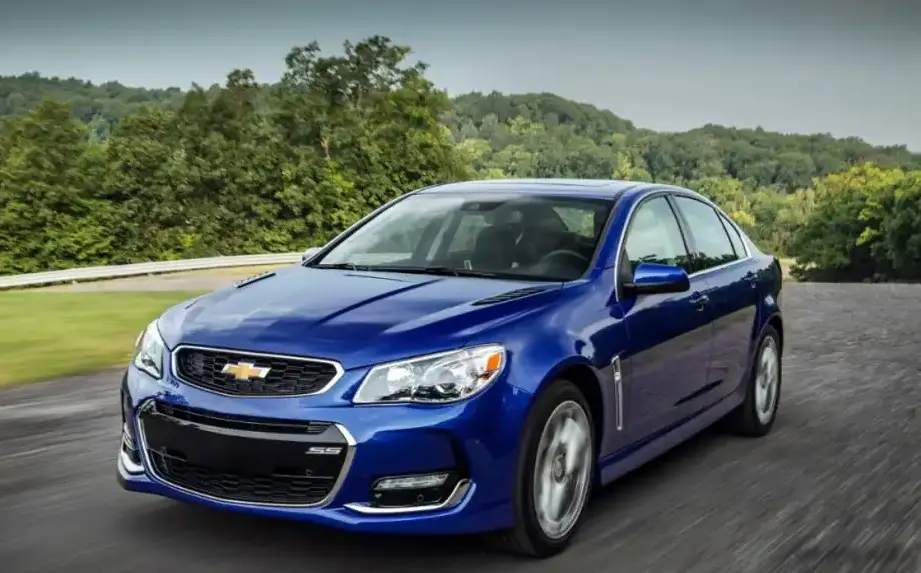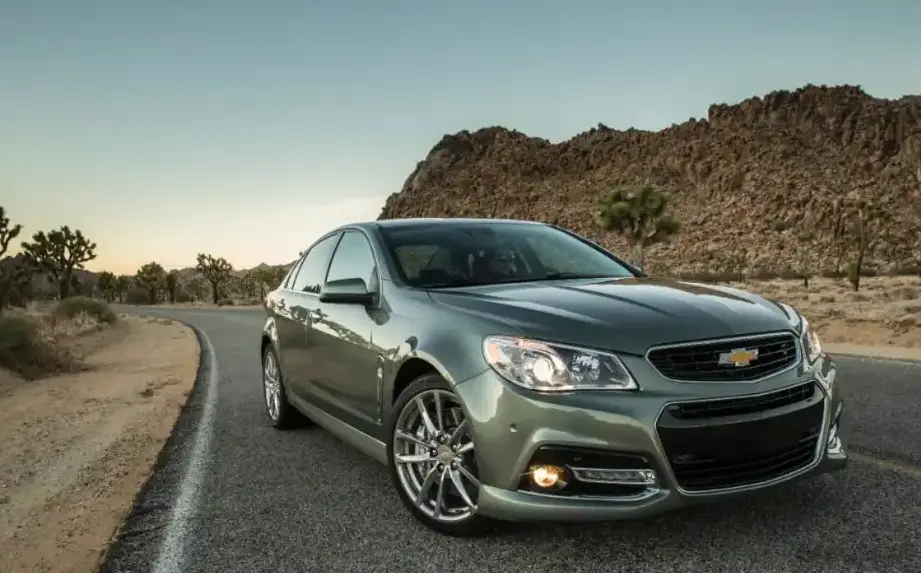
The Chevrolet SS 6.2 V8 Automatic, produced for the 2014 to 2016 model years, represented Chevrolet’s final rear-wheel-drive performance sedan in the American market for a considerable period. Positioned as a direct descendant of the Pontiac G8 GXP, the SS aimed to deliver a blend of American muscle and Australian engineering – a result of its production at Holden’s Elizabeth plant in South Australia. This variant, equipped with the 6.2-liter LS3 V8 and a six-speed automatic transmission, served as the flagship model within the SS lineup, offering a significant performance upgrade over potential future, smaller-engined options that were never realized. It was Chevrolet’s answer to performance sedans like the Dodge Charger SRT and the Ford Taurus SHO, though it distinguished itself with a more focused driving experience.
Technical Specifications
| Brand | Chevrolet |
| Model | SS |
| Generation | SS |
| Type (Engine) | 6.2 V8 (415 Hp) Automatic |
| Start of production | 2014 |
| End of production | 2016 |
| Powertrain Architecture | Internal Combustion engine |
| Body type | Sedan |
| Seats | 5 |
| Doors | 4 |
| Fuel consumption (economy) – urban | 16.8 l/100 km (14 US mpg, 16.8 UK mpg, 6 km/l) |
| Fuel consumption (economy) – extra urban | 11.2 l/100 km (21 US mpg, 25.2 UK mpg, 8.9 km/l) |
| Fuel consumption (economy) – combined | 13.8 l/100 km (17 US mpg, 20.5 UK mpg, 7.2 km/l) |
| Fuel Type | Petrol (Gasoline) |
| Weight-to-power ratio | 4.3 kg/Hp, 230.2 Hp/tonne |
| Weight-to-torque ratio | 3.2 kg/Nm, 312.3 Nm/tonne |
| Power | 415 Hp @ 5900 rpm |
| Power per litre | 67.3 Hp/l |
| Torque | 563 Nm @ 4600 rpm (415.25 lb.-ft. @ 4600 rpm) |
| Maximum engine speed | 6600 rpm |
| Engine layout | Front, Longitudinal |
| Engine Model/Code | LS3 |
| Engine displacement | 6162 cm3 (376.03 cu. in.) |
| Number of cylinders | 8 |
| Engine configuration | V-engine |
| Cylinder Bore | 103.25 mm (4.06 in.) |
| Piston Stroke | 92 mm (3.62 in.) |
| Compression ratio | 10.7:1 |
| Number of valves per cylinder | 2 |
| Fuel injection system | Direct injection |
| Engine oil capacity | 7.6 l (8.03 US qt | 6.69 UK qt) |
| Coolant | 10.5 l (11.1 US qt | 9.24 UK qt) |
| Kerb Weight | 1803 kg (3974.93 lbs.) |
| Trunk (boot) space – minimum | 464 l (16.39 cu. ft.) |
| Fuel tank capacity | 71 l (18.76 US gal | 15.62 UK gal) |
| Length | 4966 mm (195.51 in.) |
| Width | 1897 mm (74.69 in.) |
| Height | 1471 mm (57.91 in.) |
| Wheelbase | 2916 mm (114.8 in.) |
| Front track | 1590 mm (62.6 in.) |
| Rear (Back) track | 1585 mm (62.4 in.) |
| Minimum turning circle (turning diameter) | 11.4 m (37.4 ft.) |
| Drivetrain Architecture | The Internal combustion engine (ICE) drives the rear wheels of the vehicle. |
| Drive wheel | Rear wheel drive |
| Number of gears and type of gearbox | 6 gears, automatic transmission |
| Front suspension | McPherson, Independent multi-link suspension |
| Rear suspension | Independent multi-link suspension |
| Front brakes | Disc, 355×32 mm |
| Rear brakes | Disc, 324×22 mm |
| Assisting systems | ABS (Anti-lock braking system) |
| Steering type | Steering rack and pinion |
| Power steering | Electric Steering |
| Tires size | Front wheel tires: 9J x 19, Rear wheel tires: 275/35 R19 |
| Wheel rims size | Front wheel rims: 8.5J x 19, Rear wheel rims: 245/40 19 |
Powertrain & Engine Architecture
At the heart of the SS was the 6.2-liter LS3 V8 engine. This naturally aspirated powerplant, a member of General Motors’ Small-Block family, featured aluminum cylinder heads, a cast iron block, and direct fuel injection. The LS3 produced 415 horsepower at 5900 rpm and 415 lb-ft of torque at 4600 rpm. The engine’s architecture was relatively simple, prioritizing reliability and readily available parts. The six-speed 6L80 automatic transmission was chosen for its durability and ability to handle the engine’s output. While a manual transmission was available in other Holden-produced models, it was not offered in the US-market Chevrolet SS. The transmission featured paddle shifters for manual control, but was primarily geared towards smooth, comfortable shifts.
Driving Characteristics
The SS 6.2L Automatic delivered brisk acceleration, achieving 0-60 mph times in the low-to-mid 5-second range. The automatic transmission, while not as engaging as a manual, provided quick and seamless gear changes. The torque converter allowed for smooth launches, and the transmission’s programming was tuned for a balance between performance and fuel efficiency. Compared to a hypothetical manual version, the automatic offered slightly slower acceleration but greater ease of use in everyday driving. The rear-wheel-drive layout contributed to a balanced feel, although traction could be a concern under hard acceleration, particularly with the generous torque output. The suspension was tuned for a comfortable ride, but also provided good body control during cornering.
Equipment & Trim Levels
The Chevrolet SS came standard with a relatively comprehensive list of features. Interior appointments included leather upholstery, heated and ventilated front seats, a dual-zone automatic climate control system, and an 8-inch touchscreen infotainment system with Chevrolet’s MyLink interface. Standard safety features included a rearview camera, parking sensors, and a suite of airbags. Optional extras included a Bose premium sound system, a sunroof, and a head-up display. The SS trim represented the highest level of equipment available, with no further upgrade paths offered by Chevrolet.
Chassis & Braking
The SS utilized a robust chassis derived from the Holden Commodore platform. The suspension consisted of an independent multi-link setup at both the front and rear, providing a comfortable ride and good handling characteristics. The braking system featured four-wheel disc brakes with Brembo calipers at the front, providing ample stopping power. ABS (Anti-lock Braking System) was standard. The SS’s weight distribution was nearly 50/50, contributing to its balanced handling. The rear suspension geometry was optimized for performance, minimizing body roll during cornering.
Market Reception & Comparison
The Chevrolet SS was generally well-received by automotive critics. Praise was given for its powerful engine, comfortable ride, and spacious interior. However, some reviewers noted that the automatic transmission lacked the engagement of a manual gearbox. Fuel economy, at 17 mpg combined, was considered reasonable for a V8-powered performance sedan, but not exceptional. Compared to the Dodge Charger SRT, the SS offered a more refined driving experience and a more upscale interior. Against the Ford Taurus SHO, the SS provided a more engaging driving experience and a more powerful engine. The SS’s relatively high price point, however, limited its appeal to a niche market.
Legacy
The Chevrolet SS represents a unique chapter in Chevrolet’s history. As the last rear-wheel-drive performance sedan offered by the brand for a significant period, it has gained a following among enthusiasts. The LS3 engine is known for its reliability and tunability, making the SS a popular platform for modifications. On the used car market, well-maintained examples of the SS 6.2L Automatic command a premium price. The powertrain, while not without its quirks, has proven to be durable and long-lasting, ensuring that the SS will remain a desirable performance car for years to come. The discontinuation of the SS marked the end of an era for American rear-wheel-drive sedans, leaving a void that has yet to be fully filled.