
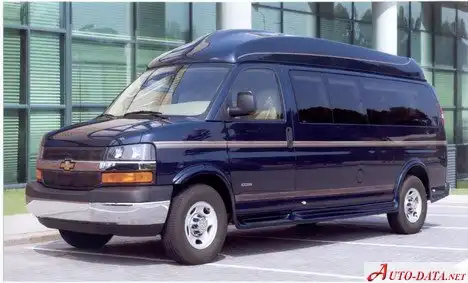
The Chevrolet Starcraft 6.5 D, produced between 1992 and 1996, represents a unique offering within the full-size van segment in the United States. Built by Starcraft Bus Corporation for Chevrolet, this variant focused on providing a durable and spacious platform primarily for commercial and shuttle applications. While Chevrolet offered various Starcraft configurations, the 6.5 D, powered by a naturally aspirated diesel engine producing 150 horsepower, occupied a specific niche – a balance between affordability, fuel efficiency, and the capability to handle demanding workloads. It was positioned as a workhorse alternative to the gasoline-powered Starcraft vans, and competed with similar offerings from Ford and Dodge.
Technical Specifications
| Brand | Chevrolet |
| Model | Starcraft |
| Generation | Starcraft |
| Type (Engine) | 6.5 D (150 Hp) |
| Start of Production | 1992 |
| End of Production | 1996 |
| Powertrain Architecture | Internal Combustion Engine |
| Body Type | Minivan |
| Fuel Type | Diesel |
| Power | 150 Hp |
| Engine Aspiration | Naturally Aspirated |
Powertrain & Engine Architecture
The heart of the Starcraft 6.5 D is the 6.5-liter naturally aspirated diesel engine, a derivative of the Detroit Diesel Series 60. This engine, designated as the 6.5L, was known for its robust construction and longevity, though it wasn’t particularly refined. It utilized a direct injection system, injecting fuel directly into the cylinders under high pressure. This system, while effective, contributed to the engine’s characteristic diesel clatter. The engine featured a cast iron block and head, contributing to its durability. The valvetrain employed an overhead valve (OHV) configuration, a simpler and more cost-effective design compared to overhead cam systems.
The Starcraft 6.5 D was exclusively paired with a 4-speed automatic transmission, the 4L80-E. This transmission was chosen for its durability and ability to handle the engine’s torque output, crucial for applications involving frequent stops and starts or hauling heavy loads. The 4L80-E is electronically controlled, offering smoother shifts compared to older hydraulically controlled automatics. However, it’s not known for being particularly fuel-efficient, and its shift points are optimized for durability rather than performance.
Driving Characteristics
The driving experience in a Starcraft 6.5 D is decidedly utilitarian. With 150 horsepower propelling a large, heavy van, acceleration is modest at best. The 4-speed automatic transmission contributes to this, with relatively wide gear ratios. The engine produces a substantial amount of torque – though specific figures vary slightly depending on the year – which is available at low RPMs. This makes it suitable for towing and hauling, but it doesn’t translate into quick acceleration. The van feels most comfortable cruising at highway speeds, where the engine can operate efficiently. The suspension is tuned for comfort and load-carrying capacity, resulting in a somewhat soft and wallowy ride when unladen. Steering is also relatively vague, prioritizing ease of use over precision.
Compared to the gasoline-powered Starcraft variants, the 6.5 D offers significantly better fuel economy, especially under heavy load. However, it lacks the responsiveness and refinement of the gasoline engines. The manual transmission options available on other Starcraft models provided a more engaging driving experience and slightly better fuel economy, but at the cost of convenience.
Equipment & Trim Levels
The Starcraft 6.5 D was typically offered in a fairly basic trim level, reflecting its intended use as a commercial vehicle. Standard features generally included a vinyl interior, rubber floor covering, and a basic AM/FM radio. Air conditioning was often an optional extra, as were power windows and locks. Seating configurations varied depending on the intended application, ranging from basic bench seats to more elaborate configurations with individual seats and aisle access. The dashboard layout was functional and straightforward, prioritizing practicality over aesthetics. The focus was on providing a durable and easy-to-clean interior that could withstand heavy use.
Chassis & Braking
The Starcraft 6.5 D utilizes a body-on-frame construction, providing a robust and durable chassis. The suspension consists of leaf springs in the rear and coil springs in the front. Rear brakes are typically drum brakes, while front brakes are disc brakes. This configuration was common for full-size vans of this era, prioritizing cost-effectiveness and durability over ultimate stopping power. A stabilizer bar is present in the front to reduce body roll, but the overall handling characteristics are still geared towards comfort and load-carrying capacity. The steering system is a recirculating ball system, which is known for its simplicity and durability but lacks the precision of more modern steering technologies.
Market Reception & Comparison
The Chevrolet Starcraft 6.5 D received mixed reviews. Critics praised its durability and fuel efficiency, particularly for a vehicle of its size. However, it was often criticized for its lack of refinement, slow acceleration, and basic interior. Compared to the gasoline-powered Starcraft models, the 6.5 D appealed to buyers who prioritized fuel economy and longevity over performance and comfort. It was a popular choice for shuttle services, airport transportation, and other commercial applications where reliability and low operating costs were paramount. Against competitors like the Ford Econoline and Dodge Ram Van with diesel options, the Starcraft 6.5 D offered a comparable level of performance and features, often at a competitive price point.
Legacy
The Chevrolet Starcraft 6.5 D has developed a reputation for being a remarkably durable and reliable vehicle. The 6.5-liter diesel engine, while not particularly powerful, is known for its ability to withstand high mileage with proper maintenance. Today, these vans are still found in service, often with hundreds of thousands of miles on the odometer. The 4L80-E transmission is also known for its durability. However, potential buyers should be aware of potential issues such as injector problems, cooling system failures, and rust. Parts availability is generally good, but some components can be expensive. In the used car market, the Starcraft 6.5 D remains a relatively affordable option for those seeking a spacious and durable van for commercial or recreational purposes. Its simplicity and robust construction make it a popular choice for those who value practicality and reliability over modern amenities.
