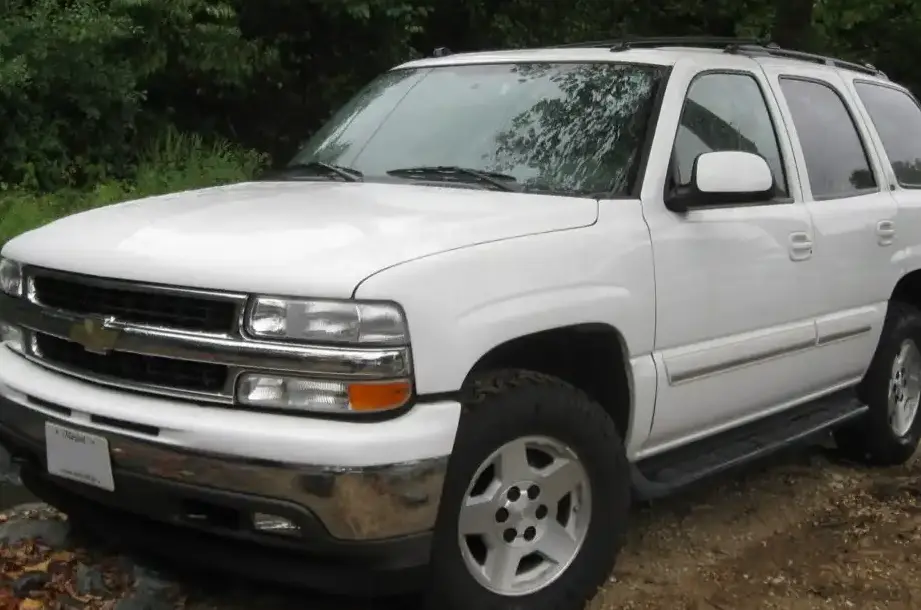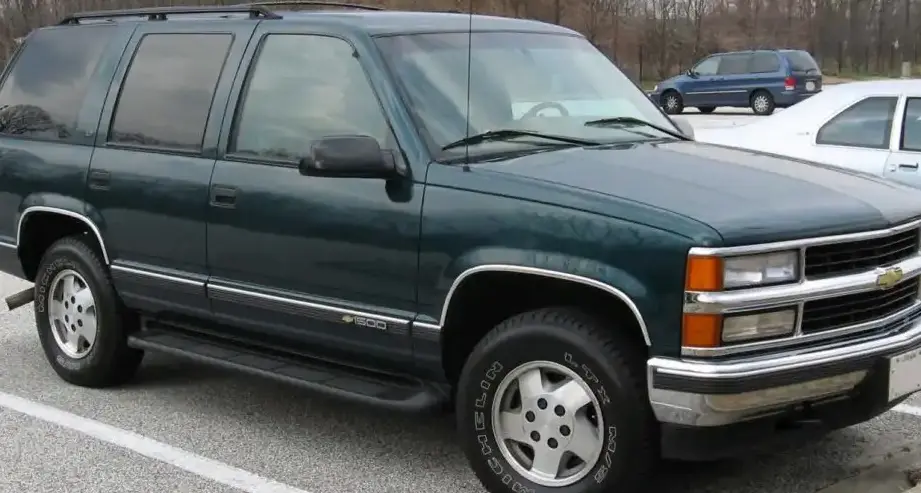
The Chevrolet Tahoe (GMT410) 5.7L V8 4WD, produced from 1996 to 1999, represents a significant iteration of Chevrolet’s full-size SUV. Positioned as a robust, body-on-frame vehicle, it served as a mainstay in the American SUV market, offering a blend of passenger capacity, towing capability, and four-wheel-drive utility. This particular variant, equipped with the 5.7-liter V8 engine and a four-speed automatic transmission, occupied a mid-range position within the Tahoe lineup, offering a step up in performance from the base engine options while remaining more accessible than the higher-trim levels. It was a popular choice for families and individuals needing a versatile vehicle capable of handling both daily driving and more demanding tasks.
Technical Specifications
| Brand | Chevrolet |
| Model | Tahoe |
| Generation | Tahoe (GMT410) |
| Type | 5.7L i V8 4WD (258 Hp) 5 Seat |
| Start of production | 1996 |
| End of production | 1999 |
| Powertrain Architecture | Internal Combustion engine |
| Body type | SUV |
| Seats | 5 |
| Doors | 3 |
| Fuel Type | Petrol (Gasoline) |
| Maximum speed | 160 km/h (99.42 mph) |
| Weight-to-power ratio | 9.1 kg/Hp, 110.5 Hp/tonne |
| Weight-to-torque ratio | 5.3 kg/Nm, 188.9 Nm/tonne |
| Power | 258 Hp @ 4600 rpm |
| Power per litre | 45 Hp/l |
| Torque | 441 Nm @ 2800 rpm (325.26 lb.-ft. @ 2800 rpm) |
| Engine layout | Front, Longitudinal |
| Engine displacement | 5733 cm3 (349.85 cu. in.) |
| Number of cylinders | 8 |
| Engine configuration | V-engine |
| Cylinder Bore | 101.6 mm (4 in.) |
| Piston Stroke | 88.4 mm (3.48 in.) |
| Compression ratio | 9.4:1 |
| Number of valves per cylinder | 2 |
| Fuel injection system | Multi-port manifold injection |
| Engine aspiration | Naturally aspirated engine |
| Engine oil capacity | 4.8 l (5.07 US qt | 4.22 UK qt) |
| Coolant capacity | 16.5 l (17.44 US qt | 14.52 UK qt) |
| Kerb Weight | 2335 kg (5147.79 lbs.) |
| Max. weight | 2965 kg (6536.71 lbs.) |
| Max load | 630 kg (1388.91 lbs.) |
| Trunk (boot) space – maximum | 2815 l (99.41 cu. ft.) |
| Fuel tank capacity | 114 l (30.12 US gal | 25.08 UK gal) |
| Length | 4788 mm (188.5 in.) |
| Width | 1958 mm (77.09 in.) |
| Height | 1839 mm (72.4 in.) |
| Wheelbase | 2832 mm (111.5 in.) |
| Front track | 1628 mm (64.09 in.) |
| Rear (Back) track | 1613 mm (63.5 in.) |
| Drive wheel | All wheel drive (4×4) |
| Number of gears and type of gearbox | 4 gears, automatic transmission |
| Front suspension | Torsion |
| Rear suspension | Leaf spring |
| Front brakes | Disc |
| Rear brakes | Drum |
| Assisting systems | ABS (Anti-lock braking system) |
| Power steering | Hydraulic Steering |
| Tires size | 245/75 R16 |
Powertrain & Engine Architecture
The heart of this Tahoe variant is the Chevrolet 350 cubic inch (5.7L) small-block V8 engine. Specifically, engines produced during this period typically fall under the Vortec 5700 series. This engine featured a cast iron block and cylinder heads, and utilized a multi-port fuel injection system for precise fuel delivery. The Vortec heads were designed for improved airflow, contributing to the engine’s power output. The engine produced 258 horsepower at 4600 rpm and 325 lb-ft of torque at 2800 rpm. The 4L60E four-speed automatic transmission was the standard pairing for this engine. This transmission was electronically controlled, offering smoother shifts and improved efficiency compared to earlier designs. The 4L60E featured a torque converter lock-up clutch to further enhance fuel economy at cruising speeds.
Driving Characteristics
The 5.7L V8 and 4L60E combination provided a noticeable step up in performance compared to the base 4.3L V6 engine offered in the Tahoe. While not a sports car, the Tahoe 5.7L offered adequate acceleration for highway merging and passing maneuvers. The automatic transmission’s gear ratios were tuned for a balance of towing capability and everyday drivability. The lower gear ratios provided sufficient torque for hauling loads, while the higher gears allowed for relaxed cruising. Compared to manual transmission equipped Tahoes, the automatic offered convenience but sacrificed some driver control and potentially a slight reduction in fuel economy. The 4WD system provided enhanced traction in inclement weather and off-road conditions, making it a versatile vehicle for a variety of terrains.
Equipment & Trim Levels
The 1996-1999 Tahoe 5.7L 4WD typically came standard with features such as air conditioning, power windows and locks, and an AM/FM stereo. The interior typically featured cloth upholstery, although leather was available as an option. Optional extras included a premium sound system, a sunroof, and upgraded interior trim packages. The Tahoe offered a relatively basic interior compared to some of its competitors, focusing on durability and functionality rather than luxury. The five-seat configuration was standard, with a split-folding bench seat in the rear providing some flexibility for cargo space.
Chassis & Braking
The GMT410 Tahoe utilized a traditional body-on-frame construction, providing a robust and durable platform. The front suspension consisted of torsion bars, while the rear suspension employed leaf springs. This setup was designed to handle heavy loads and provide a comfortable ride. Braking duties were handled by disc brakes in the front and drum brakes in the rear. Anti-lock brakes (ABS) were standard, enhancing safety by preventing wheel lockup during hard braking. The steering system was hydraulic power steering, providing easy maneuverability.
Market Reception & Comparison
The Chevrolet Tahoe (GMT410) 5.7L 4WD was generally well-received by critics and consumers alike. It was praised for its spacious interior, strong V8 engine, and capable four-wheel-drive system. Compared to the base 4.3L V6 model, the 5.7L offered a significant improvement in performance, making it a popular choice for those who needed to tow or haul heavy loads. Fuel economy was a common criticism, as the Tahoe was not particularly fuel-efficient. However, this was typical for full-size SUVs of the era. Compared to competitors like the Ford Expedition and GMC Yukon, the Tahoe offered a similar level of capability and features, often at a competitive price point.
Legacy
The GMT410 Tahoe 5.7L V8 4WD has proven to be a relatively reliable vehicle, with many examples still on the road today. The 350 V8 engine is known for its durability and relatively simple maintenance requirements. The 4L60E transmission, while not without its potential issues, is generally considered a robust unit when properly maintained. In the used car market, these Tahoes are often sought after by those looking for a capable and affordable full-size SUV. Their simplicity and readily available parts make them relatively easy to maintain and repair. The GMT410 generation Tahoe laid the groundwork for future iterations of Chevrolet’s popular SUV, solidifying its position as a leader in the full-size SUV segment.