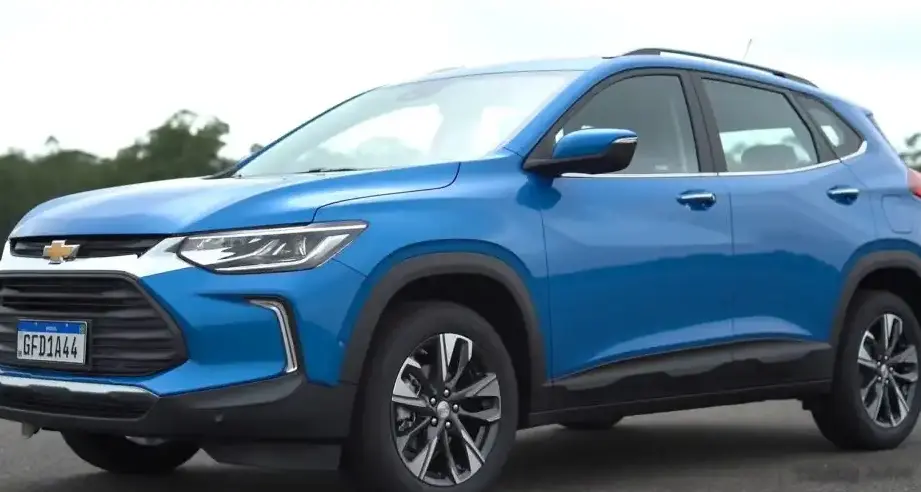
The Chevrolet Tracker (2019), specifically the 1.2 Turbo variant producing 130 horsepower, represents a significant entry in the subcompact SUV market for Chevrolet. Introduced in March 2020, this model year marked the beginning of the Tracker’s current generation, designed to appeal to buyers seeking a fuel-efficient and affordable crossover. Positioned as a base-level offering within the Tracker lineup, the 1.2 Turbo aimed to provide essential transportation with a modern feature set. It primarily targeted cost-conscious consumers and those new to the SUV segment, offering a step up from smaller hatchbacks while remaining accessible in price.
Technical Specifications
| Brand | Chevrolet |
| Model | Tracker |
| Generation | Tracker (2019) |
| Type (Engine) | 1.2 Turbo (130 Hp) |
| Start of production | March, 2020 |
| Powertrain Architecture | Internal Combustion engine |
| Body type | SUV |
| Seats | 5 |
| Doors | 5 |
| Fuel Type | Petrol (Gasoline) |
| Weight-to-power ratio | 9.2 kg/Hp, 108.3 Hp/tonne |
| Weight-to-torque ratio | 6.3 kg/Nm, 158.3 Nm/tonne |
| Power | 130 Hp @ 5500 rpm |
| Power per litre | 108.4 Hp/l |
| Torque | 190 Nm @ 2000 rpm, 140.14 lb.-ft. @ 2000 rpm |
| Engine layout | Front, Transverse |
| Engine Model/Code | L4H |
| Engine displacement | 1199 cm3, 73.17 cu. in. |
| Number of cylinders | 3 |
| Engine configuration | Inline |
| Fuel injection system | Direct injection |
| Engine aspiration | Turbocharger, Intercooler |
| Valvetrain | DOHC |
| Engine systems | Start & Stop System |
| Kerb Weight | 1200-1214 kg, 2645.55 – 2676.41 lbs. |
| Max. weight | 1624 kg, 3580.31 lbs. |
| Max load | 410-424 kg, 903.9 – 934.76 lbs. |
| Trunk (boot) space – minimum | 393 l, 13.88 cu. ft. |
| Fuel tank capacity | 44 l, 11.62 US gal | 9.68 UK gal |
| Length | 4270 mm, 168.11 in. |
| Width | 1791 mm, 70.51 in. |
| Height | 1626-1627 mm, 64.02 – 64.06 in. |
| Wheelbase | 2570 mm, 101.18 in. |
| Drivetrain Architecture | The Internal combustion engine (ICE) drives the front wheels of the vehicle. |
| Drive wheel | Front wheel drive |
| Number of gears and type of gearbox | 5 gears, manual transmission |
| Front suspension | Independent type McPherson |
| Rear suspension | Torsion |
| Front brakes | Ventilated discs |
| Rear brakes | Drum |
| Assisting systems | ABS (Anti-lock braking system) |
| Steering type | Steering rack and pinion |
| Power steering | Electric Steering |
| Tires size | 215/60 R16; 215/55 R17 |
| Wheel rims size | 7J x 16; 7J x 17 |
Powertrain & Engine Architecture
The heart of the 2019 Chevrolet Tracker 1.2 Turbo is the L4H engine, a 1.2-liter inline-three cylinder gasoline engine. This engine utilizes direct fuel injection and a single turbocharger with an intercooler to boost power and efficiency. The direct injection system allows for precise fuel delivery, optimizing combustion and reducing emissions. The DOHC (Double Overhead Camshaft) valvetrain further enhances engine breathing and performance. The engine produces 130 horsepower at 5500 rpm and 190 Nm (140.14 lb-ft) of torque at 2000 rpm. This engine is paired with a 5-speed manual transmission, delivering power to the front wheels. The inclusion of a Start & Stop system contributes to improved fuel economy in city driving conditions by automatically shutting off the engine when the vehicle is stationary.
Driving Characteristics
The 1.2 Turbo engine, coupled with the 5-speed manual transmission, provides adequate performance for everyday driving. While not a performance-oriented setup, the turbocharger helps to mitigate the power deficit associated with the small displacement engine, offering a reasonable amount of low-end torque. The gear ratios are tuned for fuel efficiency, meaning acceleration is not particularly brisk. Compared to potential higher-trim versions (if offered with larger engines), the 1.2 Turbo prioritizes fuel economy over outright speed. The manual transmission allows for driver engagement, but the relatively long throws and light clutch feel are geared towards ease of use rather than sporty driving. The weight-to-power ratio of 9.2 kg/Hp translates to a noticeable lack of urgency during acceleration, especially when fully loaded.
Equipment & Trim Levels
The 1.2 Turbo trim of the 2019 Chevrolet Tracker typically came standard with features aimed at providing a comfortable and convenient driving experience. These included air conditioning, power windows and locks, a basic infotainment system with Bluetooth connectivity, and standard safety features like ABS (Anti-lock Braking System) and airbags. Interior upholstery was typically cloth, and the dashboard featured a functional, if somewhat basic, design. Optional extras could include alloy wheels, a more advanced infotainment system with a larger touchscreen, and features like a rearview camera. The trim level was designed to be the entry point into the Tracker range, offering essential features at an affordable price point.
Chassis & Braking
The Chevrolet Tracker 1.2 Turbo utilizes a front-wheel-drive configuration with an independent McPherson strut suspension in the front and a torsion beam suspension in the rear. This suspension setup is designed to provide a comfortable ride quality while maintaining reasonable handling characteristics. The front brakes are ventilated discs, offering adequate stopping power, while the rear brakes are drums, a cost-saving measure common in this segment. The electric power steering provides light and easy steering feel, making it well-suited for urban driving. Tire sizes typically ranged from 215/60 R16 to 215/55 R17, depending on the specific trim and optional equipment.
Market Reception & Comparison
The 2019 Chevrolet Tracker 1.2 Turbo was generally well-received as an affordable and fuel-efficient subcompact SUV. Critics praised its value proposition and practicality, but noted its lack of performance compared to competitors with larger engines. Fuel economy was a strong point, with the 1.2 Turbo engine delivering competitive MPG figures. Reliability reports have been generally positive, with the engine proving to be relatively durable. Compared to other trims within the Tracker lineup (if available), the 1.2 Turbo offered the lowest price point but also the least amount of power and features. It appealed to buyers prioritizing affordability and fuel efficiency over performance and luxury.
Legacy
The Chevrolet Tracker 1.2 Turbo has established itself as a reliable and economical option in the used car market. Its relatively simple engine design and readily available parts contribute to lower maintenance costs. While not a particularly exciting vehicle to drive, its practicality and affordability have made it a popular choice for first-time car buyers and those seeking a budget-friendly SUV. The L4H engine, while not known for exceptional performance, has proven to be reasonably durable, and with proper maintenance, can provide many years of reliable service. As a base-level trim, it represents a solid entry point into the Chevrolet Tracker family, offering a functional and affordable transportation solution.