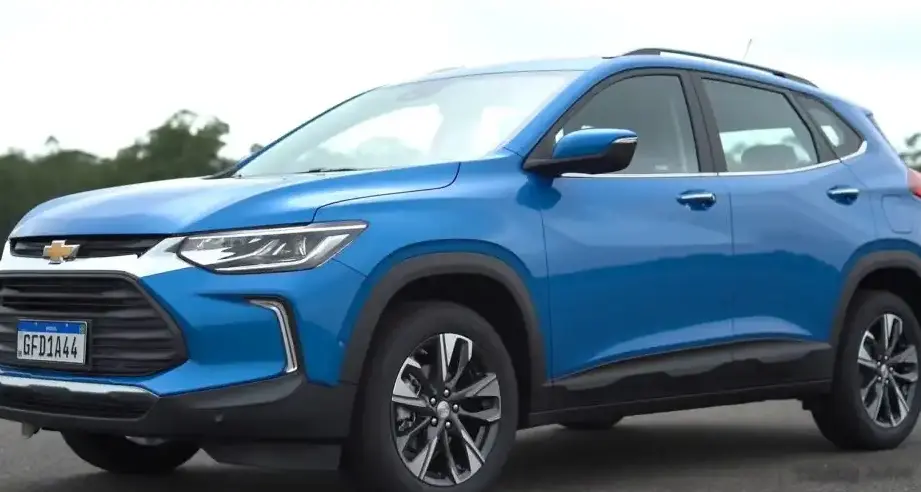
The Chevrolet Tracker, introduced for the 2020 model year in the United States, represents a significant entry for General Motors into the subcompact SUV segment. This generation of Tracker, distinct from earlier models sold under the same name, is primarily marketed in South America and now North America as an affordable and fuel-efficient option. The 1.2 Turbo Automatic variant, equipped with a 1.2-liter turbocharged three-cylinder engine and a six-speed automatic transmission, served as a key trim level, offering a balance between economy and acceptable performance. Production began in March 2020, and the Tracker quickly became a contender in a crowded market segment.
Technical Specifications
| Brand | Chevrolet |
| Model | Tracker |
| Generation | Tracker (2019) |
| Type (Engine) | 1.2 Turbo (130 Hp) Automatic |
| Start of production | March, 2020 |
| Powertrain Architecture | Internal Combustion engine |
| Body type | SUV |
| Seats | 5 |
| Doors | 5 |
| Fuel Type | Petrol (Gasoline) |
| Weight-to-power ratio | 9.5 kg/Hp, 104.8 Hp/tonne |
| Weight-to-torque ratio | 6.5 kg/Nm, 153.1 Nm/tonne |
| Power | 130 Hp @ 5500 rpm |
| Power per litre | 108.4 Hp/l |
| Torque | 190 Nm @ 2000 rpm, 140.14 lb.-ft. @ 2000 rpm |
| Engine layout | Front, Transverse |
| Engine Model/Code | L4H |
| Engine displacement | 1199 cm3, 73.17 cu. in. |
| Number of cylinders | 3 |
| Engine configuration | Inline |
| Fuel injection system | Direct injection |
| Engine aspiration | Turbocharger, Intercooler |
| Valvetrain | DOHC |
| Engine systems | Start & Stop System |
| Kerb Weight | 1241-1263 kg, 2735.94 – 2784.44 lbs. |
| Max. weight | 1673 kg, 3688.33 lbs. |
| Max load | 410-432 kg, 903.9 – 952.4 lbs. |
| Trunk (boot) space – minimum | 393 l, 13.88 cu. ft. |
| Fuel tank capacity | 44 l, 11.62 US gal | 9.68 UK gal |
| Length | 4270 mm, 168.11 in. |
| Width | 1791 mm, 70.51 in. |
| Height | 1627 mm, 64.06 in. |
| Wheelbase | 2570 mm, 101.18 in. |
| Drivetrain Architecture | The Internal combustion engine (ICE) drives the front wheels of the vehicle. |
| Drive wheel | Front wheel drive |
| Number of gears and type of gearbox | 6 gears, automatic transmission |
| Front suspension | Independent type McPherson |
| Rear suspension | Torsion |
| Front brakes | Ventilated discs |
| Rear brakes | Drum |
| Assisting systems | ABS (Anti-lock braking system) |
| Steering type | Steering rack and pinion |
| Power steering | Electric Steering |
| Tires size | 215/55 R17 |
| Wheel rims size | 7J x 17 |
Powertrain & Engine Architecture
The heart of the Tracker 1.2 Turbo Automatic is the GM-developed Ecotec L4H engine. This 1.2-liter inline three-cylinder engine utilizes direct fuel injection and a single turbocharger with an intercooler to boost power and efficiency. The engine’s design prioritizes reduced friction and weight, contributing to its fuel economy. The DOHC (Dual Overhead Camshaft) valvetrain further enhances breathing and performance. The six-speed automatic transmission, sourced from GM, is tuned for smooth shifts and optimized fuel consumption. It’s a conventional torque-converter automatic, prioritizing comfort over outright performance. The inclusion of a Start & Stop system further aids in reducing fuel consumption during city driving.
Driving Characteristics
The 130 horsepower and 190 Nm (140 lb-ft) of torque produced by the 1.2-liter turbo engine provide adequate, though not exhilarating, performance for the Tracker. Acceleration is best described as sufficient for everyday driving, with a 0-60 mph time estimated around 9-10 seconds. The automatic transmission’s gear ratios are geared towards fuel efficiency, meaning the engine can feel somewhat strained during aggressive acceleration or when fully loaded. Compared to potential higher-trim versions with larger engines (not widely available in the US market), the 1.2 Turbo Automatic prioritizes fuel economy and ease of use over sporty driving dynamics. The front-wheel-drive configuration contributes to predictable handling, but lacks the all-weather capability of an all-wheel-drive system.
Equipment & Trim Levels
The Tracker 1.2 Turbo Automatic typically came equipped with a respectable array of standard features. These generally included air conditioning, power windows and locks, a touchscreen infotainment system with Apple CarPlay and Android Auto compatibility, and a rearview camera. Higher trim levels offered upgrades such as alloy wheels, a larger touchscreen, upgraded interior materials, and additional safety features like blind-spot monitoring and rear cross-traffic alert. Interior upholstery was typically cloth, with optional leatherette available on some trims. The dashboard layout is functional and straightforward, prioritizing usability over luxury.
Chassis & Braking
The Tracker utilizes a front-wheel-drive chassis with an independent McPherson strut suspension in the front and a torsion beam suspension in the rear. This setup provides a comfortable ride quality, suitable for everyday commuting. The front brakes are ventilated discs, providing adequate stopping power, while the rear brakes are drums, a cost-saving measure common in this segment. The electric power steering offers light and easy steering, making it maneuverable in urban environments. The vehicle’s relatively light weight helps to offset the limitations of the braking system.
Market Reception & Comparison
The Chevrolet Tracker 1.2 Turbo Automatic was generally well-received by critics as a value-oriented option in the subcompact SUV segment. Its fuel economy was a major selling point, consistently achieving around 30 mpg combined. However, some reviewers noted the engine could feel underpowered, particularly when climbing hills or carrying a full load. Compared to competitors like the Honda HR-V or Mazda CX-3, the Tracker offered a lower price point but lacked the refinement and driving dynamics of those models. Its reliability has been generally good, with few widespread reports of major mechanical issues.
Legacy
The Chevrolet Tracker 1.2 Turbo Automatic has established itself as a popular choice in the used car market, particularly for buyers seeking an affordable and fuel-efficient SUV. The Ecotec 1.2-liter engine has proven to be relatively reliable, although regular maintenance, including oil changes and timing chain inspections, is crucial. The six-speed automatic transmission is also generally durable. As a relatively new model, parts availability is currently good, and the Tracker’s simple mechanical design makes it relatively easy to repair. The Tracker represents a pragmatic approach to the subcompact SUV segment, offering a compelling combination of value, efficiency, and practicality.