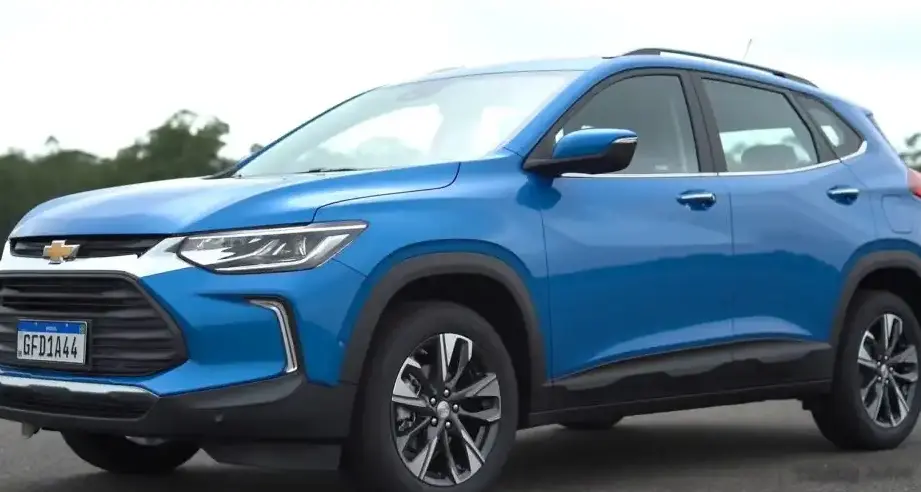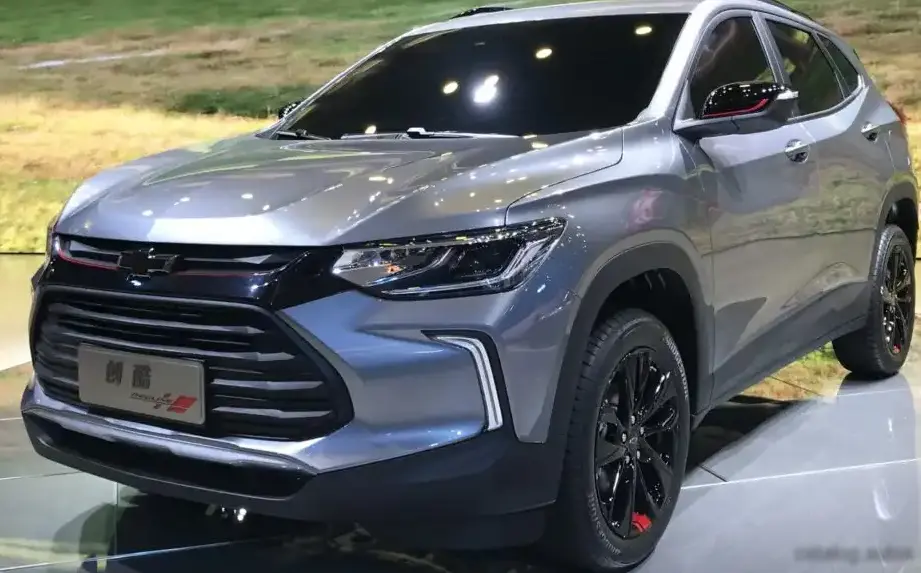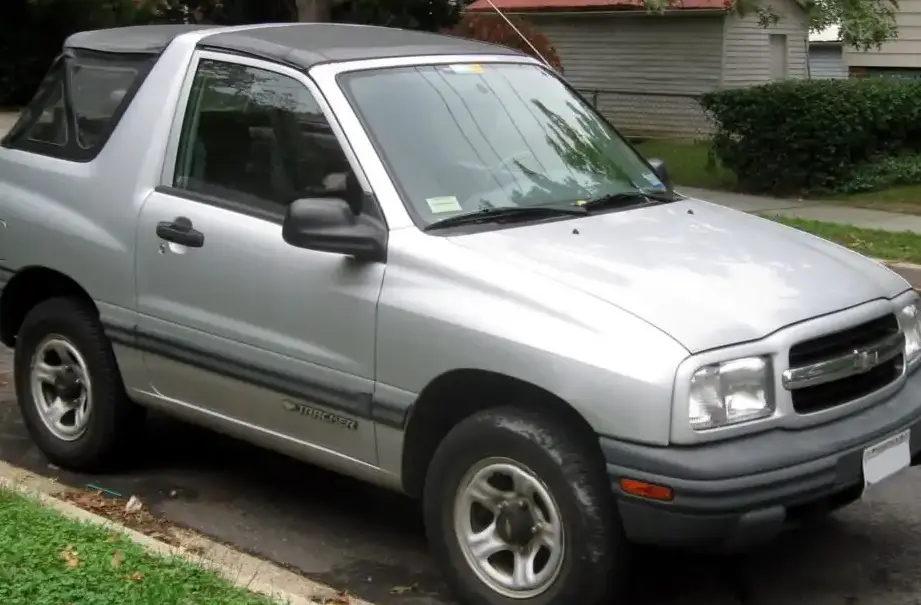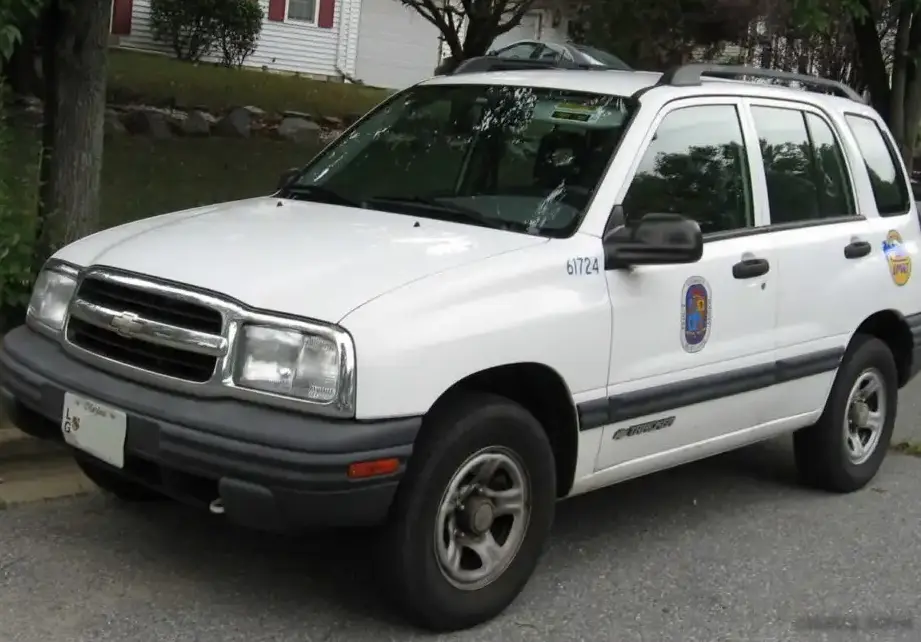
The Chevrolet Tracker II 1.6 i 16V, producing 97 horsepower, with all-wheel drive (AWD) was a compact sport utility vehicle (SUV) sold primarily in North and South America from 1998 to 2002. It represented a significant update to the original Tracker, offering improved refinement and a more modern feature set. This particular variant, equipped with the 1.6-liter engine and a five-speed manual transmission, occupied the entry-level position in the Tracker II lineup, appealing to buyers seeking affordability and all-weather capability. It was built on the GM S-10/Blazer platform, sharing many components with its pickup truck sibling.
Technical Specifications
| Brand | Chevrolet |
| Model | Tracker |
| Generation | Tracker II |
| Type (Engine) | 1.6 i 16V (97 Hp) AWD |
| Start of production | 1998 |
| End of production | 2002 |
| Powertrain Architecture | Internal Combustion engine |
| Body type | SUV |
| Seats | 5 |
| Doors | 5 |
| Fuel consumption (urban) | 14 l/100 km (16.8 US mpg, 20.2 UK mpg, 7.1 km/l) |
| Fuel consumption (extra urban) | 8 l/100 km (29.4 US mpg, 35.3 UK mpg, 12.5 km/l) |
| Fuel Type | Petrol (Gasoline) |
| Maximum speed | 150 km/h (93.21 mph) |
| Weight-to-power ratio | 14 kg/Hp, 71.6 Hp/tonne |
| Weight-to-torque ratio | 10.2 kg/Nm, 98.2 Nm/tonne |
| Power | 97 Hp @ 5600 rpm |
| Power per litre | 61 Hp/l |
| Torque | 133 Nm @ 4000 rpm (98.1 lb.-ft. @ 4000 rpm) |
| Engine layout | Front, Longitudinal |
| Engine Model/Code | L01 |
| Engine displacement | 1590 cm3 (97.03 cu. in.) |
| Number of cylinders | 4 |
| Engine configuration | Inline |
| Cylinder Bore | 75 mm (2.95 in.) |
| Piston Stroke | 90 mm (3.54 in.) |
| Compression ratio | 9.5:1 |
| Number of valves per cylinder | 4 |
| Fuel injection system | Multi-port manifold injection |
| Engine aspiration | Naturally aspirated engine |
| Valvetrain | OHC |
| Engine oil capacity | 4.2 l (4.44 US qt | 3.7 UK qt) |
| Coolant | 5.5 l (5.81 US qt | 4.84 UK qt) |
| Kerb Weight | 1355 kg (2987.26 lbs.) |
| Trunk (boot) space – minimum | 590 l (20.84 cu. ft.) |
| Trunk (boot) space – maximum | 1300 l (45.91 cu. ft.) |
| Fuel tank capacity | 56 l (14.79 US gal | 12.32 UK gal) |
| Length | 4030 mm (158.66 in.) |
| Width | 1640 mm (64.57 in.) |
| Height | 1670 mm (65.75 in.) |
| Wheelbase | 2480 mm (97.64 in.) |
| Front track | 1455 mm (57.28 in.) |
| Rear (Back) track | 1460 mm (57.48 in.) |
| Drive wheel | All wheel drive (4×4) |
| Number of gears and type of gearbox | 5 gears, manual transmission |
| Front suspension | Spring Strut |
| Rear suspension | Coil spring |
| Front brakes | Disc |
| Rear brakes | Drum |
| Assisting systems | ABS (Anti-lock braking system) |
| Steering type | Worm-reduction unit |
| Power steering | Hydraulic Steering |
| Tires size | 195/75 R15 |
Powertrain & Engine Architecture
The Chevrolet Tracker II 1.6 i 16V AWD utilized the L01 engine, a 1.6-liter inline-four cylinder gasoline engine. This engine featured a single overhead camshaft (SOHC) valvetrain operating four valves per cylinder. The multi-port fuel injection system delivered fuel directly to each intake port, optimizing combustion efficiency. The engine’s relatively modest output of 97 horsepower at 5600 rpm and 133 Nm (98 lb-ft) of torque at 4000 rpm was a result of its smaller displacement and focus on fuel economy. The five-speed manual transmission provided a reasonable balance between acceleration and fuel efficiency, with gear ratios tailored for everyday driving conditions. The longitudinal engine placement was a consequence of the shared S-10 platform, designed originally for rear-wheel drive vehicles.
Driving Characteristics
The 1.6-liter engine and manual transmission combination in the Tracker II offered adequate, though not exhilarating, performance. Acceleration was best described as leisurely, with a 0-60 mph time estimated around 11-12 seconds. The all-wheel drive system provided enhanced traction in slippery conditions, making it a capable vehicle for inclement weather. Compared to the optional 2.0-liter engine available in some markets, the 1.6L felt noticeably less powerful, particularly when fully loaded or climbing hills. The manual transmission allowed for greater driver control and engagement compared to the available automatic option, but the shift quality was considered somewhat notchy by some reviewers. The gear ratios were spaced to prioritize fuel economy, resulting in a slightly less responsive feel at higher speeds.
Equipment & Trim Levels
The 1.6 i 16V AWD Tracker II typically came with a fairly basic level of standard equipment. This included air conditioning, a basic audio system, and cloth upholstery. Power windows and door locks were often optional extras. Safety features were limited to ABS (Anti-lock Braking System) and driver and passenger airbags. Interior trim was functional and durable, prioritizing practicality over luxury. Optional extras included upgraded audio systems, alloy wheels, and a sunroof. The Tracker II was positioned as an affordable and practical SUV, so luxury features were generally kept to a minimum.
Chassis & Braking
The Tracker II utilized a body-on-frame construction, inherited from the S-10 pickup truck. The front suspension consisted of a spring strut setup, while the rear employed a coil spring arrangement. This suspension configuration provided a comfortable ride on paved roads, but could feel somewhat bouncy on rough terrain. The braking system featured disc brakes on the front wheels and drum brakes on the rear. While adequate for normal driving conditions, the braking performance was not particularly strong, especially when compared to more modern SUVs. The all-wheel drive system employed a viscous coupling to transfer torque between the front and rear axles, providing automatic engagement of the rear wheels when traction was lost.
Market Reception & Comparison
The Chevrolet Tracker II 1.6 i 16V AWD was generally well-received as an affordable and capable compact SUV. Critics praised its all-weather capability and relatively low price point. However, the engine’s modest power output and the somewhat basic interior were common criticisms. Compared to other SUVs in its class, such as the Honda CR-V or Toyota RAV4, the Tracker II offered less refinement and performance, but at a significantly lower price. Fuel economy was respectable for its time, averaging around 20-25 mpg in mixed driving conditions. Reliability was generally good, although some owners reported issues with the cooling system and electrical components.
Legacy
The Chevrolet Tracker II, particularly the 1.6-liter AWD variant, has become a popular choice among budget-conscious buyers in the used car market. Its simple mechanical design and readily available parts make it relatively easy and inexpensive to maintain. While not known for its performance or luxury, the Tracker II remains a practical and reliable vehicle for those seeking an affordable all-wheel drive SUV. The L01 engine, while not a powerhouse, proved to be reasonably durable, and many examples are still on the road today. Its legacy lies in providing accessible all-wheel drive capability to a wider range of buyers, and serving as a dependable, if unpretentious, transportation option.