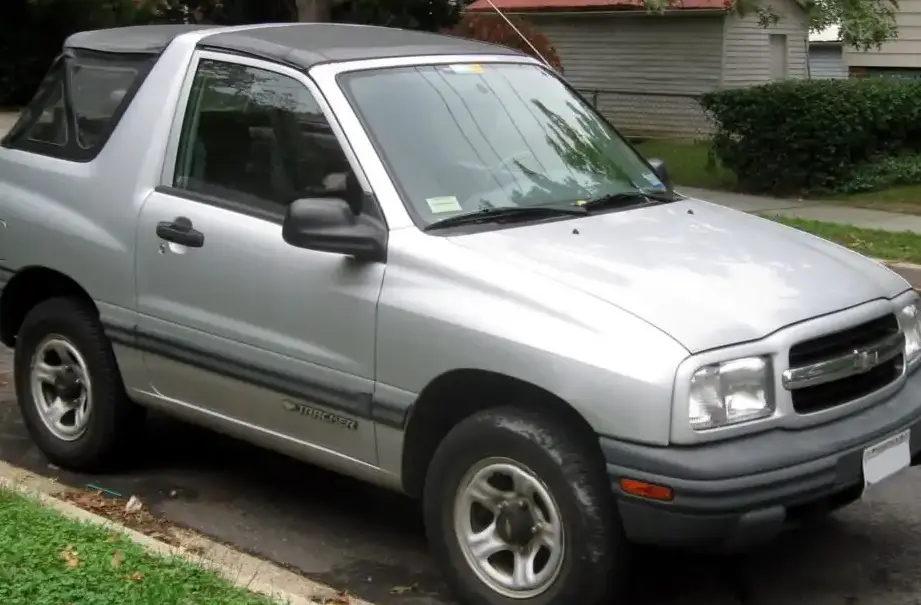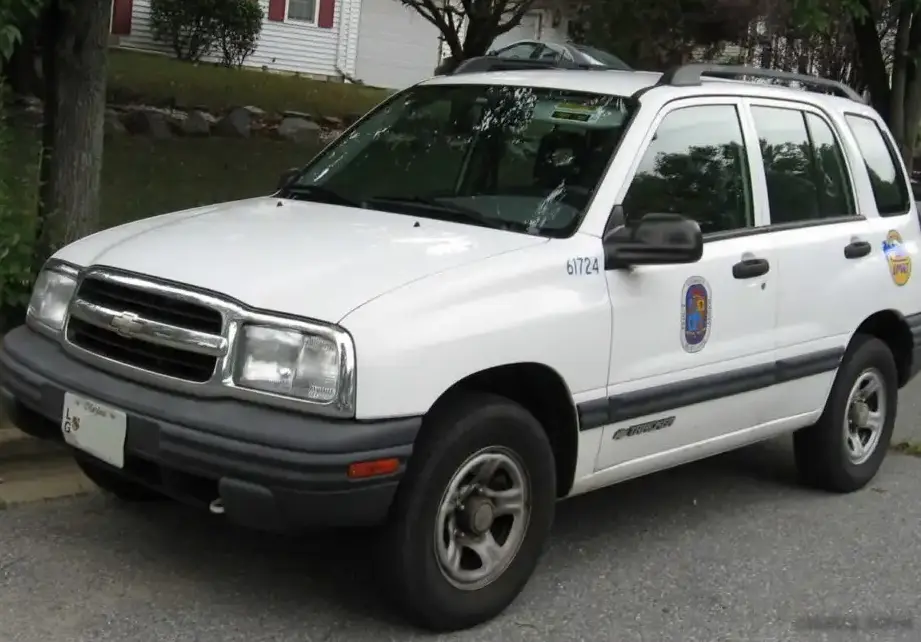
The Chevrolet Tracker II 2.0 i 16V, produced between 1998 and 2002, represented a significant update to Chevrolet’s compact SUV offering. Positioned as a relatively affordable and practical vehicle, the Tracker II was primarily marketed in North and South America. It was built on a body-on-frame chassis, a design choice that differentiated it from the increasingly prevalent unibody construction of its competitors. This particular 2.0-liter, 16-valve variant occupied a mid-range position within the Tracker II lineup, offering a balance between performance and fuel economy. It served as a step up from the base 1.6L engine, while remaining more accessible than potential future, higher-performance options that never materialized.
Technical Specifications
| Brand | Chevrolet |
| Model | Tracker |
| Generation | Tracker II |
| Type (Engine) | 2.0 i 16V (122 Hp) |
| Start of production | 1998 |
| End of production | 2002 |
| Powertrain Architecture | Internal Combustion engine |
| Body type | SUV |
| Seats | 5 |
| Doors | 5 |
| Fuel Type | Petrol (Gasoline) |
| Maximum speed | 155 km/h (96.31 mph) |
| Weight-to-power ratio | 10.9 kg/Hp, 91.7 Hp/tonne |
| Weight-to-torque ratio | 7.3 kg/Nm, 136.8 Nm/tonne |
| Power | 122 Hp @ 6000 rpm |
| Power per litre | 61.2 Hp/l |
| Torque | 182 Nm @ 3000 rpm (134.24 lb.-ft. @ 3000 rpm) |
| Engine layout | Front, Longitudinal |
| Engine Model/Code | J20A |
| Engine displacement | 1995 cm3 (121.74 cu. in.) |
| Number of cylinders | 4 |
| Engine configuration | Inline |
| Cylinder Bore | 84 mm (3.31 in.) |
| Piston Stroke | 90 mm (3.54 in.) |
| Compression ratio | 9.5:1 |
| Number of valves per cylinder | 4 |
| Fuel injection system | Multi-port manifold injection |
| Engine aspiration | Naturally aspirated engine |
| Valvetrain | OHC |
| Engine oil capacity | 5.2 l (5.49 US qt | 4.58 UK qt) |
| Coolant | 6.5 l (6.87 US qt | 5.72 UK qt) |
| Kerb Weight | 1330 kg (2932.15 lbs.) |
| Max. weight | 1730 kg (3814 lbs.) |
| Max load | 400 kg (881.85 lbs.) |
| Trunk (boot) space – minimum | 575 l (20.31 cu. ft.) |
| Trunk (boot) space – maximum | 1265 l (44.67 cu. ft.) |
| Fuel tank capacity | 66 l (17.44 US gal | 14.52 UK gal) |
| Length | 4059 mm (159.8 in.) |
| Width | 1694 mm (66.69 in.) |
| Height | 1689 mm (66.5 in.) |
| Wheelbase | 2479 mm (97.6 in.) |
| Front track | 1460 mm (57.48 in.) |
| Rear (Back) track | 1460 mm (57.48 in.) |
| Drivetrain Architecture | The Internal combustion engine (ICE) drives the rear wheels of the vehicle. |
| Drive wheel | Rear wheel drive |
| Number of gears and type of gearbox | 5 gears, manual transmission |
| Front suspension | Spring Strut |
| Rear suspension | Coil spring |
| Front brakes | Disc |
| Rear brakes | Drum |
| Assisting systems | ABS (Anti-lock braking system) |
| Steering type | Worm-reduction unit |
| Power steering | Hydraulic Steering |
| Tires size | 195/75 R15 |
Powertrain & Engine Architecture
The heart of the Tracker II 2.0 i 16V is the J20A engine, a 1.995-liter inline-four cylinder gasoline engine. This engine, derived from General Motors’ global engine family, featured a single overhead camshaft (SOHC) valvetrain operating four valves per cylinder. The multi-port fuel injection system delivered fuel directly into the intake ports, optimizing combustion efficiency. The engine’s 9.5:1 compression ratio was a compromise between performance and the ability to run on readily available fuel grades. The 122 horsepower peak was achieved at 6000 rpm, while the 182 Nm (134 lb-ft) of torque was readily available at 3000 rpm. This engine was paired with a 5-speed manual transmission, providing a relatively direct connection between the engine and the rear wheels. An automatic transmission option was also available, though it impacted performance and fuel economy.
Driving Characteristics
The 2.0-liter engine in the Tracker II provided adequate, though not exhilarating, performance. Acceleration was reasonable for everyday driving, but the vehicle felt noticeably slower when fully loaded or tackling steep inclines. The 5-speed manual transmission allowed drivers to keep the engine in its optimal power band, improving responsiveness. The rear-wheel-drive configuration offered a more engaging driving experience than front-wheel-drive alternatives, particularly on slippery surfaces. Compared to the base 1.6L engine, the 2.0L offered a substantial improvement in both acceleration and towing capacity. However, it didn’t possess the refinement or power of larger SUVs available at the time. The automatic transmission, while offering convenience, resulted in a more sluggish driving experience due to its less efficient power transfer.
Equipment & Trim Levels
The Tracker II 2.0 i 16V typically came standard with features such as air conditioning, power steering, and a basic audio system. Interior upholstery was generally cloth, with options for upgraded materials available. The dashboard layout was functional but lacked the aesthetic sophistication of more modern vehicles. Optional extras included alloy wheels, a sunroof, and upgraded audio systems. The trim level often dictated the availability of these features, with higher trims offering more standard equipment. Safety features were relatively basic for the era, typically including only ABS as a primary safety system.
Chassis & Braking
The Tracker II utilized a traditional body-on-frame construction, which contributed to its robust feel and off-road capability. The front suspension employed a spring strut design, while the rear suspension utilized coil springs. The braking system consisted of disc brakes at the front and drum brakes at the rear. ABS was standard, providing improved braking control in emergency situations. The rear-wheel-drive layout and relatively short wheelbase made the Tracker II reasonably maneuverable, but also susceptible to oversteer in challenging conditions. Stabilizer bars were present, but relatively thin, contributing to a noticeable degree of body roll during cornering.
Market Reception & Comparison
The Chevrolet Tracker II 2.0 i 16V was generally well-received as a practical and affordable SUV. Critics praised its rugged construction and rear-wheel-drive layout, but noted its relatively basic interior and lack of refinement compared to unibody competitors. Fuel economy was considered average for its class. Compared to the 1.6L version, the 2.0L offered a noticeable performance improvement, making it a more appealing option for drivers who frequently carried passengers or cargo. However, the automatic transmission version often drew criticism for its sluggish performance and reduced fuel efficiency. The Tracker II competed with vehicles like the Suzuki Sidekick, Geo Tracker, and early Honda CR-V models.
Legacy
The Chevrolet Tracker II, particularly the 2.0 i 16V variant, has developed a modest following among enthusiasts. The J20A engine is known for its relative reliability, although regular maintenance is crucial to prevent issues. The body-on-frame construction contributes to the vehicle’s durability, but also makes it more susceptible to rust in areas with harsh winters. Today, the Tracker II can be found in the used car market at relatively affordable prices. Its simplicity and ruggedness make it a popular choice for off-road enthusiasts and those seeking a basic, reliable SUV. While not a groundbreaking vehicle, the Tracker II 2.0 i 16V represents a significant chapter in Chevrolet’s SUV history, offering a unique blend of practicality, affordability, and rear-wheel-drive capability.