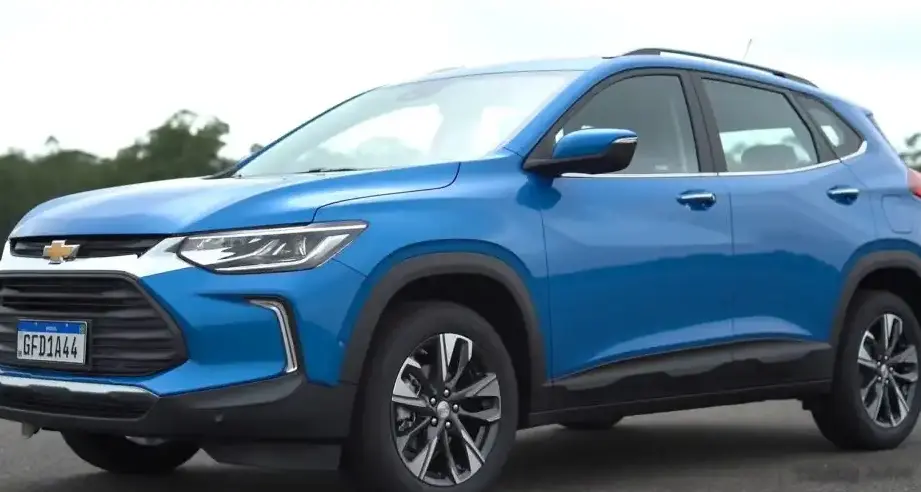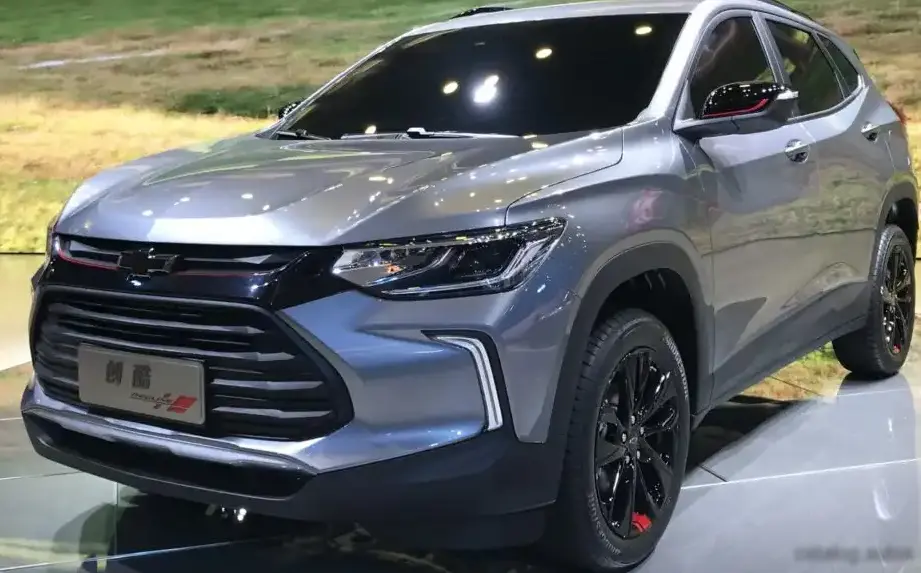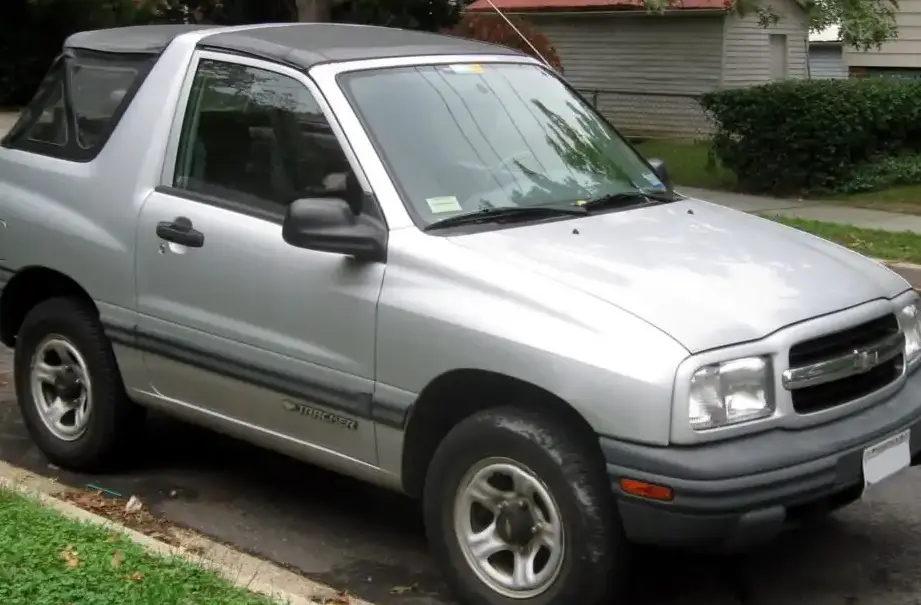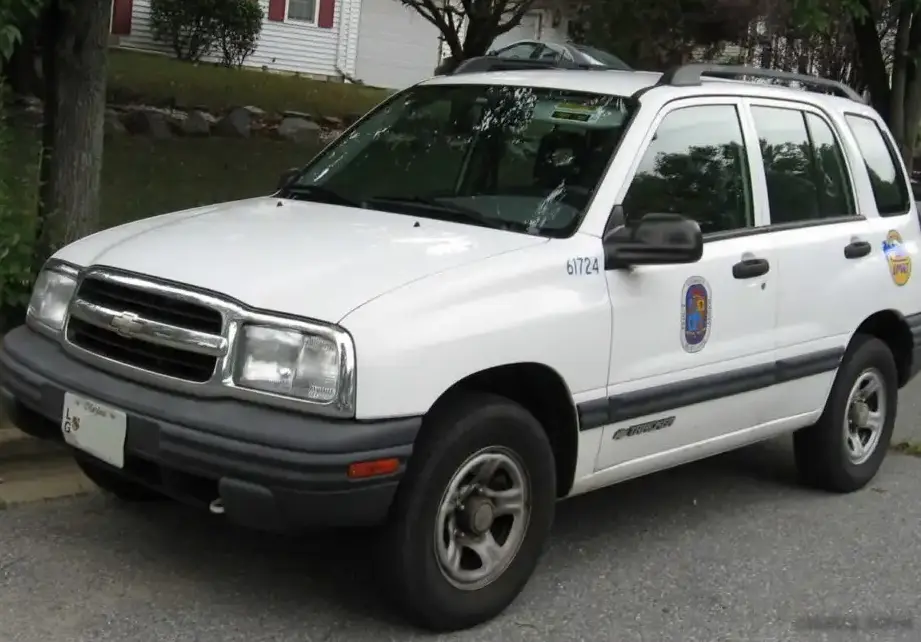
The Chevrolet Tracker II 2.0 i 16V, produced between 1998 and 2002, represented a substantial update to Chevrolet’s entry-level SUV offering. Positioned as a compact and affordable sport utility vehicle, the Tracker II was primarily aimed at buyers seeking a versatile vehicle for both urban commuting and light off-road capability. Built upon the GM S-10/Blazer platform, it shared many components with its pickup truck sibling. This particular 2.0-liter, 16-valve variant occupied a mid-range position within the Tracker II lineup, offering a balance between performance and fuel economy, slotting above the base 1.6L engine and below potential special editions or optional upgrades. The Tracker II was sold primarily in North and South America, offering a relatively inexpensive SUV option in a growing market segment.
Technical Specifications
| Brand | Chevrolet |
| Model | Tracker |
| Generation | Tracker II |
| Type (Engine) | 2.0 i 16V (129 Hp) |
| Start of production | 1998 |
| End of production | 2002 |
| Powertrain Architecture | Internal Combustion engine |
| Body type | SUV |
| Seats | 5 |
| Doors | 5 |
| Fuel consumption (urban) | 14 l/100 km (16.8 US mpg) |
| Fuel consumption (extra urban) | 8 l/100 km (29.4 US mpg) |
| Fuel Type | Petrol (Gasoline) |
| Maximum speed | 150 km/h (93.21 mph) |
| Weight-to-power ratio | 10.5 kg/Hp |
| Weight-to-torque ratio | 7.4 kg/Nm |
| Power | 129 Hp @ 6000 rpm |
| Power per litre | 64.7 Hp/l |
| Torque | 182 Nm @ 3000 rpm (134.24 lb.-ft. @ 3000 rpm) |
| Engine layout | Front, Longitudinal |
| Engine Model/Code | J20A |
| Engine displacement | 1995 cm3 (121.74 cu. in.) |
| Number of cylinders | 4 |
| Engine configuration | Inline |
| Cylinder Bore | 84 mm (3.31 in.) |
| Piston Stroke | 90 mm (3.54 in.) |
| Compression ratio | 9.5:1 |
| Number of valves per cylinder | 4 |
| Fuel injection system | Multi-port manifold injection |
| Engine aspiration | Naturally aspirated engine |
| Valvetrain | OHC |
| Engine oil capacity | 5.2 l (5.49 US qt | 4.58 UK qt) |
| Coolant | 6.5 l (6.87 US qt | 5.72 UK qt) |
| Kerb Weight | 1355 kg (2987.26 lbs.) |
| Trunk (boot) space – minimum | 575 l (20.31 cu. ft.) |
| Trunk (boot) space – maximum | 985 l (34.78 cu. ft.) |
| Fuel tank capacity | 56 l (14.79 US gal | 12.32 UK gal) |
| Length | 4060 mm (159.84 in.) |
| Width | 1695 mm (66.73 in.) |
| Height | 1690 mm (66.54 in.) |
| Wheelbase | 2480 mm (97.64 in.) |
| Front track | 1455 mm (57.28 in.) |
| Rear (Back) track | 1460 mm (57.48 in.) |
| Drivetrain Architecture | Rear wheel drive |
| Number of gears and type of gearbox | 5 gears, manual transmission |
| Front suspension | Spring Strut |
| Rear suspension | Coil spring |
| Front brakes | Ventilated discs |
| Rear brakes | Drum |
| Assisting systems | ABS (Anti-lock braking system) |
| Steering type | Worm-reduction unit |
| Power steering | Hydraulic Steering |
| Tires size | 195/75 R15 |
Powertrain & Engine Architecture
The heart of the Tracker II 2.0 i 16V is the J20A inline-four cylinder engine. This engine, a member of the General Motors Family II engine family, features a cast iron block and an aluminum cylinder head. The 16-valve configuration, achieved through dual overhead camshafts (DOHC), contributes to improved breathing and higher engine speeds. Fuel delivery is managed by a multi-port fuel injection system, providing precise fuel metering for optimal combustion. The engine produces 129 horsepower at 6000 rpm and 182 Nm (134 lb-ft) of torque at 3000 rpm. The five-speed manual transmission was standard, offering a relatively direct connection between the engine and the rear wheels. The transmission’s gear ratios were tuned for a balance of acceleration and fuel efficiency, though it wasn’t particularly sporty in its gearing.
Driving Characteristics
The 2.0-liter engine provided adequate, though not exhilarating, performance for the Tracker II. Acceleration was reasonable for everyday driving, but the vehicle felt somewhat sluggish when fully loaded or attempting to pass on the highway. The rear-wheel-drive configuration offered a more traditional driving experience compared to front-wheel-drive SUVs, providing a slightly more balanced feel. The manual transmission allowed for greater driver control, but the shift quality was often described as notchy. Compared to the base 1.6L engine, the 2.0L offered a noticeable improvement in power and responsiveness. However, it didn’t match the performance of larger SUVs or those equipped with more powerful engines.
Equipment & Trim Levels
The Tracker II 2.0 i 16V typically came standard with features such as air conditioning, power steering, and an AM/FM radio. Interior upholstery was typically cloth, with a relatively basic dashboard layout. Optional extras included power windows and locks, a CD player, and upgraded sound systems. Higher trim levels might have offered features like alloy wheels and a sunroof. The interior was functional and durable, prioritizing practicality over luxury.
Chassis & Braking
The Tracker II utilized a body-on-frame construction, contributing to its ruggedness and off-road capability. The front suspension consisted of a spring strut setup, while the rear employed a coil spring arrangement. Front brakes were ventilated discs, providing adequate stopping power, while the rear brakes were drums. An anti-lock braking system (ABS) was often included as standard equipment, enhancing safety. The rear-wheel-drive layout and relatively short wheelbase made the Tracker II reasonably maneuverable, but also susceptible to oversteer in slippery conditions.
Market Reception & Comparison
The Chevrolet Tracker II 2.0 i 16V was generally well-received as an affordable and practical SUV. Critics praised its versatility and relatively low price point. However, some reviewers noted its basic interior and somewhat unrefined driving experience. Compared to other SUVs in its class, such as the Honda CR-V or Toyota RAV4, the Tracker II offered less refinement and a lower level of standard equipment. However, it often undercut those competitors in price. Fuel economy was considered average for the time, with the 2.0L engine offering a slight improvement over the base 1.6L.
Legacy
The Chevrolet Tracker II, including the 2.0 i 16V variant, has developed a modest following among enthusiasts and budget-minded buyers. The J20A engine is generally considered reliable, though regular maintenance is crucial to prevent issues. Parts availability is generally good, thanks to the Tracker II’s shared components with other GM vehicles. Today, these vehicles are often found as affordable transportation or as project vehicles for off-road modifications. While not a particularly collectible vehicle, the Tracker II represents a significant chapter in Chevrolet’s SUV history, offering a glimpse into a time when compact and affordable SUVs were gaining popularity.