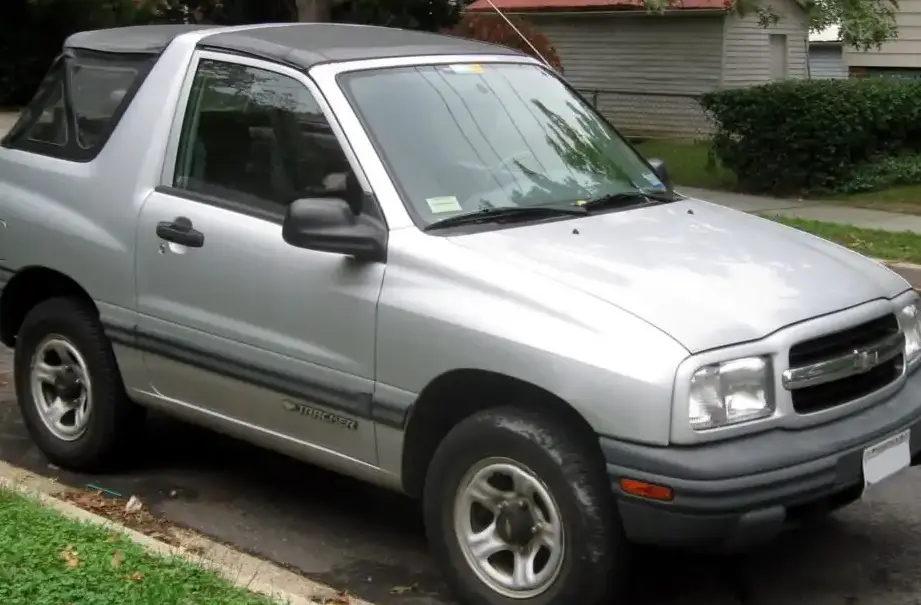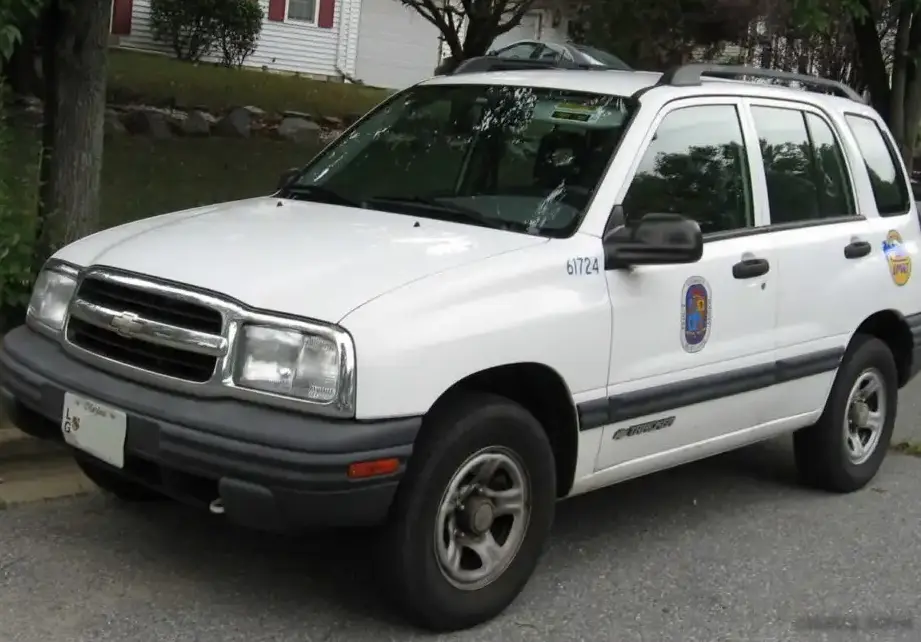
The Chevrolet Tracker II 2.0 i 16V 4WD, produced from 1998 to 2002, represented a significant update to Chevrolet’s entry-level SUV offering in North America. Built upon the GM S-10/Blazer platform, the Tracker II aimed to provide affordable four-wheel drive capability and compact dimensions. This particular variant, equipped with the 2.0-liter inline-four engine and a five-speed manual transmission, occupied a middle ground within the Tracker II lineup, offering a balance between performance and fuel economy. It was positioned above the base models and below the more powerful, though less common, options.
Technical Specifications
| Brand | Chevrolet |
| Model | Tracker |
| Generation | Tracker II |
| Type (Engine) | 2.0 i 16V 4WD (122 Hp) |
| Start of production | 1998 |
| End of production | 2002 |
| Powertrain Architecture | Internal Combustion engine |
| Body type | SUV |
| Seats | 5 |
| Doors | 5 |
| Fuel consumption (urban) | 10.2 l/100 km (23.1 US mpg) |
| Fuel consumption (extra urban) | 9.4 l/100 km (25 US mpg) |
| Fuel Type | Petrol (Gasoline) |
| Acceleration 0 – 100 km/h | 12.5 sec |
| Acceleration 0 – 62 mph | 12.5 sec |
| Acceleration 0 – 60 mph | 11.9 sec |
| Maximum speed | 155 km/h (96.31 mph) |
| Weight-to-power ratio | 11.4 kg/Hp |
| Weight-to-torque ratio | 7.6 kg/Nm |
| Power | 122 Hp @ 6000 rpm |
| Torque | 182 Nm @ 3000 rpm (134.24 lb.-ft. @ 3000 rpm) |
| Engine layout | Front, Longitudinal |
| Engine Model/Code | J20A |
| Engine displacement | 1995 cm3 (121.74 cu. in.) |
| Number of cylinders | 4 |
| Engine configuration | Inline |
| Cylinder Bore | 84 mm (3.31 in.) |
| Piston Stroke | 90 mm (3.54 in.) |
| Compression ratio | 9.5:1 |
| Number of valves per cylinder | 4 |
| Fuel injection system | Multi-port manifold injection |
| Engine aspiration | Naturally aspirated |
| Valvetrain | OHC |
| Engine oil capacity | 5.2 l (5.49 US qt | 4.58 UK qt) |
| Coolant capacity | 6.5 l (6.87 US qt | 5.72 UK qt) |
| Kerb Weight | 1390 kg (3064.43 lbs.) |
| Max. weight | 1780 kg (3924.23 lbs.) |
| Max load | 390 kg (859.8 lbs.) |
| Trunk (boot) space – minimum | 575 l (20.31 cu. ft.) |
| Trunk (boot) space – maximum | 1265 l (44.67 cu. ft.) |
| Fuel tank capacity | 66 l (17.44 US gal | 14.52 UK gal) |
| Length | 4059 mm (159.8 in.) |
| Width | 1694 mm (66.69 in.) |
| Height | 1689 mm (66.5 in.) |
| Wheelbase | 2479 mm (97.6 in.) |
| Front track | 1460 mm (57.48 in.) |
| Rear track | 1460 mm (57.48 in.) |
| Drive wheel | All wheel drive (4×4) |
| Number of gears | 5 |
| Gearbox type | Manual transmission |
| Front suspension | Spring Strut |
| Rear suspension | Coil spring |
| Front brakes | Ventilated discs |
| Rear brakes | Drum |
| Assisting systems | ABS (Anti-lock braking system) |
| Steering type | Worm-reduction unit |
| Power steering | Hydraulic |
| Tires size | 205/75 R15 |
Powertrain & Engine Architecture
The heart of the Tracker II 2.0 i 16V was the J20A engine, a 1.995-liter inline-four cylinder gasoline engine. This engine was part of the GM Family II series, known for its relatively simple design and durability. It featured a single overhead camshaft (SOHC) operating four valves per cylinder (16V), and utilized multi-port fuel injection for precise fuel delivery. The engine produced 122 horsepower at 6000 rpm and 182 Nm (134 lb-ft) of torque at 3000 rpm. The five-speed manual transmission provided a reasonably direct connection to the engine, offering drivers more control compared to the optional four-speed automatic. The 4WD system was a part-time setup, typically engaging the rear wheels when traction was needed, enhancing off-road capability for its class.
Driving Characteristics
The 2.0-liter engine and manual transmission combination in the Tracker II provided adequate, though not exhilarating, performance. Acceleration from 0-60 mph took around 11.9 seconds, and top speed was limited to 155 km/h (96 mph). The gear ratios were tuned for everyday driving, prioritizing fuel economy and usability over outright speed. Compared to the base 1.6-liter engine, the 2.0-liter offered a noticeable improvement in power and responsiveness, particularly when fully loaded or tackling inclines. While not as sporty as some competitors, the Tracker II 2.0 i 4WD offered a comfortable ride and predictable handling, making it a practical choice for daily commuting and light off-road adventures.
Equipment & Trim Levels
The Tracker II 2.0 i 16V 4WD typically came standard with features like air conditioning, power steering, and an AM/FM radio. Interior upholstery was generally cloth, with a durable plastic dashboard and trim. Optional extras included a CD player, upgraded sound system, and power windows and locks. The 4WD system was a key selling point, and often bundled with other convenience features. Trim levels varied slightly depending on the year and region, but generally focused on adding cosmetic enhancements and comfort features rather than significant performance upgrades.
Chassis & Braking
The Tracker II utilized a body-on-frame construction, providing a robust and durable chassis. Front suspension consisted of a MacPherson strut setup, while the rear employed a coil spring arrangement. Braking duties were handled by ventilated discs at the front and drum brakes at the rear. ABS (Anti-lock Braking System) was standard, enhancing safety and control during emergency braking situations. The relatively lightweight construction of the Tracker II helped to offset the limitations of the drum brakes in the rear, providing adequate stopping power for its intended use.
Market Reception & Comparison
The Chevrolet Tracker II 2.0 i 16V 4WD was generally well-received as an affordable and capable small SUV. Critics praised its value for money, spacious interior for its size, and the added security of four-wheel drive. However, some reviewers noted the engine’s lack of refinement and the somewhat basic interior appointments. Compared to other trims, the 2.0-liter offered a significant performance advantage over the base 1.6-liter, while remaining more affordable than potential upgrades. Fuel economy was respectable for its class, averaging around 23-25 mpg in mixed driving conditions.
Legacy
The Chevrolet Tracker II, particularly the 2.0-liter 4WD variant, has developed a reputation for reliability and durability. The J20A engine is known to be relatively trouble-free with proper maintenance. Today, these vehicles are often found in the used car market at very affordable prices. While they may not offer the modern features and refinement of newer SUVs, they remain a practical and capable option for those seeking a budget-friendly four-wheel drive vehicle. Parts availability is generally good, and the simple mechanical design makes them relatively easy to maintain and repair. The Tracker II represents a significant chapter in Chevrolet’s history, offering a blend of affordability, practicality, and off-road capability that appealed to a wide range of buyers.