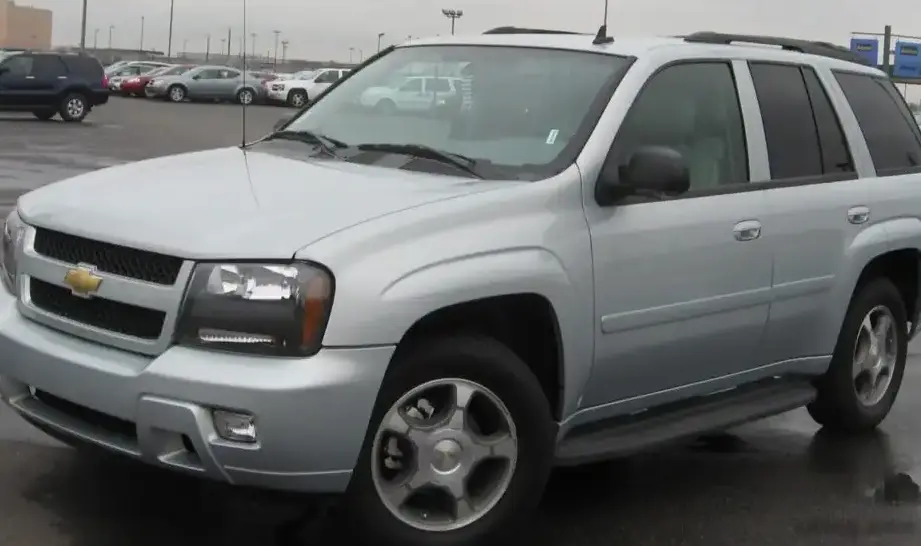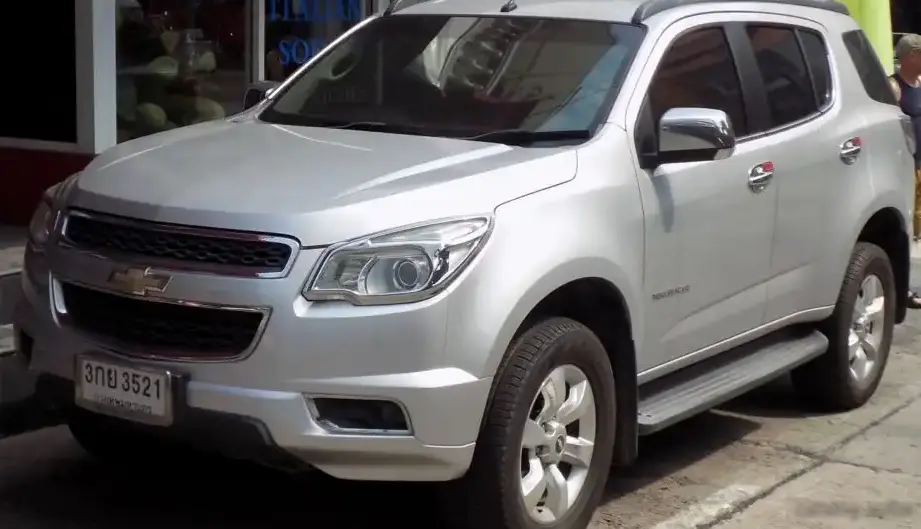
The Chevrolet Trailblazer II, specifically the 3.6-liter V6 variant paired with a six-speed automatic transmission, was a mid-size SUV produced from 2012 to 2016. Positioned as a body-on-frame SUV, it represented Chevrolet’s entry into a segment dominated by the Toyota 4Runner and Jeep Grand Cherokee, primarily targeting markets outside of North America where larger SUVs remained popular. This particular configuration, producing 236 horsepower, served as a mainstream offering within the Trailblazer II lineup, slotting between the base diesel models and potential higher-trim level options depending on the specific market.
Technical Specifications
| Brand | Chevrolet |
| Model | Trailblazer |
| Generation | Trailblazer II |
| Type (Engine) | 3.6 V6 (236 Hp) Automatic |
| Start of production | 2012 |
| End of production | 2016 |
| Powertrain Architecture | Internal Combustion engine |
| Body type | SUV |
| Seats | 7 |
| Doors | 5 |
| Fuel consumption (combined) | 12.2 l/100 km (19.3 US mpg, 23.2 UK mpg, 8.2 km/l) |
| Fuel Type | Petrol (Gasoline) |
| Weight-to-power ratio | 10.9 kg/Hp, 91.4 Hp/tonne |
| Weight-to-torque ratio | 7.9 kg/Nm, 127.4 Nm/tonne |
| Power | 236 Hp @ 6500 rpm |
| Power per litre | 66.2 Hp/l |
| Torque | 329 Nm @ 2800 rpm (242.66 lb.-ft. @ 2800 rpm) |
| Engine layout | Front, Longitudinal |
| Engine Model/Code | LFX |
| Engine displacement | 3564 cm3 (217.49 cu. in.) |
| Number of cylinders | 6 |
| Engine configuration | V-engine |
| Compression ratio | 10.2:1 |
| Number of valves per cylinder | 4 |
| Fuel injection system | Multi-port manifold injection |
| Engine aspiration | Naturally aspirated engine |
| Valvetrain | DOHC, VVT |
| Kerb Weight | 2583 kg (5694.54 lbs.) |
| Trunk (boot) space – minimum | 235 l (8.3 cu. ft.) |
| Trunk (boot) space – maximum | 1830 l (64.63 cu. ft.) |
| Fuel tank capacity | 76 l (20.08 US gal | 16.72 UK gal) |
| Permitted trailer load with brakes (12%) | 728 kg (1604.97 lbs.) |
| Length | 4878 mm (192.05 in.) |
| Width | 1902 mm (74.88 in.) |
| Width including mirrors | 2132 mm (83.94 in.) |
| Height | 1848 mm (72.76 in.) |
| Wheelbase | 2845 mm (112.01 in.) |
| Front track | 1570 mm (61.81 in.) |
| Rear (Back) track | 1588 mm (62.52 in.) |
| Front overhang | 948 mm (37.32 in.) |
| Rear overhang | 1085 mm (42.72 in.) |
| Ride height (ground clearance) | 239-252 mm (9.41 – 9.92 in.) |
| Approach angle | 31-32° |
| Departure angle | 22° |
| Ramp-over (brakeover) angle | 22° |
| Drivetrain Architecture | Rear wheel drive |
| Number of gears and type of gearbox | 6 gears, automatic transmission |
| Front suspension | Double wishbone |
| Rear suspension | Independent multi-link suspension |
| Front brakes | Ventilated discs |
| Rear brakes | Disc |
| Assisting systems | ABS (Anti-lock braking system) |
| Steering type | Steering rack and pinion |
| Power steering | Hydraulic Steering |
| Tires size | 245/70 R16; 265/60 R18 |
| Wheel rims size | 6.5J x 16; 7.5J x 18 |
INTRODUCTION
The Chevrolet Trailblazer II, launched in 2012, was a significant departure from the earlier, smaller Trailblazer model. Built on a body-on-frame chassis, it was designed to appeal to customers in developing markets – particularly South America, Asia-Pacific, and parts of Africa – where robust SUVs capable of handling rough terrain and carrying substantial loads were in high demand. The 3.6-liter V6 engine, coupled with a six-speed automatic transmission, represented a mid-range offering, balancing performance with fuel efficiency and affordability. It was a key component of Chevrolet’s strategy to offer a versatile and capable SUV to a broad customer base.
Powertrain & Engine Architecture
The heart of this Trailblazer variant is the LFX 3.6-liter V6 engine. This engine is a naturally aspirated, 60-degree V6 featuring dual overhead camshafts (DOHC) and variable valve timing (VVT) on both intake and exhaust valves. The LFX utilizes multi-port fuel injection, delivering fuel directly into the intake ports. The engine produces 236 horsepower at 6500 rpm and 242.66 lb-ft of torque at 2800 rpm. The six-speed automatic transmission (likely a 6L48 or similar GM unit) was chosen for its balance of smoothness, efficiency, and durability. This transmission features electronically controlled shifting and overdrive capabilities. The longitudinal engine layout, coupled with rear-wheel drive, provided a traditional SUV driving experience.
Driving Characteristics
The 3.6L V6 automatic Trailblazer II offered a comfortable and capable driving experience, though it wasn’t designed for outright speed. Acceleration was adequate for everyday driving and highway merging, but it lacked the punch of some competitors with larger displacement engines or forced induction. The automatic transmission generally shifted smoothly, but could sometimes feel hesitant during quick acceleration. The gear ratios were tuned for a balance of fuel economy and towing capacity. Compared to manual transmission versions (where available) or diesel-powered Trailblazers, this variant prioritized ease of use and refinement over ultimate performance or fuel savings. The rear-wheel-drive configuration provided a more traditional SUV feel, but also meant it wasn’t as capable in low-traction conditions as four-wheel-drive models.
Equipment & Trim Levels
The standard equipment level for the 3.6L V6 automatic Trailblazer II varied depending on the specific market. Generally, it included features such as air conditioning, power windows and locks, a basic audio system, and standard safety equipment like ABS and airbags. Higher trim levels added features like leather upholstery, alloy wheels, a more advanced audio system with touchscreen display, rear parking sensors, and a sunroof. Interior upholstery typically consisted of cloth or leatherette, with plastic trim accents. Dashboard configurations were relatively straightforward, prioritizing functionality over luxury.
Chassis & Braking
The Trailblazer II utilized a robust body-on-frame chassis, providing a solid foundation for off-road capability and towing. The front suspension featured a double wishbone design, while the rear suspension employed an independent multi-link setup. This combination aimed to provide a comfortable ride while maintaining good handling characteristics. Braking duties were handled by ventilated discs at the front and solid discs at the rear. The hydraulic power steering provided a reasonably direct steering feel. Tire sizes varied depending on the trim level, ranging from 245/70 R16 to 265/60 R18.
Market Reception & Comparison
The Chevrolet Trailblazer II, and specifically the 3.6L V6 automatic variant, received mixed reviews. Critics generally praised its spacious interior, comfortable ride, and robust construction. However, some criticized its fuel economy, which was relatively high compared to more modern crossover SUVs. Compared to the diesel-powered Trailblazers, the V6 offered smoother and quieter operation but lacked the low-end torque and fuel efficiency of the diesel. Against competitors like the Toyota 4Runner and Jeep Grand Cherokee, the Trailblazer II offered a more affordable price point but often lacked the same level of refinement and brand prestige.
Legacy
The Chevrolet Trailblazer II, including the 3.6L V6 automatic version, has established a reputation for reasonable reliability, particularly the powertrain. While not without its quirks, the LFX V6 engine is generally considered a durable and dependable unit. In the used car market, these Trailblazers represent a relatively affordable option for those seeking a spacious, capable SUV. Maintenance costs are generally moderate, and parts availability is typically good. However, potential buyers should be aware of potential issues with the automatic transmission and the possibility of corrosion in areas with harsh winters. The Trailblazer II remains a popular choice in many developing markets, where its ruggedness and practicality continue to be valued.