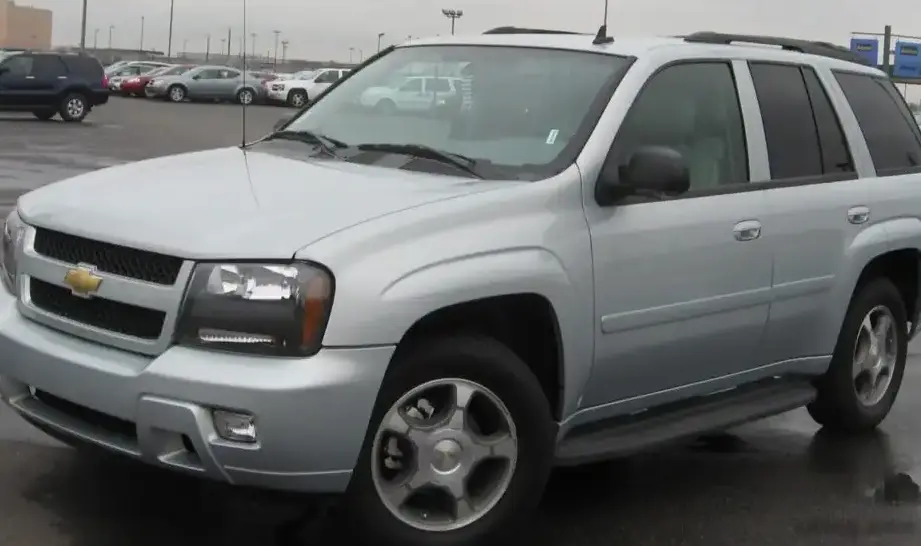
The Chevrolet Trailblazer III, launched in March 2020 and produced through February 2023, represents a significant shift in Chevrolet’s compact SUV offerings. This generation, primarily aimed at the North American and emerging markets, moved away from the body-on-frame construction of its predecessors to a more modern, unibody platform. The 1.2 ECOTEC Turbo (137 Hp) CVT variant occupied the entry-level position in the Trailblazer III lineup, offering a fuel-efficient and affordable option for buyers seeking a small SUV. It was positioned below the 1.3L and 1.5L turbocharged engine options, catering to a segment prioritizing economy over outright performance.
Technical Specifications
| Brand | Chevrolet |
| Model | Trailblazer |
| Generation | Trailblazer III |
| Type (Engine) | 1.2 ECOTEC Turbo (137 Hp) CVT |
| Start of production | March, 2020 |
| End of production | February, 2023 |
| Powertrain Architecture | Internal Combustion engine |
| Body type | SUV |
| Seats | 5 |
| Doors | 5 |
| Fuel consumption (urban) | 8.4 l/100 km (28 US mpg, 33.6 UK mpg, 11.9 km/l) |
| Fuel consumption (extra urban) | 7.6 l/100 km (30.9 US mpg, 37.2 UK mpg, 13.2 km/l) |
| Fuel consumption (combined) | 8.1 l/100 km (29 US mpg, 34.9 UK mpg, 12.3 km/l) |
| Fuel Type | Petrol (Gasoline) |
| Weight-to-power ratio | 9.9 kg/Hp, 100.9 Hp/tonne |
| Weight-to-torque ratio | 6.2 kg/Nm, 161.3 Nm/tonne |
| Power | 137 Hp @ 5000 rpm |
| Torque | 219 Nm @ 2500 rpm (161.53 lb.-ft. @ 2500 rpm) |
| Engine layout | Front, Transverse |
| Engine Model/Code | LIH |
| Number of cylinders | 3 |
| Engine configuration | Inline |
| Cylinder Bore | 75 mm (2.95 in.) |
| Piston Stroke | 90 mm (3.54 in.) |
| Fuel injection system | Direct injection |
| Engine aspiration | Turbocharger, Intercooler |
| Valvetrain | DOHC, VVT |
| Engine oil capacity | 4 l (4.23 US qt | 3.52 UK qt) |
| Coolant capacity | 6.3 l (6.66 US qt | 5.54 UK qt) |
| Kerb Weight | 1358-1391 kg (2993.88 – 3066.63 lbs.) |
| Max. weight | 1900 kg (4188.78 lbs.) |
| Max load | 509-542 kg (1122.15 – 1194.91 lbs.) |
| Trunk (boot) space – minimum | 716 l (25.29 cu. ft.) |
| Trunk (boot) space – maximum | 1540 l (54.38 cu. ft.) |
| Fuel tank capacity | 50 l (13.21 US gal | 11 UK gal) |
| Permitted trailer load with brakes (12%) | 495 kg (1091.29 lbs.) |
| Length | 4408 mm (173.54 in.) |
| Width | 1808 mm (71.18 in.) |
| Height | 1646-1656 mm (64.8 – 65.2 in.) |
| Wheelbase | 2640 mm (103.94 in.) |
| Front track | 1546-1554 mm (60.87 – 61.18 in.) |
| Rear (Back) track | 1557-1562 mm (61.3 – 61.5 in.) |
| Ride height (ground clearance) | 191 mm (7.52 in.) |
| Minimum turning circle | 11.39 m (37.37 ft.) |
| Drivetrain Architecture | Front wheel drive |
| Number of gears and type of gearbox | automatic transmission CVT |
| Front suspension | Independent type McPherson |
| Rear suspension | Torsion |
| Front brakes | Disc |
| Rear brakes | Disc |
| Assisting systems | ABS (Anti-lock braking system) |
| Steering type | Steering rack and pinion |
| Power steering | Electric Steering |
| Tires size | 215/65 R16; 225/60 R17; 225/55 R18 |
| Wheel rims size | 7J x 16; 7.5J x 17; 7.5J x 18 |
Powertrain & Engine Architecture
The heart of this Trailblazer variant is the LIH 1.2-liter inline-three cylinder ECOTEC turbocharged engine. This engine utilizes direct fuel injection and a variable valve timing (VVT) system to optimize both power delivery and fuel efficiency. The turbocharger, coupled with an intercooler, helps to mitigate turbo lag and provide a broader torque curve. The engine produces 137 horsepower at 5000 rpm and 219 Nm (161.53 lb-ft) of torque at 2500 rpm. This engine is paired exclusively with a continuously variable transmission (CVT), designed to maximize fuel economy and provide smooth acceleration. The CVT lacks traditional gear steps, instead using a belt-and-pulley system to offer an infinite number of gear ratios within its operating range.
Driving Characteristics
The 1.2L Turbo/CVT combination delivers adequate performance for everyday driving situations. Acceleration is not brisk, but sufficient for merging onto highways and navigating city streets. The CVT, while prioritizing fuel efficiency, can sometimes feel less responsive than a traditional automatic transmission, exhibiting a “rubber band” effect during hard acceleration. Compared to the 1.3L and 1.5L turbocharged options, the 1.2L provides a more economical driving experience, but at the expense of outright power. The CVT’s programming is tuned for efficiency, holding lower “gear ratios” for longer periods to maintain optimal engine speed. The front-wheel-drive configuration contributes to a lighter vehicle weight, further aiding fuel economy.
Equipment & Trim Levels
The base-level Trailblazer III 1.2 ECOTEC Turbo typically included standard features such as air conditioning, a basic infotainment system with a touchscreen display (usually 7 inches), Bluetooth connectivity, and power windows and locks. Safety features included ABS, stability control, and multiple airbags. Higher trim levels, available as optional upgrades, added features like a larger touchscreen, Apple CarPlay and Android Auto compatibility, a rearview camera, and upgraded interior materials. Interior upholstery was typically cloth, with options for leatherette available on higher trims. Dashboard configurations were relatively simple and functional, prioritizing ease of use over elaborate design.
Chassis & Braking
The Trailblazer III utilizes a front-wheel-drive platform with an independent McPherson strut suspension in the front and a torsion beam suspension in the rear. This setup provides a comfortable ride quality, suitable for everyday commuting. Front and rear disc brakes provide adequate stopping power, assisted by an Anti-lock Braking System (ABS). The suspension tuning is geared towards comfort rather than sporty handling. Stabilizer bars are present, but are relatively thin compared to those found on higher-performance trims.
Market Reception & Comparison
The 1.2L Turbo CVT Trailblazer was generally well-received as an affordable and fuel-efficient option within the compact SUV segment. Critics noted its adequate performance for urban driving, but pointed out its limitations when fully loaded or tackling steep inclines. Compared to the 1.3L and 1.5L turbocharged variants, the 1.2L offered significantly better fuel economy, but lacked the same level of power and responsiveness. Reliability reports have been generally positive, with the 1.2L ECOTEC engine proving to be a relatively durable unit. However, some owners have reported minor issues with the CVT transmission, such as occasional hesitation or shuddering.
Legacy
The Chevrolet Trailblazer III 1.2 ECOTEC Turbo CVT represents a key step in Chevrolet’s strategy to offer a diverse range of compact SUVs catering to different budgets and priorities. While not the most powerful or feature-rich variant, it provided an accessible entry point into the Trailblazer lineup. On the used car market, these models are often sought after by buyers prioritizing fuel economy and affordability. The 1.2L engine and CVT transmission, when properly maintained, have demonstrated reasonable long-term reliability, making this variant a viable option for budget-conscious consumers. Its continued presence in the used car market reflects its appeal as a practical and economical small SUV.