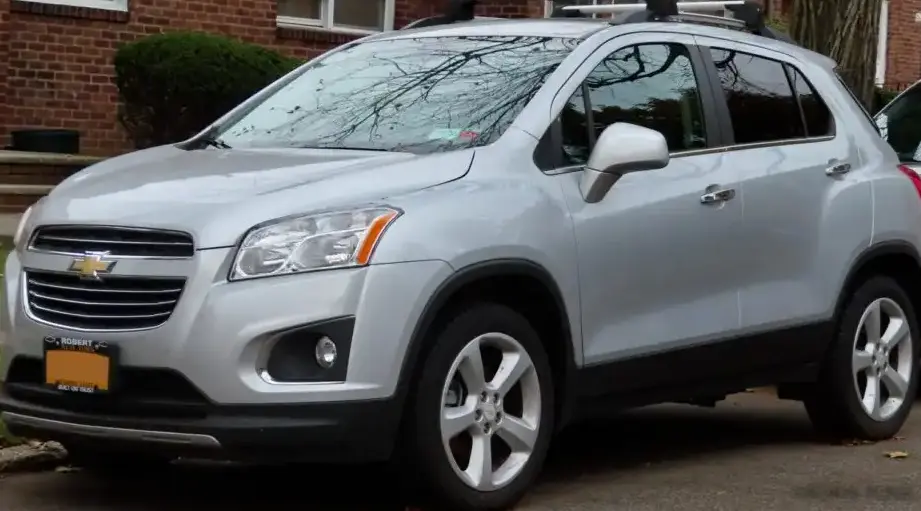
The Chevrolet Trax I 1.7D Automatic, produced between 2013 and 2017, represented Chevrolet’s entry into the burgeoning subcompact SUV market, particularly in Europe and other regions outside of North America. Positioned as a more affordable and fuel-efficient option within the Trax lineup, this variant utilized a 1.7-liter turbocharged diesel engine paired with a six-speed automatic transmission. It was built on the GM Gamma platform, shared with other small Chevrolet and Opel/Vauxhall models. The Trax aimed to provide a practical and versatile vehicle for urban drivers and small families, offering a higher seating position and increased cargo space compared to traditional hatchbacks.
Technical Specifications
| Brand | Chevrolet |
| Model | Trax |
| Generation | Trax I |
| Type (Engine) | 1.7D (130 Hp) Automatic |
| Start of production | 2013 |
| End of production | 2017 |
| Powertrain Architecture | Internal Combustion engine |
| Body type | SUV |
| Seats | 5 |
| Doors | 5 |
| Fuel consumption (urban) | 6.4 l/100 km (36.8 US mpg, 44.1 UK mpg, 15.6 km/l) |
| Fuel consumption (extra urban) | 4.6 l/100 km (51.1 US mpg, 61.4 UK mpg, 21.7 km/l) |
| Fuel consumption (combined) | 5.3 l/100 km (44.4 US mpg, 53.3 UK mpg, 18.9 km/l) |
| Fuel Type | Diesel |
| Acceleration 0 – 100 km/h | 10.5 sec |
| Acceleration 0 – 62 mph | 10.5 sec |
| Acceleration 0 – 60 mph | 10 sec |
| Maximum speed | 182 km/h (113.09 mph) |
| Emission standard | Euro 5 |
| Weight-to-power ratio | 10.7 kg/Hp, 93.7 Hp/tonne |
| Weight-to-torque ratio | 4.6 kg/Nm, 216.3 Nm/tonne |
| Power | 130 Hp @ 4000 rpm |
| Power per litre | 77.1 Hp/l |
| Torque | 300 Nm @ 2000 rpm (221.27 lb.-ft. @ 2000 rpm) |
| Engine layout | Front, Transverse |
| Engine Model/Code | LUD |
| Engine displacement | 1686 cm3 (102.89 cu. in.) |
| Number of cylinders | 4 |
| Engine configuration | Inline |
| Cylinder Bore | 79 mm (3.11 in.) |
| Piston Stroke | 86 mm (3.39 in.) |
| Compression ratio | 16.5:1 |
| Number of valves per cylinder | 4 |
| Fuel injection system | Diesel Commonrail |
| Engine aspiration | Turbocharger, Intercooler |
| Engine oil capacity | 5.4 l (5.71 US qt | 4.75 UK qt) |
| Coolant capacity | 7.1 l (7.5 US qt | 6.25 UK qt) |
| Kerb Weight | 1387 kg (3057.81 lbs.) |
| Max. weight | 1891 kg (4168.94 lbs.) |
| Max load | 504 kg (1111.13 lbs.) |
| Trunk (boot) space – minimum | 356 l (12.57 cu. ft.) |
| Fuel tank capacity | 52 l (13.74 US gal | 11.44 UK gal) |
| Length | 4248 mm (167.24 in.) |
| Width | 1776 mm (69.92 in.) |
| Height | 1674 mm (65.91 in.) |
| Wheelbase | 2555 mm (100.59 in.) |
| Front track | 1540 mm (60.63 in.) |
| Rear track | 1540 mm (60.63 in.) |
| Minimum turning circle | 10.9 m (35.76 ft.) |
| Drivetrain Architecture | Front wheel drive |
| Number of gears | 6 |
| Gearbox type | Automatic transmission |
| Front suspension | Independent type McPherson |
| Rear suspension | Torsion |
| Front brakes | Disc |
| Assisting systems | ABS (Anti-lock braking system) |
| Steering type | Steering rack and pinion |
| Power steering | Electric |
Powertrain & Engine Architecture
The heart of the Trax I 1.7D Automatic is the LUD engine, a 1.7-liter inline-four cylinder diesel engine. This engine is part of the A17DTE family, commonly found in various Opel, Vauxhall, and Chevrolet models. It features a common rail direct injection system, delivering fuel directly into the combustion chamber at extremely high pressure for improved efficiency and reduced emissions. A turbocharger with an intercooler is employed to boost power output and enhance torque. The engine utilizes a variable geometry turbocharger (VGT) to optimize performance across the rev range. The six-speed automatic transmission, sourced from Aisin, was chosen for its smooth operation and fuel efficiency. It features adaptive shift patterns, adjusting to driving conditions and driver input. While not a performance-oriented transmission, it provided a comfortable and convenient driving experience, particularly in urban environments.
Driving Characteristics
The 1.7D Automatic offered a balance between fuel economy and usability. With 130 horsepower and 300 Nm (221 lb-ft) of torque, acceleration was adequate for everyday driving, though not particularly brisk. The 0-60 mph time of around 10 seconds reflects this. The automatic transmission, while smooth, could sometimes feel hesitant during quick overtaking maneuvers. Compared to the manual transmission version of the same engine, the automatic offered less driver engagement but greater convenience. Higher-output engine options, such as the 1.4-liter turbocharged gasoline engine, provided significantly more performance but at the expense of fuel economy. The gear ratios were tuned for fuel efficiency, prioritizing lower engine speeds during cruising. This resulted in a relatively quiet cabin experience at highway speeds.
Equipment & Trim Levels
The Trax I 1.7D Automatic typically came with a reasonable level of standard equipment. This included air conditioning, power windows, power mirrors, a basic audio system with USB connectivity, and stability control. Higher trim levels, often denoted by names like “LS” or “LT,” added features such as alloy wheels, a more advanced infotainment system with a touchscreen display, rear parking sensors, and cruise control. Interior upholstery was typically cloth, with options for leatherette available on higher trims. Optional extras included a panoramic sunroof, heated front seats, and a rearview camera.
Chassis & Braking
The Trax I utilized a McPherson strut front suspension and a torsion beam rear suspension. This setup provided a comfortable ride quality, suitable for everyday driving. The torsion beam rear suspension, while cost-effective, wasn’t as sophisticated as a fully independent rear suspension, which was reserved for higher-spec models in some markets. Braking consisted of disc brakes on the front wheels and drum brakes on the rear wheels. Anti-lock Braking System (ABS) was standard. The steering was electrically assisted, providing light and easy steering feel, ideal for maneuvering in tight spaces.
Market Reception & Comparison
The Chevrolet Trax I 1.7D Automatic was generally well-received as a practical and affordable subcompact SUV. Critics praised its fuel efficiency and spacious interior for its size. However, some reviewers noted the engine could feel underpowered, particularly when fully loaded. Compared to competitors like the Nissan Juke, Peugeot 2008, and Renault Captur, the Trax offered a competitive price point and a generous amount of interior space. The diesel engine provided significantly better fuel economy than the gasoline alternatives, making it a popular choice for drivers covering long distances. Reliability was generally good, although some owners reported minor issues with the diesel particulate filter (DPF).
Legacy
The Chevrolet Trax I 1.7D Automatic has established itself as a reliable and economical used car option. The 1.7-liter diesel engine, when properly maintained, is known for its longevity. However, potential buyers should be aware of the potential for DPF issues, particularly if the vehicle has primarily been used for short trips. The automatic transmission has also proven to be relatively durable. Today, the Trax I 1.7D Automatic remains a popular choice for budget-conscious buyers seeking a practical and fuel-efficient small SUV.