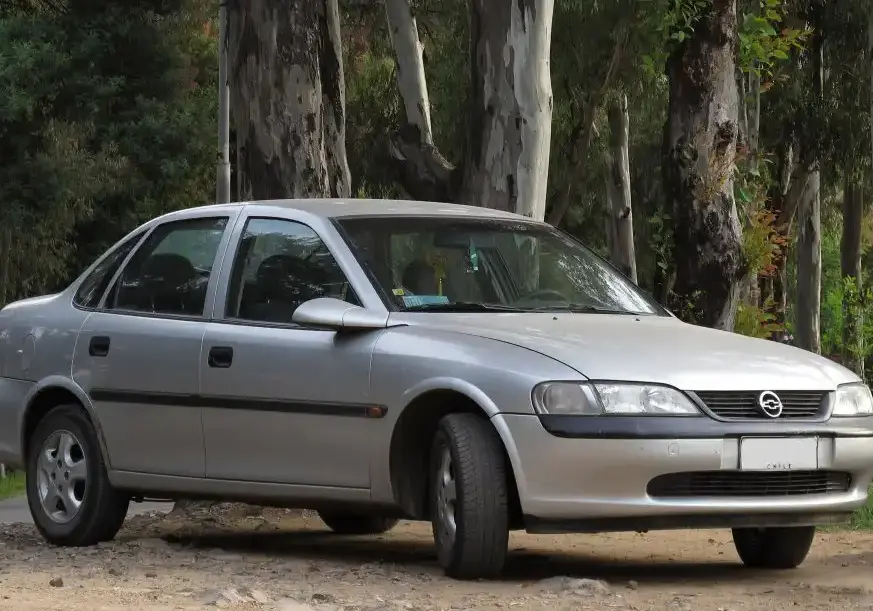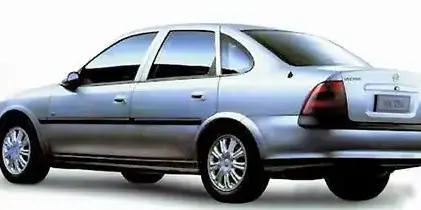
The Chevrolet Vectra, specifically the GM2900 series produced between 1998 and 2005, represented Chevrolet’s entry into the mid-size family sedan segment. The 2.2 i 16V (139 hp) Automatic variant occupied a middle ground within the Vectra lineup, offering a balance between performance and affordability. Positioned above the base models and below the more powerful V6 options, it aimed to appeal to buyers seeking a comfortable and reasonably equipped vehicle for daily commuting and family transportation. This generation Vectra was primarily sold in Europe and other international markets, representing Chevrolet’s attempt to establish a stronger foothold outside of North America.
Technical Specifications
| Brand | Chevrolet |
| Model | Vectra |
| Generation | Vectra (GM2900) |
| Type (Engine) | 2.2 i 16V (139 Hp) Automatic |
| Start of production | 1998 |
| End of production | 2005 |
| Powertrain Architecture | Internal Combustion engine |
| Body type | Sedan |
| Seats | 5 |
| Doors | 4 |
| Fuel consumption (urban) | 11.6 l/100 km (20.3 US mpg) |
| Fuel consumption (extra urban) | 7.3 l/100 km (32.2 US mpg) |
| Fuel Type | Petrol (Gasoline) |
| Acceleration 0 – 100 km/h | 12 sec |
| Acceleration 0 – 62 mph | 12 sec |
| Acceleration 0 – 60 mph | 11.4 sec |
| Maximum speed | 200 km/h (124.27 mph) |
| Weight-to-power ratio | 9.7 kg/Hp |
| Weight-to-torque ratio | 6.6 kg/Nm |
| Power | 139 Hp @ 5400 rpm |
| Torque | 203 Nm @ 2800 rpm (149.73 lb.-ft. @ 2800 rpm) |
| Engine layout | Front, Transverse |
| Engine Model/Code | C22SEL |
| Engine displacement | 2198 cm3 (134.13 cu. in.) |
| Number of cylinders | 4 |
| Engine configuration | Inline |
| Cylinder Bore | 86 mm (3.39 in.) |
| Piston Stroke | 94.6 mm (3.72 in.) |
| Compression ratio | 9.2:1 |
| Number of valves per cylinder | 4 |
| Fuel injection system | Multi-port manifold injection |
| Engine aspiration | Naturally aspirated engine |
| Valvetrain | DOHC |
| Engine oil capacity | 4.5 l (4.76 US qt | 3.96 UK qt) |
| Kerb Weight | 1345 kg (2965.22 lbs.) |
| Max. weight | 1865 kg (4111.62 lbs.) |
| Max load | 520 kg (1146.4 lbs.) |
| Trunk (boot) space – minimum | 500 l (17.66 cu. ft.) |
| Fuel tank capacity | 57 l (15.06 US gal | 12.54 UK gal) |
| Length | 4480 mm (176.38 in.) |
| Width | 1710 mm (67.32 in.) |
| Height | 1410 mm (55.51 in.) |
| Wheelbase | 2637 mm (103.82 in.) |
| Front track | 1485 mm (58.46 in.) |
| Rear (Back) track | 1470 mm (57.87 in.) |
| Drivetrain Architecture | The Internal combustion engine (ICE) drives the front wheels of the vehicle. |
| Drive wheel | Front wheel drive |
| Number of gears and type of gearbox | 4 gears, automatic transmission |
| Front suspension | Coil spring |
| Rear suspension | Coil spring |
| Front brakes | Disc |
| Rear brakes | Drum |
| Assisting systems | ABS (Anti-lock braking system) |
| Steering type | Steering rack and pinion |
| Power steering | Hydraulic Steering |
| Tires size | 195/65 R15 |
| Wheel rims size | 15 |
Powertrain & Engine Architecture
The heart of the Vectra 2.2 i Automatic was the C22SEL engine, a 2.2-liter inline-four cylinder powerplant. This engine featured a dual overhead camshaft (DOHC) valvetrain with four valves per cylinder, contributing to its relatively high output for its displacement. Fuel delivery was handled by a multi-port fuel injection system, optimizing combustion efficiency. The engine’s 9.2:1 compression ratio was a compromise between performance and the ability to run on readily available fuel grades. Paired with this engine was a four-speed automatic transmission, designed for smooth and convenient operation. While not a particularly advanced transmission by modern standards, it provided adequate shifting performance for everyday driving. The automatic transmission was chosen to appeal to a broader audience, prioritizing ease of use over the more engaging experience offered by a manual gearbox.
Driving Characteristics
The 139 horsepower and 149.73 lb-ft of torque produced by the 2.2-liter engine, when channeled through the four-speed automatic, resulted in a 0-60 mph time of around 11.4 seconds. This wasn’t a particularly quick time, even for the late 1990s and early 2000s, but it was sufficient for comfortable highway cruising and city driving. The automatic transmission’s gear ratios were tuned for fuel economy and smooth acceleration, rather than outright performance. Compared to the manual transmission versions of the 2.2L, the automatic offered less direct control and a slightly slower response. Higher-output Vectra variants, such as those equipped with the V6 engine, provided significantly more spirited acceleration. The 2.2L automatic was best suited for drivers who prioritized comfort and convenience over sporty handling.
Equipment & Trim Levels
The 2.2 i Automatic trim typically included features such as power windows, power door locks, air conditioning, and an AM/FM radio. Higher trim levels offered options like alloy wheels, a sunroof, upgraded upholstery, and a more sophisticated audio system. Interior upholstery was generally cloth, with leather options available as an upgrade. The dashboard layout was functional and straightforward, prioritizing usability over aesthetic flair. Optional extras could significantly enhance the vehicle’s comfort and convenience, but also increased the overall price.
Chassis & Braking
The Vectra GM2900 utilized a coil spring suspension system at both the front and rear, providing a comfortable ride quality. Front brakes were discs, offering adequate stopping power, while rear brakes were drums, a cost-saving measure common in this class of vehicle. Anti-lock Braking System (ABS) was standard, enhancing safety by preventing wheel lockup during hard braking. The chassis was designed to balance ride comfort with handling stability, but it wasn’t particularly sporty. Stabilizer bars were included to reduce body roll during cornering, but the overall handling characteristics were geared towards everyday driving rather than aggressive performance.
Market Reception & Comparison
The Vectra 2.2 i Automatic received mixed reviews from automotive critics. While praised for its comfortable ride and reasonable fuel economy (around 20-32 mpg), it was often criticized for its lack of performance and somewhat uninspired styling. Compared to other mid-size sedans available at the time, such as the Ford Mondeo and Volkswagen Passat, the Vectra offered a competitive price point but lacked the same level of refinement and driving engagement. The 2.2L automatic was generally considered a more sensible choice than the higher-output V6 models, offering a better balance between cost and fuel consumption. However, it was often overshadowed by the more popular manual transmission variants.
Legacy
The Chevrolet Vectra 2.2 i Automatic, while not a standout performer, proved to be a relatively reliable vehicle. The C22SEL engine, when properly maintained, could provide many years of service. Common issues included minor oil leaks and occasional problems with the automatic transmission. Today, these vehicles are relatively affordable on the used car market, making them an attractive option for budget-conscious buyers. However, finding well-maintained examples can be challenging, and potential buyers should be prepared for the possibility of age-related maintenance issues. The Vectra, in this configuration, represents a typical example of a late 1990s/early 2000s family sedan – practical, comfortable, and reasonably reliable, but lacking the excitement of more performance-oriented alternatives.