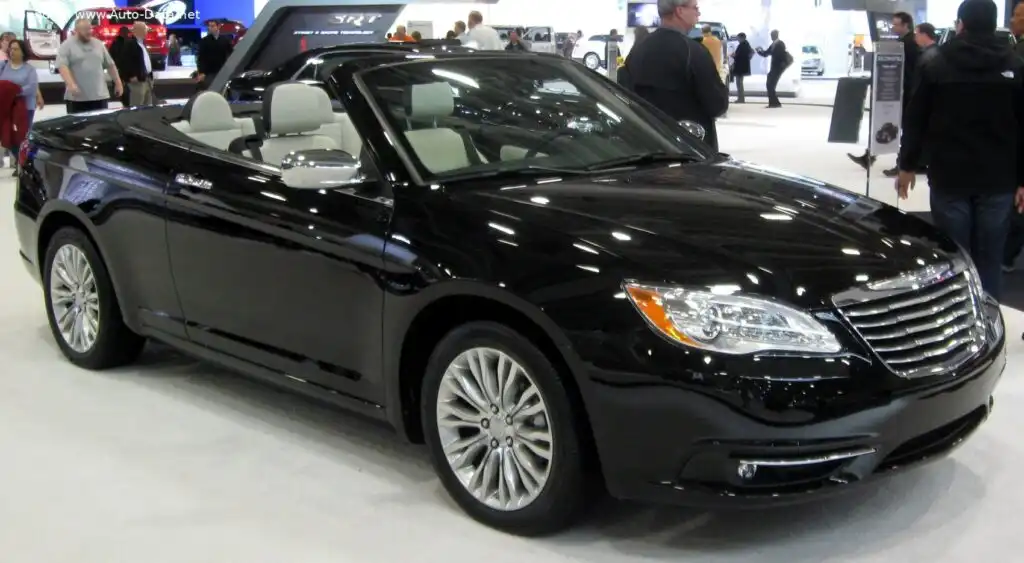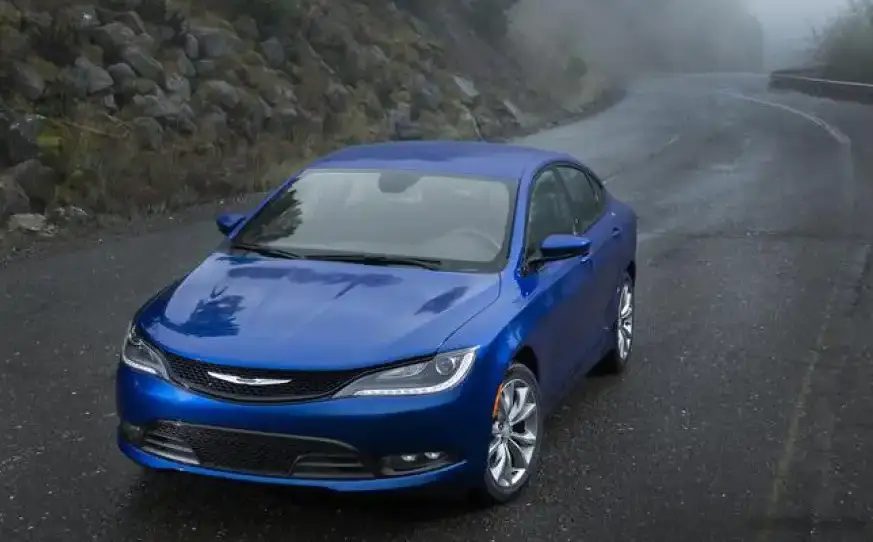
The Chrysler 200 II 2.4L (184 hp) Automatic Stop-Start represents a mid-cycle refresh of the Chrysler 200, produced for the 2015 through 2017 model years. Positioned as a mainstream mid-size sedan, the 200 aimed to compete with established rivals like the Toyota Camry, Honda Accord, and Ford Fusion. This particular variant, equipped with the 2.4-liter Tigershark engine and a nine-speed automatic transmission with Start-Stop technology, served as a key volume seller within the 200 lineup, offering a balance of fuel efficiency and acceptable performance for the average commuter. It sat between the base 184 hp engine and the more powerful 3.6L V6 options.
Technical Specifications
| Brand | Chrysler |
| Model | 200 |
| Generation | 200 II |
| Type (Engine) | 2.4 (184 Hp) Automatic Stop-Start |
| Start of production | 2015 |
| End of production | 2017 |
| Powertrain Architecture | Internal Combustion engine |
| Body type | Sedan |
| Seats | 5 |
| Doors | 4 |
| Fuel consumption (urban) | 10.2 l/100 km (23.1 US mpg) |
| Fuel consumption (extra urban) | 6.5 l/100 km (36.2 US mpg) |
| Fuel consumption (combined) | 8.4 l/100 km (28 US mpg) |
| Fuel Type | Petrol (Gasoline) |
| Weight-to-power ratio | 8.6 kg/Hp |
| Weight-to-torque ratio | 6.7 kg/Nm |
| Power | 184 Hp @ 6250 rpm |
| Power per litre | 78 Hp/l |
| Torque | 234 Nm @ 4600 rpm (172.59 lb.-ft. @ 4600 rpm) |
| Maximum engine speed | 6500 rpm |
| Engine layout | Front, Transverse |
| Engine Model/Code | ED6 |
| Engine displacement | 2360 cm3 (144.02 cu. in.) |
| Number of cylinders | 4 |
| Engine configuration | Inline |
| Cylinder Bore | 88 mm (3.46 in.) |
| Piston Stroke | 97 mm (3.82 in.) |
| Compression ratio | 10:1 |
| Number of valves per cylinder | 4 |
| Fuel injection system | Multi-port manifold injection |
| Engine aspiration | Naturally aspirated engine |
| Valvetrain | SOHC |
| Engine oil capacity | 5.2 l (5.49 US qt | 4.58 UK qt) |
| Coolant capacity | 6.8 l (7.19 US qt | 5.98 UK qt) |
| Kerb Weight | 1575 kg (3472.28 lbs.) |
| Max. weight | 2092 kg (4612.07 lbs.) |
| Max load | 517 kg (1139.79 lbs.) |
| Trunk (boot) space – minimum | 453 l (16 cu. ft.) |
| Fuel tank capacity | 60 l (15.85 US gal | 13.2 UK gal) |
| Length | 4884 mm (192.28 in.) |
| Width | 1871 mm (73.66 in.) |
| Height | 1491 mm (58.7 in.) |
| Wheelbase | 2742 mm (107.95 in.) |
| Front track | 1578 mm (62.13 in.) |
| Rear track | 1576 mm (62.05 in.) |
| Front overhang | 1039 mm (40.91 in.) |
| Rear overhang | 1103 mm (43.43 in.) |
| Ride height (ground clearance) | 147 mm (5.79 in.) |
| Drag coefficient (Cd) | 0.27 |
| Minimum turning circle | 12.13 m (39.8 ft.) |
| Drivetrain Architecture | Front wheel drive |
| Number of gears | 9 |
| Gearbox type | Automatic transmission |
| Front suspension | Independent type McPherson |
| Rear suspension | Independent multi-link suspension |
| Front brakes | Ventilated discs |
| Rear brakes | Disc |
| Steering type | Steering rack and pinion |
| Power steering | Electric Steering |
| Tires size | 215/55 R17 |
| Wheel rims size | 17 |
Powertrain & Engine Architecture
The heart of this 200 variant is the 2.4-liter “Tigershark” inline-four cylinder engine, designated as the ED6 engine code. This engine is a naturally aspirated powerplant featuring multi-point fuel injection and a single overhead camshaft (SOHC) valvetrain. The Tigershark engine was designed to offer a balance between fuel efficiency and adequate power. It utilizes a variable valve timing (VVT) system to optimize performance across the rev range. The engine’s 2360 cc displacement, combined with a 10:1 compression ratio, produces 184 horsepower at 6250 rpm and 172 lb-ft of torque at 4600 rpm. Paired with this engine is a ZF-sourced nine-speed automatic transmission. This transmission was a key feature, offering a wide range of gear ratios to improve both fuel economy and acceleration. The inclusion of a Start-Stop system further enhances fuel efficiency by automatically shutting off the engine when the vehicle is stationary, such as at traffic lights.
Driving Characteristics
The 200 II 2.4L Automatic delivers a comfortable, if not particularly sporty, driving experience. The nine-speed automatic transmission generally shifts smoothly, although some drivers noted occasional hesitation or hunting for the right gear. The wide gear ratio spread helps to keep the engine in its optimal power band during acceleration, but the 184 hp output isn’t overwhelming. Acceleration from 0 to 60 mph takes around 9.2 seconds, which is competitive within the mid-size sedan segment but slower than V6-powered rivals. The Start-Stop system, while beneficial for fuel economy, can sometimes exhibit a noticeable delay when restarting the engine. The suspension is tuned for comfort, providing a relatively smooth ride over most road surfaces. Steering feel is light and precise, making the car easy to maneuver in urban environments.
Equipment & Trim Levels
The 200 II 2.4L Automatic was typically offered in LX, Limited, and S trim levels. The base LX model included standard features such as air conditioning, a touchscreen infotainment system with Bluetooth connectivity, and a rearview camera. The Limited trim added features like leather upholstery, heated front seats, and a premium audio system. The S trim, positioned as the sportier option, included unique exterior styling cues, sport-tuned suspension, and paddle shifters. Optional extras available across the range included a panoramic sunroof, navigation system, and advanced safety features like blind-spot monitoring and rear cross-traffic alert.
Chassis & Braking
The Chrysler 200 II utilizes a front-wheel-drive layout with an independent McPherson strut suspension in the front and an independent multi-link suspension in the rear. This suspension setup provides a good balance of ride comfort and handling. Braking duties are handled by ventilated discs at the front and solid discs at the rear. Anti-lock brakes (ABS) are standard, along with electronic stability control and traction control. The steering system employs an electric power steering (EPS) system, which provides light and responsive steering feel.
Market Reception & Comparison
The Chrysler 200 II 2.4L Automatic received mixed reviews from automotive critics. While praised for its comfortable ride, spacious interior, and available features, it was often criticized for its lackluster performance and occasionally hesitant transmission. Compared to the V6-powered 200 models, the 2.4L variant offered significantly lower performance but better fuel economy. Fuel economy figures averaged around 28 mpg combined, which was competitive with other four-cylinder mid-size sedans. Reliability ratings were average, with some reports of issues with the nine-speed automatic transmission and the Start-Stop system.
Legacy
The Chrysler 200 was discontinued after the 2017 model year, as Chrysler shifted its focus to SUVs and trucks. The 2.4L Tigershark engine and nine-speed automatic transmission combination, while not without its flaws, proved to be reasonably durable in many applications. On the used car market, the 200 II 2.4L Automatic represents an affordable option for buyers seeking a comfortable and well-equipped mid-size sedan. However, potential buyers should be aware of the potential for transmission issues and the occasional quirks of the Start-Stop system. Regular maintenance and careful inspection are recommended to ensure long-term reliability.