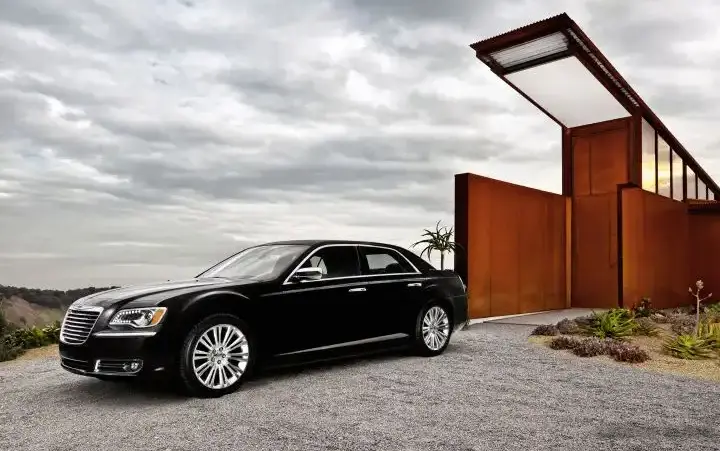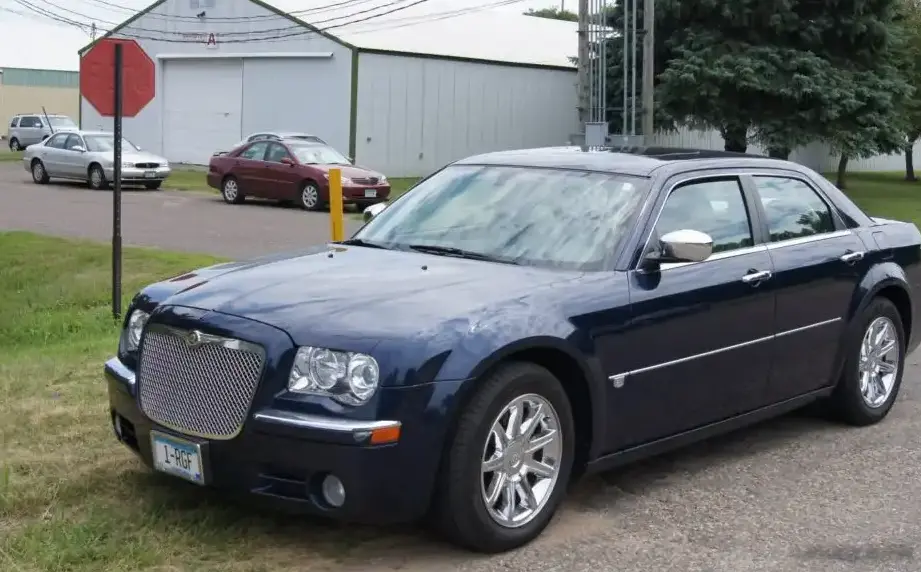
The Chrysler 300, introduced for the 2005 model year, represented a significant departure for the brand, aiming to recapture the spirit of Chrysler’s classic large sedans. The 2.7-liter V6 variant, paired with an automatic transmission, was offered from 2004 through 2010 and served as the entry-level engine option in the lineup. This configuration targeted buyers seeking a full-size American sedan with a focus on affordability and comfortable cruising, rather than outright performance. It was positioned below the more powerful 3.5L V6 and the flagship 5.7L HEMI V8 models.
Technical Specifications
| Brand | Chrysler |
| Model | 300 |
| Generation | 300 |
| Type (Engine) | 2.7 V6 (181 Hp) Automatic |
| Start of production | 2004 |
| End of production | 2010 |
| Powertrain Architecture | Internal Combustion engine |
| Body type | Sedan |
| Seats | 5 |
| Doors | 4 |
| Fuel consumption (urban) | 15.1 l/100 km (15.6 US mpg, 18.7 UK mpg, 6.6 km/l) |
| Fuel consumption (extra urban) | 8.0 l/100 km (29.4 US mpg, 35.3 UK mpg, 12.5 km/l) |
| Fuel consumption (combined) | 10.5 l/100 km (22.4 US mpg, 26.9 UK mpg, 9.5 km/l) |
| Fuel Type | Petrol (Gasoline) |
| Acceleration 0 – 100 km/h | 11.1 sec |
| Acceleration 0 – 62 mph | 11.1 sec |
| Acceleration 0 – 60 mph | 10.5 sec |
| Maximum speed | 209 km/h (129.87 mph) |
| Weight-to-power ratio | 9.4 kg/Hp, 106.9 Hp/tonne |
| Weight-to-torque ratio | 6.6 kg/Nm, 152.4 Nm/tonne |
| Power | 181 Hp @ 5500 rpm |
| Power per litre | 66.2 Hp/l |
| Torque | 258 Nm @ 4000 rpm (190.29 lb.-ft. @ 4000 rpm) |
| Maximum engine speed | 6600 rpm |
| Engine layout | Front, Longitudinal |
| Engine Model/Code | EER |
| Engine displacement | 2736 cm3 (166.96 cu. in.) |
| Number of cylinders | 6 |
| Engine configuration | V-engine |
| Cylinder Bore | 86 mm (3.39 in.) |
| Piston Stroke | 78.5 mm (3.09 in.) |
| Compression ratio | 9.7:1 |
| Number of valves per cylinder | 4 |
| Fuel injection system | Multi-port manifold injection |
| Engine aspiration | Naturally aspirated engine |
| Valvetrain | DOHC |
| Engine oil capacity | 5.7 l (6.02 US qt | 5.02 UK qt) |
| Coolant | 9.4 l (9.93 US qt | 8.27 UK qt) |
| Kerb Weight | 1693 kg (3732.43 lbs.) |
| Trunk (boot) space – minimum | 442 l (15.61 cu. ft.) |
| Fuel tank capacity | 68 l (17.96 US gal | 14.96 UK gal) |
| Length | 4999 mm (196.81 in.) |
| Width | 1881 mm (74.06 in.) |
| Height | 1483 mm (58.39 in.) |
| Wheelbase | 3048 mm (120 in.) |
| Front track | 1600 mm (62.99 in.) |
| Rear (Back) track | 1603 mm (63.11 in.) |
| Ride height (ground clearance) | 143 mm (5.63 in.) |
| Drag coefficient (Cd) | 0.33 |
| Minimum turning circle (turning diameter) | 11.9 m (39.04 ft.) |
| Drivetrain Architecture | The Internal combustion engine (ICE) drives the rear wheels of the vehicle. |
| Drive wheel | Rear wheel drive |
| Number of gears and type of gearbox | 4 gears, automatic transmission |
| Front suspension | Independent, type McPherson with coil spring and anti-roll bar |
| Rear suspension | Independent multi-link suspension |
| Front brakes | Ventilated discs |
| Rear brakes | Disc |
| Assisting systems | ABS (Anti-lock braking system) |
| Steering type | Steering rack and pinion |
| Tires size | 215/65 R17 |
| Wheel rims size | 7.0J x 17 |
Powertrain & Engine Architecture
The Chrysler 300’s 2.7-liter V6 engine, designated the EER code, was a 60-degree V-shaped engine. It featured a cast iron block and aluminum cylinder heads. The engine utilized a multi-port fuel injection system, delivering fuel directly to each intake port. The valvetrain employed dual overhead camshafts (DOHC) with four valves per cylinder, contributing to improved breathing and efficiency. The 4-speed automatic transmission was a crucial component, chosen for its smooth operation and suitability for comfortable highway driving. This transmission was not known for its sportiness, prioritizing fuel economy and ease of use over rapid shifts.
Driving Characteristics
The 2.7L V6 automatic combination in the Chrysler 300 delivered adequate, but not exhilarating, performance. Acceleration from 0-60 mph took around 10.5 seconds, making it slower than the 3.5L V6 and significantly slower than the HEMI V8 models. The automatic transmission’s gear ratios were tuned for relaxed cruising, resulting in a noticeable delay in downshifts when needing to accelerate quickly. While perfectly suitable for daily commuting and long road trips, the 2.7L struggled when pushed hard. The rear-wheel-drive configuration provided a balanced feel, but the engine’s modest power output didn’t fully exploit the chassis’ potential.
Equipment & Trim Levels
The 2.7L automatic variant typically came standard with features like air conditioning, power windows and locks, a basic audio system, and cloth upholstery. Higher trim levels, such as the Touring model, added features like alloy wheels, upgraded audio systems, and premium cloth or leather upholstery. Optional extras included a sunroof, navigation system, and premium sound systems. The interior design was generally straightforward and functional, prioritizing space and comfort over luxury.
Chassis & Braking
The Chrysler 300 featured an independent front suspension with McPherson struts and an independent multi-link rear suspension. This setup provided a comfortable ride quality, absorbing bumps and imperfections in the road effectively. The base models typically came equipped with ventilated disc brakes up front and disc brakes in the rear. Anti-lock braking system (ABS) was standard. The suspension tuning was geared towards comfort, resulting in some body roll during cornering. Stabilizer bars were included to help mitigate this, but the 2.7L models generally had thinner bars compared to the higher-performance trims.
Market Reception & Comparison
Critics generally viewed the 2.7L Chrysler 300 as a competent, but unremarkable, entry-level offering. It was praised for its spacious interior, comfortable ride, and relatively affordable price point. However, the engine’s lack of power and the transmission’s sluggishness were common criticisms. Compared to the 3.5L V6, the 2.7L offered significantly less performance, but it did provide better fuel economy. The 2.7L was also more affordable to insure and maintain than the more powerful engines. The 3.5L V6 was often considered a better value for buyers seeking a more engaging driving experience.
Legacy
The 2.7L V6 engine in the Chrysler 300, while not known for its longevity or performance, proved to be reasonably reliable with proper maintenance. Common issues included oil leaks and occasional sensor failures. Today, these vehicles are relatively affordable on the used car market. The 2.7L automatic variant remains a viable option for buyers seeking a large, comfortable sedan on a budget, but potential buyers should be aware of the engine’s limitations and the importance of regular maintenance. The 2.7L engine, while not a standout performer, played a role in making the Chrysler 300 accessible to a wider range of buyers.