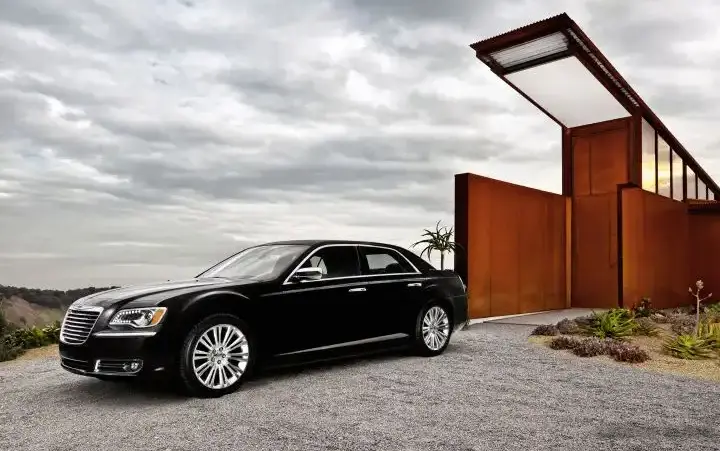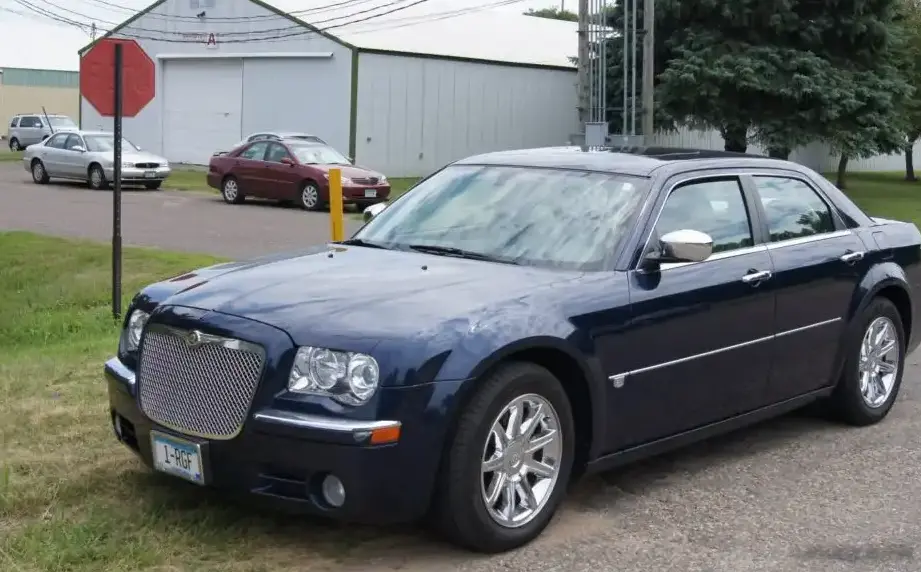
The Chrysler 300, introduced for the 2005 model year, represented a bold departure for the American automaker, aiming to recapture the spirit of its muscular heritage. The 3.5L V6 variant, producing 253 horsepower and paired with a four-speed automatic transmission, served as the entry point into the 300 lineup from 2004 through 2010. This configuration was designed to offer a balance of performance and affordability, appealing to a broader customer base than the higher-trim Hemi V8 models. It quickly became a popular choice for those seeking a full-size sedan with a modern aesthetic and respectable power.
Technical Specifications
| Brand | Chrysler |
| Model | 300 |
| Generation | 300 |
| Type (Engine) | 3.5 V6 (253 Hp) Automatic |
| Start of production | 2004 |
| End of production | 2010 |
| Powertrain Architecture | Internal Combustion engine |
| Body type | Sedan |
| Seats | 5 |
| Doors | 4 |
| Fuel consumption (urban) | 14.8 l/100 km (15.9 US mpg, 19.1 UK mpg, 6.8 km/l) |
| Fuel consumption (extra urban) | 8.0 l/100 km (29.4 US mpg, 35.3 UK mpg, 12.5 km/l) |
| Fuel consumption (combined) | 10.5 l/100 km (22.4 US mpg, 26.9 UK mpg, 9.5 km/l) |
| Fuel Type | Petrol (Gasoline) |
| Acceleration 0 – 100 km/h | 9.2 sec |
| Acceleration 0 – 62 mph | 9.2 sec |
| Acceleration 0 – 60 mph | 8.7 sec |
| Maximum speed | 219 km/h (136.08 mph) |
| Weight-to-power ratio | 6.8 kg/Hp, 146.3 Hp/tonne |
| Weight-to-torque ratio | 5.1 kg/Nm, 196.6 Nm/tonne |
| Power | 253 Hp @ 6400 rpm |
| Power per litre | 71.9 Hp/l |
| Torque | 340 Nm @ 3800 rpm (250.77 lb.-ft. @ 3800 rpm) |
| Maximum engine speed | 6800 rpm |
| Engine layout | Front, Longitudinal |
| Engine Model/Code | EGG |
| Engine displacement | 3518 cm3 (214.68 cu. in.) |
| Number of cylinders | 6 |
| Engine configuration | V-engine |
| Cylinder Bore | 96 mm (3.78 in.) |
| Piston Stroke | 81 mm (3.19 in.) |
| Compression ratio | 9.91:1 |
| Number of valves per cylinder | 4 |
| Fuel injection system | Multi-port manifold injection |
| Engine aspiration | Naturally aspirated engine |
| Valvetrain | SOHC |
| Engine oil capacity | 5.7 l (6.02 US qt | 5.02 UK qt) |
| Coolant | 10.5 l (11.1 US qt | 9.24 UK qt) |
| Kerb Weight | 1729 kg (3811.79 lbs.) |
| Trunk (boot) space – minimum | 442 l (15.61 cu. ft.) |
| Fuel tank capacity | 68 l (17.96 US gal | 14.96 UK gal) |
| Length | 4999 mm (196.81 in.) |
| Width | 1881 mm (74.06 in.) |
| Height | 1483 mm (58.39 in.) |
| Wheelbase | 3048 mm (120 in.) |
| Front track | 1600 mm (62.99 in.) |
| Rear (Back) track | 1603 mm (63.11 in.) |
| Ride height (ground clearance) | 143 mm (5.63 in.) |
| Drag coefficient (Cd) | 0.34 |
| Minimum turning circle (turning diameter) | 11.9 m (39.04 ft.) |
| Drivetrain Architecture | The Internal combustion engine (ICE) drives the rear wheels of the vehicle. |
| Drive wheel | Rear wheel drive |
| Number of gears and type of gearbox | 4 gears, automatic transmission |
| Front suspension | Independent, type McPherson with coil spring and anti-roll bar |
| Rear suspension | Independent multi-link suspension |
| Front brakes | Ventilated discs |
| Rear brakes | Disc |
| Assisting systems | ABS (Anti-lock braking system) |
| Steering type | Steering rack and pinion |
| Tires size | 215/65 R17 |
| Wheel rims size | 7.0J x 17 |
Powertrain & Engine Architecture
The heart of the 300 3.5 was the EGG engine, a 3.5-liter (3518 cc) naturally aspirated V6. This engine utilized a single overhead camshaft (SOHC) valvetrain with four valves per cylinder. Fuel delivery was managed by a multi-port fuel injection system, providing a balance between efficiency and performance. The engine produced 253 horsepower at 6400 rpm and 250 lb-ft of torque at 3800 rpm. The engine’s longitudinal mounting and rear-wheel-drive configuration were a deliberate nod to classic American muscle cars. The four-speed automatic transmission, while adequate for the time, was a point of criticism as newer transmissions with more gears emerged. It was a robust unit, but lacked the refinement and efficiency of more modern automatics.
Driving Characteristics
The 3.5L V6-equipped 300 offered a comfortable and composed driving experience. Acceleration from 0-60 mph took approximately 8.7 seconds, making it reasonably quick for a full-size sedan. However, it wasn’t designed for outright speed; the focus was on providing smooth, effortless cruising. The four-speed automatic transmission, while reliable, resulted in noticeable gear changes and didn’t allow the engine to stay in its optimal power band as effectively as a transmission with more ratios. Compared to the 5.7L Hemi V8 models, the 3.5L felt noticeably less powerful, particularly during overtaking maneuvers. The rear-wheel-drive layout provided a balanced feel, but the car’s considerable weight (approximately 3812 lbs) was always apparent.
Equipment & Trim Levels
The 3.5L V6 typically came standard with features such as air conditioning, power windows and locks, a CD player, and cloth upholstery. Higher trim levels, such as the Touring model, added features like leather seats, upgraded audio systems, and alloy wheels. Optional extras included a sunroof, navigation system, and premium sound systems. The interior design was generally considered spacious and comfortable, with a focus on providing a premium feel. The dashboard layout was straightforward and easy to use, although some materials felt less luxurious than those found in competing vehicles.
Chassis & Braking
The Chrysler 300 featured an independent front suspension with McPherson struts and a multi-link independent rear suspension. This setup provided a comfortable ride and decent handling characteristics. Front brakes were ventilated discs, while rear brakes were solid discs. Anti-lock brakes (ABS) were standard. The suspension was tuned for comfort rather than sporty handling, resulting in a relatively soft ride. The steering was precise and responsive, but lacked the feedback of some other vehicles in its class. The 215/65R17 tires provided adequate grip in most conditions.
Market Reception & Comparison
The 3.5L V6-equipped Chrysler 300 was generally well-received by critics and consumers alike. It offered a compelling combination of style, space, and affordability. Fuel economy was rated at around 22.4 mpg combined, which was reasonable for a full-size sedan. However, some critics noted that the four-speed automatic transmission felt dated and limited the car’s overall performance. Compared to the Hemi V8 models, the 3.5L offered a more economical option, but at the expense of power and acceleration. It competed with other full-size sedans such as the Ford Crown Victoria, Chevrolet Impala, and Toyota Avalon.
Legacy
The Chrysler 300 3.5L V6 Automatic has proven to be a relatively reliable powertrain. The engine is known for its durability, and the four-speed automatic transmission, while not the most advanced, is generally robust. In the used car market, these models represent a good value for those seeking a spacious and comfortable full-size sedan. While not as sought after as the Hemi V8 versions, the 3.5L offers a more affordable entry point into the 300 ownership experience. Common maintenance items include regular oil changes, coolant flushes, and transmission fluid services. Overall, the 300 3.5L V6 remains a popular choice for budget-conscious buyers looking for a stylish and dependable American sedan.