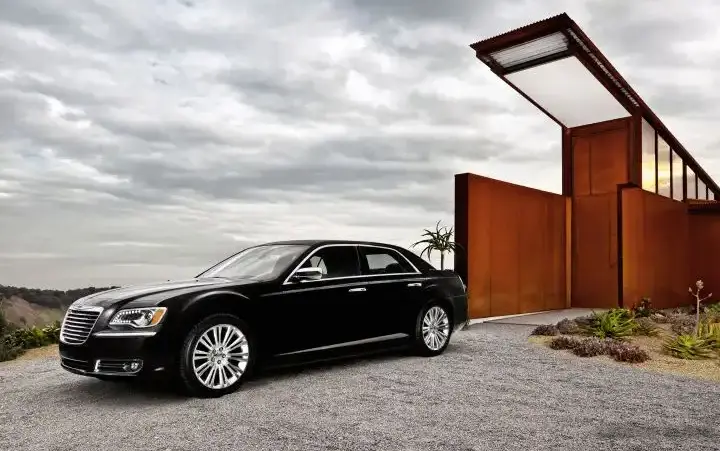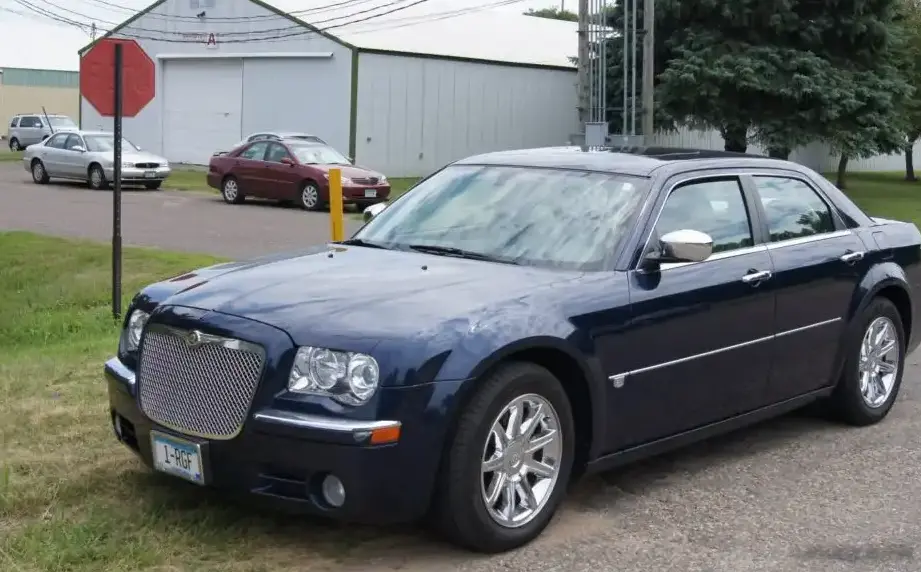
The Chrysler 300 5.7i V8 16V (340 Hp) represents a significant return to rear-wheel-drive performance for Chrysler, debuting in 2004 and continuing through the 2010 model year. This variant occupied a mid-to-upper position within the 300 lineup, offering a substantial power upgrade over the base 2.7L V6 and 3.5L V6 engines. It aimed to recapture the spirit of Chrysler’s muscle car heritage while providing a comfortable and spacious full-size sedan experience. The 300, built on the LX platform, was a pivotal model for Chrysler, signaling a shift towards more performance-oriented vehicles and a departure from the front-wheel-drive focus of previous generations.
Technical Specifications
| Brand | Chrysler |
| Model | 300 |
| Generation | 300 |
| Type (Engine) | 5.7 i V8 16V (340 Hp) |
| Start of production | 2004 |
| End of production | 2010 |
| Powertrain Architecture | Internal Combustion engine |
| Body type | Sedan |
| Seats | 5 |
| Doors | 4 |
| Fuel consumption (urban) | 19.5 l/100 km (12.1 US mpg) |
| Fuel consumption (extra urban) | 9.7 l/100 km (24.2 US mpg) |
| Fuel consumption (combined) | 12.3 l/100 km (19.1 US mpg) |
| Fuel Type | Petrol (Gasoline) |
| Acceleration 0 – 100 km/h | 6.3 sec |
| Acceleration 0 – 62 mph | 6.3 sec |
| Acceleration 0 – 60 mph | 6 sec |
| Maximum speed | 250 km/h (155.34 mph) |
| Weight-to-power ratio | 5.4 kg/Hp |
| Weight-to-torque ratio | 3.5 kg/Nm |
| Power | 340 Hp @ 5000 rpm |
| Torque | 525 Nm @ 5800 rpm (387.22 lb.-ft. @ 5800 rpm) |
| Engine layout | Front, Longitudinal |
| Engine Model/Code | EZB |
| Engine displacement | 5654 cm3 (345.03 cu. in.) |
| Number of cylinders | 8 |
| Engine configuration | V-engine |
| Cylinder Bore | 99.5 mm (3.92 in.) |
| Piston Stroke | 90.9 mm (3.58 in.) |
| Compression ratio | 9.6:1 |
| Number of valves per cylinder | 2 |
| Fuel injection system | Multi-port manifold injection |
| Engine aspiration | Naturally aspirated engine |
| Valvetrain | OHV |
| Engine oil capacity | 6.6 l (6.97 US qt | 5.81 UK qt) |
| Coolant capacity | 13.9 l (14.69 US qt | 12.23 UK qt) |
| Kerb Weight | 1840 kg (4056.51 lbs.) |
| Trunk (boot) space – minimum | 442 l (15.61 cu. ft.) |
| Fuel tank capacity | 72 l (19.02 US gal | 15.84 UK gal) |
| Length | 4999 mm (196.81 in.) |
| Width | 1882 mm (74.09 in.) |
| Height | 1483 mm (58.39 in.) |
| Wheelbase | 3048 mm (120 in.) |
| Front track | 1600 mm (62.99 in.) |
| Rear (Back) track | 1603 mm (63.11 in.) |
| Drivetrain Architecture | Rear wheel drive |
| Number of gears and type of gearbox | 5 gears, automatic transmission |
| Front suspension | Spring Strut |
| Rear suspension | Transverse stabilizer |
| Front brakes | Ventilated discs |
| Rear brakes | Disc |
| Assisting systems | ABS (Anti-lock braking system) |
| Steering type | Steering rack and pinion |
| Tires size | 225/60 R18 |
| Wheel rims size | 7.5J X 18 |
Powertrain & Engine Architecture
The heart of the 300 5.7i is the EZB engine, a 5.7-liter (345 cubic inch) HEMI V8. This engine utilizes a cast iron block with aluminum cylinder heads, a configuration that balances durability with weight savings. The “HEMI” designation refers to the hemispherical combustion chambers, a design that promotes efficient combustion and increased power output. The engine employs multi-port fuel injection, delivering fuel directly to each cylinder for precise control. The valvetrain utilizes an overhead valve (OHV) configuration with two valves per cylinder. The 545RFE five-speed automatic transmission was the sole transmission option for this engine. This transmission was known for its smooth shifting and durability, although it wasn’t as fuel-efficient as some contemporary automatic transmissions. The transmission was tuned to provide a balance between performance and comfort, with relatively conservative gear ratios geared towards cruising.
Driving Characteristics
The 300 5.7i offered a distinctly different driving experience compared to the V6 models. The 340 horsepower and 387 lb-ft of torque provided brisk acceleration, with 0-60 mph times consistently in the low-to-mid 6-second range. While not a dedicated sports car, the rear-wheel-drive layout and ample power made it enjoyable to drive. The automatic transmission, while smooth, could feel somewhat sluggish during quick downshifts. The suspension was tuned for comfort, resulting in a relatively soft ride, but body roll was noticeable during aggressive cornering. Compared to the higher-performance SRT8 variant, the 5.7i offered a more relaxed and refined driving experience, prioritizing comfort and everyday usability over outright track performance.
Equipment & Trim Levels
The 300 5.7i typically came standard with features such as air conditioning, power windows and locks, a premium sound system, and alloy wheels. Leather upholstery and heated front seats were common options. Higher trim levels added features like a sunroof, navigation system, and upgraded interior trim. The overall interior design was spacious and comfortable, with a focus on providing a luxurious experience. The dashboard layout was straightforward and easy to use, with clearly labeled controls.
Chassis & Braking
The 300 5.7i utilized a traditional body-on-frame construction, which contributed to its substantial weight. The front suspension featured independent spring struts, while the rear suspension employed a multi-link setup with a transverse stabilizer bar. This suspension configuration provided a comfortable ride, but wasn’t particularly sporty. Braking duties were handled by ventilated disc brakes at all four corners, with ABS standard. The braking system was adequate for everyday driving, but lacked the stopping power of some competitors.
Market Reception & Comparison
The Chrysler 300 5.7i was generally well-received by critics, who praised its powerful engine, spacious interior, and retro-inspired styling. However, some reviewers criticized its fuel economy and handling. Compared to the V6 models, the 5.7i offered a significant performance upgrade, but at the cost of increased fuel consumption. The SRT8 variant provided even more performance, but came with a higher price tag and a firmer ride. The 300 5.7i competed with other full-size sedans such as the Ford Crown Victoria, Chevrolet Impala, and Toyota Avalon.
Legacy
The Chrysler 300 5.7i remains a popular choice among used car buyers seeking a comfortable and powerful full-size sedan. The HEMI V8 engine is known for its reliability, although regular maintenance is essential. Common issues include oil leaks and sensor failures. The 545RFE transmission is generally durable, but can experience problems with the torque converter. Overall, the 300 5.7i represents a significant chapter in Chrysler’s history, marking a return to rear-wheel-drive performance and a bold statement of American automotive design.