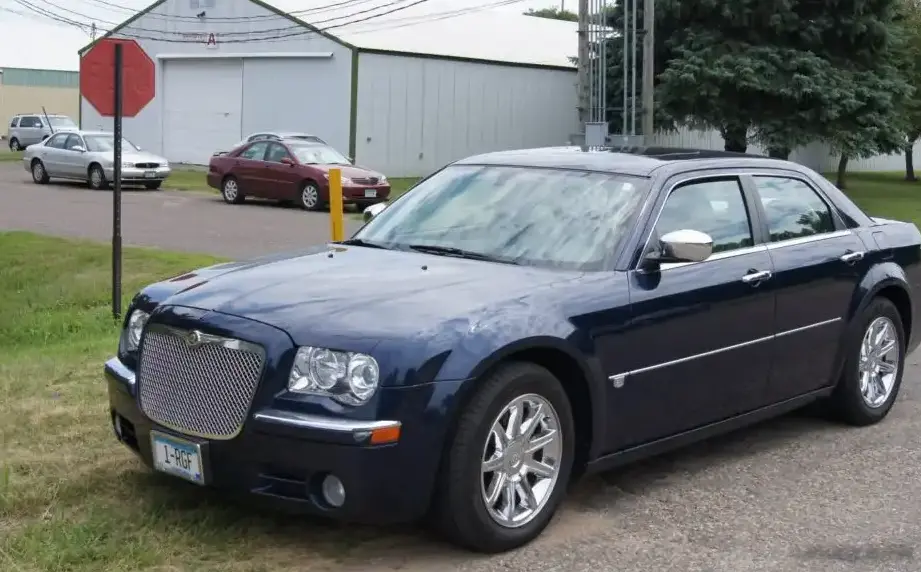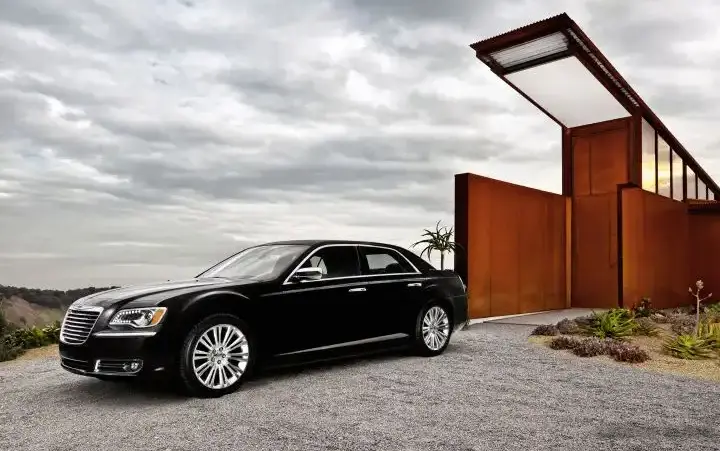
The Chrysler 300 II, specifically the 3.6-liter (286 horsepower) variant paired with an automatic transmission, represented a significant update to the popular full-size sedan. Produced from 2011 to 2014, this iteration of the 300 aimed to blend American muscle car aesthetics with a more refined driving experience and modern technology. It occupied a mid-range position within the 300 lineup, offering a balance between the base V6 models and the high-performance 5.7L HEMI V8 and 6.4L SRT trims. This version was primarily targeted at buyers seeking a comfortable, stylish, and reasonably powerful sedan for daily driving and long-distance cruising.
Technical Specifications
| Brand | Chrysler |
| Model | 300 |
| Generation | 300 II |
| Type (Engine) | 3.6 (286 Hp) Automatic |
| Start of production | 2011 |
| End of production | 2014 |
| Powertrain Architecture | Internal Combustion engine |
| Body type | Sedan |
| Seats | 5 |
| Doors | 4 |
| Fuel consumption (urban) | 14.3 l/100 km (16.4 US mpg) |
| Fuel consumption (extra urban) | 7.1 l/100 km (33.1 US mpg) |
| Fuel consumption (combined) | 9.7 l/100 km (24.2 US mpg) |
| CO2 emissions | 227 g/km |
| Fuel Type | Petrol (Gasoline) |
| Acceleration 0 – 100 km/h | 7 sec |
| Acceleration 0 – 62 mph | 7 sec |
| Acceleration 0 – 60 mph | 6.7 sec |
| Maximum speed | 240 km/h (149.13 mph) |
| Emission standard | Euro 5 |
| Weight-to-power ratio | 6.4 kg/Hp |
| Weight-to-torque ratio | 5.4 kg/Nm |
| Power | 286 Hp @ 6350 rpm |
| Torque | 340 Nm @ 4650 rpm (250.77 lb.-ft. @ 4650 rpm) |
| Engine layout | Front, Longitudinal |
| Engine Model/Code | ERB |
| Engine displacement | 3604 cm3 (219.93 cu. in.) |
| Number of cylinders | 6 |
| Engine configuration | V-engine |
| Cylinder Bore | 96 mm (3.78 in.) |
| Piston Stroke | 83 mm (3.27 in.) |
| Compression ratio | 10:1 |
| Number of valves per cylinder | 4 |
| Fuel injection system | Multi-port manifold injection |
| Engine aspiration | Naturally aspirated engine |
| Engine oil capacity | 5.6 l (5.92 US qt | 4.93 UK qt) |
| Coolant | 9.5 l (10.04 US qt | 8.36 UK qt) |
| Kerb Weight | 1828 kg (4030.05 lbs.) |
| Max. weight | 2359 kg (5200.7 lbs.) |
| Max load | 531 kg (1170.65 lbs.) |
| Trunk (boot) space – minimum | 462 l (16.32 cu. ft.) |
| Fuel tank capacity | 72 l (19.02 US gal | 15.84 UK gal) |
| Length | 5066 mm (199.45 in.) |
| Width | 1902 mm (74.88 in.) |
| Height | 1462 mm (57.56 in.) |
| Wheelbase | 3052 mm (120.16 in.) |
| Front track | 1623 mm (63.9 in.) |
| Rear (Back) track | 1640 mm (64.57 in.) |
| Ride height (ground clearance) | 120 mm (4.72 in.) |
| Drivetrain Architecture | Rear wheel drive |
| Number of gears and type of gearbox | 8 gears, automatic transmission |
| Front suspension | Independent, type McPherson with coil spring and anti-roll bar |
| Rear suspension | Independent coil spring |
| Front brakes | Ventilated discs |
| Rear brakes | Ventilated discs |
| Assisting systems | ABS (Anti-lock braking system) |
| Steering type | Steering rack and pinion |
| Power steering | Electric Steering |
| Tires size | 245/45 R20 |
| Wheel rims size | 20 |
Powertrain & Engine Architecture
The heart of this 300 variant is the 3.6-liter Pentastar V6 engine, designated as the ERB code. This engine is a 60-degree V6 featuring a lightweight aluminum block and cylinder heads. It utilizes a multi-port fuel injection system, delivering fuel directly into the intake ports. The engine boasts dual overhead camshafts (DOHC) with four valves per cylinder, contributing to its respectable power output. The Pentastar engine was a significant improvement over previous Chrysler V6 offerings, known for its smoothness and relatively good fuel efficiency. The eight-speed automatic transmission, sourced from ZF, was a key component in maximizing both performance and fuel economy. This transmission offered smooth shifts and a wide gear ratio spread, allowing the engine to operate in its optimal power band more frequently. The transmission also included a manual shift mode for drivers who desired more control.
Driving Characteristics
The 3.6L automatic 300 offered a comfortable and composed driving experience. While not as quick as the HEMI-powered models, the 286 horsepower and 250 lb-ft of torque provided adequate acceleration for most driving situations. The 0-60 mph time of around 6.7 seconds was respectable for a full-size sedan. The eight-speed automatic transmission played a crucial role in keeping the engine in its sweet spot, delivering smooth and responsive shifts. Compared to the manual transmission versions, the automatic offered greater convenience, particularly in city driving. However, it did slightly diminish the sense of driver engagement. The rear-wheel-drive configuration contributed to a balanced feel, although it wasn’t a particularly sporty car. The suspension was tuned for comfort, absorbing bumps and imperfections in the road effectively.
Equipment & Trim Levels
The 3.6L automatic 300 typically came standard with features such as air conditioning, power windows and locks, a touchscreen infotainment system, and a premium audio system. Higher trim levels, such as the Limited and Luxury models, added features like leather upholstery, heated and ventilated front seats, a sunroof, and advanced safety technologies like blind-spot monitoring and rear cross-traffic alert. Optional extras included a navigation system, a rear-seat entertainment system, and upgraded wheels. Interior upholstery generally consisted of cloth on base models, with leather becoming standard on higher trims. The dashboard layout was generally straightforward and user-friendly, with a focus on providing a comfortable and functional cabin environment.
Chassis & Braking
The Chrysler 300 II utilized an independent front suspension with McPherson struts and a multi-link independent rear suspension. This setup provided a good balance between ride comfort and handling. The front and rear brakes were ventilated discs, offering adequate stopping power. Anti-lock brakes (ABS) were standard, enhancing safety during emergency braking situations. The steering was electric power-assisted, providing a light and responsive feel. The 300’s chassis was designed to provide a stable and comfortable ride, prioritizing isolation from road imperfections over sporty handling characteristics. Stabilizer bars were included both front and rear to reduce body roll during cornering.
Market Reception & Comparison
The 3.6L automatic Chrysler 300 was generally well-received by critics as a comfortable and stylish full-size sedan. It offered a good value proposition, providing a significant amount of space and features for its price. Fuel economy was considered average for its class, with combined ratings around 24 mpg. Compared to the V8-powered models, the 3.6L version offered better fuel efficiency but lacked the same level of performance. The 3.6L engine was also generally considered more reliable than the earlier Chrysler V6 engines, although some owners reported issues with the water pump. Compared to competitors like the Toyota Avalon and Ford Taurus, the 300 stood out with its distinctive styling and rear-wheel-drive platform.
Legacy
The 3.6L Pentastar V6 engine proved to be a durable and reliable powertrain when properly maintained. The eight-speed automatic transmission also demonstrated good long-term reliability. In the used car market, the 2011-2014 Chrysler 300 3.6L automatic remains a popular choice for buyers seeking an affordable and spacious full-size sedan. While not a performance icon, it offers a comfortable ride, a stylish interior, and a reasonable level of reliability, making it a practical and appealing option for everyday transportation. Common maintenance items include regular oil changes, coolant flushes, and inspection of the water pump for potential leaks.