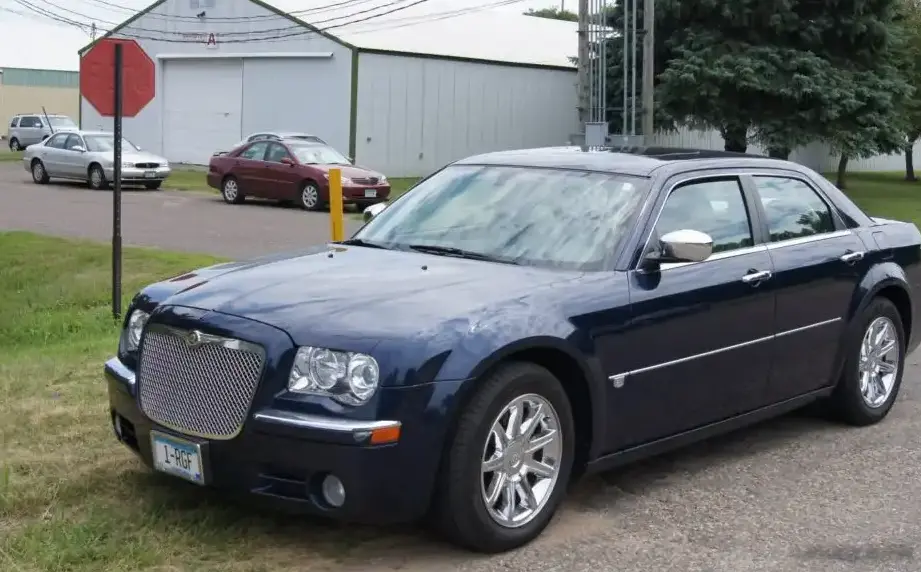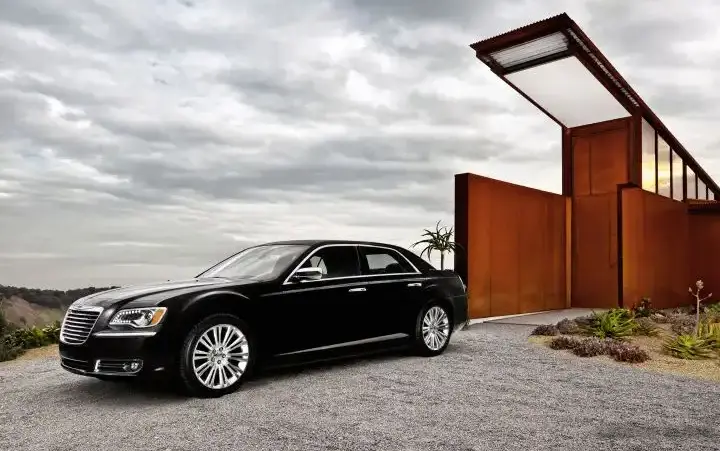
The Chrysler 300 II 5.7, produced from 2011 to 2014, represented a significant iteration of Chrysler’s full-size sedan. Positioned as a premium offering within the 300 lineup, the 5.7-liter V8 model aimed to deliver a blend of American muscle car performance and modern luxury. This generation, internally designated as the LX platform, continued the revival of the 300 nameplate, building upon the success of the original 2005-2010 model. The 5.7L variant occupied the middle ground in the 300 range, offering a substantial power upgrade over the base 3.6L V6, but remaining more accessible than the high-performance SRT8 model.
Technical Specifications
| Brand | Chrysler |
| Model | 300 |
| Generation | 300 II |
| Type (Engine) | 5.7 (363 Hp) Automatic |
| Start of production | 2011 |
| End of production | 2014 |
| Powertrain Architecture | Internal Combustion engine |
| Body type | Sedan |
| Seats | 5 |
| Doors | 4 |
| Fuel consumption (urban) | 14.7 l/100 km (16 US mpg, 19.2 UK mpg, 6.8 km/l) |
| Fuel consumption (extra urban) | 9.4 l/100 km (25 US mpg, 30.1 UK mpg, 10.6 km/l) |
| Fuel consumption (combined) | 12.4 l/100 km (19 US mpg, 22.8 UK mpg, 8.1 km/l) |
| Fuel Type | Petrol (Gasoline) |
| Acceleration 0 – 100 km/h | 5.4 sec |
| Acceleration 0 – 62 mph | 5.4 sec |
| Acceleration 0 – 60 mph | 5.1 sec |
| Weight-to-power ratio | 5.3 kg/Hp, 187.4 Hp/tonne |
| Weight-to-torque ratio | 3.7 kg/Nm, 272.1 Nm/tonne |
| Power | 363 Hp @ 5150 rpm |
| Power per litre | 64.2 Hp/l |
| Torque | 527 Nm @ 4250 rpm (388.7 lb.-ft. @ 4250 rpm) |
| Engine layout | Front, Longitudinal |
| Engine Model/Code | EZH |
| Engine displacement | 5654 cm3 (345.03 cu. in.) |
| Number of cylinders | 8 |
| Engine configuration | V-engine |
| Engine oil capacity | 6.6 l (6.97 US qt | 5.81 UK qt) |
| Coolant capacity | 13.9 l (14.69 US qt | 12.23 UK qt) |
| Kerb Weight | 1937 kg (4270.35 lbs) |
| Trunk (boot) space | 462 l (16.32 cu. ft.) |
| Fuel tank capacity | 72 l (19.02 US gal | 15.84 UK gal) |
| Length | 5066 mm (199.45 in) |
| Width | 1902 mm (74.88 in) |
| Height | 1462 mm (57.56 in) |
| Wheelbase | 3052 mm (120.16 in) |
| Front track | 1623 mm (63.9 in) |
| Rear track | 1640 mm (64.57 in) |
| Ride height (ground clearance) | 119 mm (4.69 in) |
| Drivetrain Architecture | Rear wheel drive |
| Number of gears | 5 |
| Gearbox type | Automatic transmission |
| Front suspension | Independent, McPherson with coil spring and anti-roll bar |
| Rear suspension | Independent coil spring |
| Front brakes | Ventilated discs |
| Rear brakes | Disc |
| Assisting systems | ABS (Anti-lock braking system) |
| Steering type | Steering rack and pinion |
| Power steering | Electric |
| Tires size | 215/65 R17 |
| Wheel rims size | 17 |
Powertrain & Engine Architecture
The heart of the Chrysler 300 II 5.7 was the EZH 5.7-liter (345 cubic inch) V8 engine. This engine, a member of Chrysler’s HEMI family, featured multi-displacement system (MDS) technology, allowing it to deactivate four cylinders during light-load cruising to improve fuel economy. The engine utilized a cast iron block with aluminum cylinder heads, and employed sequential port fuel injection. The valvetrain consisted of two valves per cylinder, operated by hydraulic lifters and pushrods. The 5.7L engine produced 363 horsepower at 5,150 rpm and 388 lb-ft of torque at 4,250 rpm. Paired with the engine was a five-speed automatic transmission, providing smooth shifts and adequate gear ratios for both city and highway driving. The transmission was electronically controlled, adapting to driving conditions and driver input.
Driving Characteristics
The 5.7-liter engine delivered brisk acceleration, with 0-60 mph times consistently in the low 5-second range. While not as aggressively tuned as the SRT8, the 5.7 offered ample power for passing maneuvers and confident highway cruising. The automatic transmission, while generally smooth, wasn’t known for particularly quick or sporty shifts. Compared to the 3.6L V6, the 5.7 provided a noticeable increase in performance, particularly in mid-range acceleration. The rear-wheel-drive configuration contributed to a balanced feel, although it could be prone to oversteer in challenging conditions. The gear ratios were optimized for a balance between fuel efficiency and performance, with a relatively tall final drive ratio.
Equipment & Trim Levels
The 300 II 5.7 typically came standard with features such as leather upholstery, dual-zone automatic climate control, a premium sound system, and power-adjustable front seats. Exterior features included alloy wheels, chrome accents, and automatic headlights. Optional extras included a navigation system, a sunroof, heated and ventilated front seats, and advanced safety features like blind-spot monitoring and rear cross-path detection. Trim levels varied slightly depending on the year, but generally included options like the “Limited” and “Luxury” packages, adding further refinement and convenience features.
Chassis & Braking
The Chrysler 300 II utilized an independent front suspension with McPherson struts and a multi-link independent rear suspension. This setup provided a comfortable ride quality, absorbing bumps and imperfections in the road effectively. The 5.7-liter models typically featured larger brakes than the V6 versions, with ventilated discs at all four corners. Anti-lock brakes (ABS) were standard, along with electronic stability control. The steering was rack-and-pinion with electric power assist, offering a reasonably responsive feel. The rear suspension was tuned to handle the increased weight and power of the V8 engine, with slightly stiffer springs and dampers compared to the V6 models.
Market Reception & Comparison
The Chrysler 300 II 5.7 was generally well-received by critics, who praised its powerful engine, comfortable ride, and spacious interior. However, some reviewers noted the somewhat dated interior design and the less-than-stellar fuel economy. Compared to the 3.6L V6, the 5.7 offered a significant performance upgrade, but at the cost of increased fuel consumption. Against competitors like the Ford Crown Victoria, Chevrolet Impala, and Toyota Avalon, the 300 5.7 offered a more modern design and a more powerful engine, but often came with a higher price tag. Reliability was generally considered average, with some reports of issues with the MDS system and the transmission.
Legacy
The Chrysler 300 II 5.7 remains a popular choice in the used car market, particularly for those seeking a comfortable and powerful full-size sedan. The 5.7L HEMI engine is known for its durability and relatively straightforward maintenance. While fuel economy isn’t a strong point, the engine’s robust construction and readily available parts make it a relatively affordable option to maintain. The 300 II 5.7 represents a compelling blend of American muscle and modern convenience, and continues to appeal to drivers who appreciate a classic rear-wheel-drive experience.