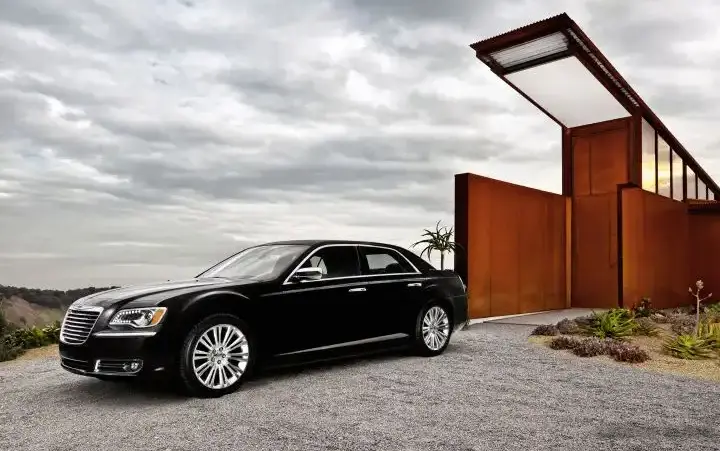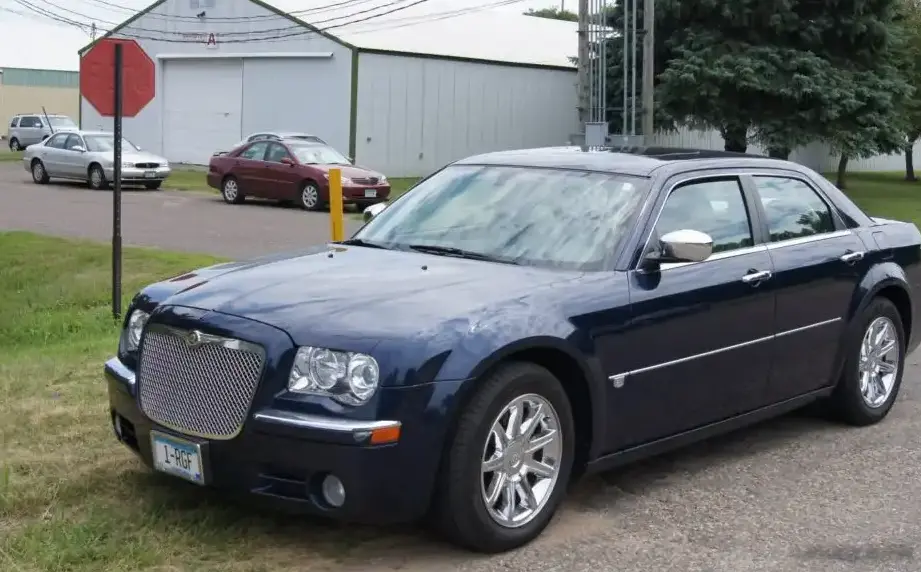
The Chrysler 300 LWB 3.5 V6 Automatic, produced from 2004 to 2010, represented a significant departure for Chrysler, aiming to recapture the spirit of the original 1950s 300 series while offering modern comfort and performance. This variant, positioned as a mid-range offering within the 300 lineup, slotted between the base 2.7L V6 and the higher-performance 5.7L HEMI V8 models. The “LWB” designation indicates a long wheelbase, providing increased rear passenger legroom, a feature particularly appealing to the American market. It was built on the LX platform, shared with other Chrysler and Dodge vehicles, and marked Chrysler’s initial foray into rear-wheel-drive architecture after a long period of front-wheel-drive dominance.
Technical Specifications
| Brand | Chrysler |
| Model | 300 |
| Generation | 300 |
| Type (Engine) | LWB 3.5 V6 (253 Hp) Automatic |
| Start of production | 2004 |
| End of production | 2010 |
| Powertrain Architecture | Internal Combustion engine |
| Body type | Sedan |
| Seats | 5 |
| Doors | 4 |
| Fuel Type | Petrol (Gasoline) |
| Weight-to-power ratio | 6.9 kg/Hp, 144.1 Hp/tonne |
| Weight-to-torque ratio | 5.2 kg/Nm, 193.6 Nm/tonne |
| Power | 253 Hp @ 6400 rpm |
| Power per litre | 71.9 Hp/l |
| Torque | 340 Nm @ 3800 rpm, 250.77 lb.-ft. @ 3800 rpm |
| Maximum engine speed | 6800 rpm |
| Engine layout | Front, Longitudinal |
| Engine Model/Code | EGG |
| Engine displacement | 3518 cm3, 214.68 cu. in. |
| Number of cylinders | 6 |
| Engine configuration | V-engine |
| Cylinder Bore | 96 mm, 3.78 in. |
| Piston Stroke | 81 mm, 3.19 in. |
| Compression ratio | 9.91:1 |
| Number of valves per cylinder | 4 |
| Fuel injection system | Multi-port manifold injection |
| Engine aspiration | Naturally aspirated engine |
| Valvetrain | SOHC |
| Engine oil capacity | 5.7 l, 6.02 US qt | 5.02 UK qt |
| Coolant | 10.5 l, 11.1 US qt | 9.24 UK qt |
| Kerb Weight | 1756 kg, 3871.32 lbs |
| Trunk (boot) space – minimum | 442 l, 15.61 cu. ft |
| Fuel tank capacity | 68 l, 17.96 US gal | 14.96 UK gal |
| Length | 5151 mm, 202.8 in |
| Width | 1881 mm, 74.06 in |
| Height | 1483 mm, 58.39 in |
| Wheelbase | 3200 mm, 125.98 in |
| Front track | 1600 mm, 62.99 in |
| Rear (Back) track | 1603 mm, 63.11 in |
| Ride height (ground clearance) | 143 mm, 5.63 in |
| Drag coefficient (Cd) | 0.34 |
| Minimum turning circle (turning diameter) | 11.9 m, 39.04 ft |
| Drivetrain Architecture | The Internal combustion engine (ICE) drives the rear wheels of the vehicle. |
| Drive wheel | Rear wheel drive |
| Number of gears and type of gearbox | 4 gears, automatic transmission |
| Front suspension | Independent, type McPherson with coil spring and anti-roll bar |
| Rear suspension | Independent multi-link suspension |
| Front brakes | Ventilated discs |
| Rear brakes | Disc |
| Assisting systems | ABS (Anti-lock braking system) |
| Steering type | Steering rack and pinion |
| Tires size | 215/65 R17 |
| Wheel rims size | 7.0 x 17 |
Powertrain & Engine Architecture
The heart of the 300 LWB 3.5 V6 was the EGG engine, a 3.5-liter (3518 cc) naturally aspirated V6. This engine utilized a single overhead camshaft (SOHC) valvetrain with four valves per cylinder. Fuel delivery was managed by a multi-port fuel injection system, providing adequate performance for everyday driving. The engine produced 253 horsepower at 6400 rpm and 340 Nm (250.77 lb-ft) of torque at 3800 rpm. The engine’s longitudinal mounting and rear-wheel-drive configuration were a significant change for Chrysler, offering a more balanced driving experience compared to the predominantly front-wheel-drive offerings of the time. Paired with the engine was a four-speed automatic transmission, chosen for its smooth operation and ease of use, catering to the American preference for comfortable cruising. This transmission, while reliable, lacked the efficiency and responsiveness of more modern gearboxes.
Driving Characteristics
The 300 LWB 3.5 V6 Automatic delivered a comfortable and composed driving experience. While not a performance-oriented model, the 253 hp engine provided sufficient power for merging onto highways and passing slower traffic. The four-speed automatic transmission, while smooth, resulted in relatively wide gear ratios. This meant that the engine often felt slightly strained during hard acceleration, and fuel economy suffered compared to the more efficient V6 and diesel options available in other markets. Compared to the 5.7L HEMI V8, the 3.5L V6 offered a noticeably softer acceleration profile. However, it provided a more refined and fuel-efficient alternative for drivers prioritizing comfort and practicality over outright speed. The rear-wheel-drive layout contributed to a balanced feel, although it didn’t offer the same level of handling precision as some European competitors.
Equipment & Trim Levels
The 300 LWB 3.5 V6 typically came standard with features such as air conditioning, power windows and locks, a CD player, and cloth upholstery. The long wheelbase provided generous rear passenger space, making it a comfortable choice for families. Optional extras included leather upholstery, a premium sound system, a sunroof, and alloy wheels. Higher trim levels, such as the Touring model, added features like automatic climate control, upgraded interior trim, and enhanced exterior styling. The base model focused on providing a well-equipped and affordable full-size sedan, while the optional packages allowed buyers to customize the vehicle to their preferences.
Chassis & Braking
The Chrysler 300 LWB utilized an independent front suspension with McPherson struts and a coil spring and anti-roll bar. The rear suspension employed an independent multi-link setup, contributing to a comfortable ride quality. Braking duties were handled by ventilated discs at the front and solid discs at the rear. Anti-lock braking system (ABS) was standard, enhancing safety and control during emergency braking situations. The chassis was designed to provide a stable and comfortable ride, prioritizing comfort over sporty handling. The relatively heavy curb weight of 1756 kg (3871.32 lbs) did impact braking performance and handling agility.
Market Reception & Comparison
The Chrysler 300 LWB 3.5 V6 was generally well-received by critics and consumers alike. It was praised for its spacious interior, comfortable ride, and bold styling. However, some reviewers noted the engine’s lack of refinement compared to some competitors and the somewhat dated four-speed automatic transmission. Compared to the 2.7L V6, the 3.5L offered a significant performance boost. Compared to the 5.7L HEMI V8, it provided a more fuel-efficient and affordable option, albeit with less power. Fuel economy was rated at around 18 mpg city and 26 mpg highway, which was competitive for a full-size sedan at the time. Reliability was generally good, although some owners reported minor issues with the transmission and electrical systems.
Legacy
The Chrysler 300 LWB 3.5 V6 Automatic holds a place as a pivotal model in Chrysler’s history, marking a return to rear-wheel-drive and a bold styling direction. While the four-speed automatic transmission is now considered outdated, the EGG engine proved to be reasonably durable. Today, these vehicles are readily available on the used car market at affordable prices. They represent a comfortable and spacious option for those seeking a full-size sedan with a classic American aesthetic. Maintenance costs are generally moderate, although finding replacement parts for some interior components can be challenging. The 300 LWB 3.5 V6 remains a popular choice for those seeking a comfortable and reliable cruiser with a touch of retro flair.