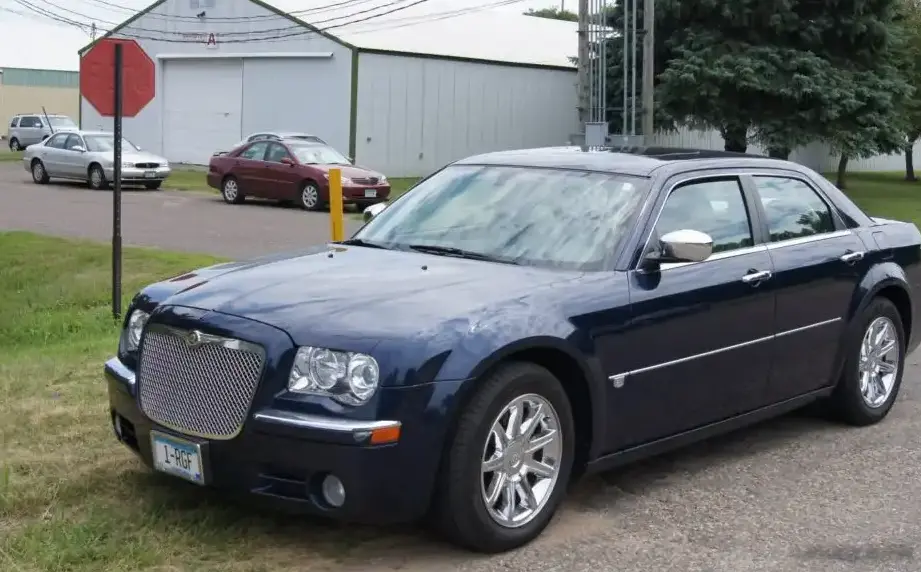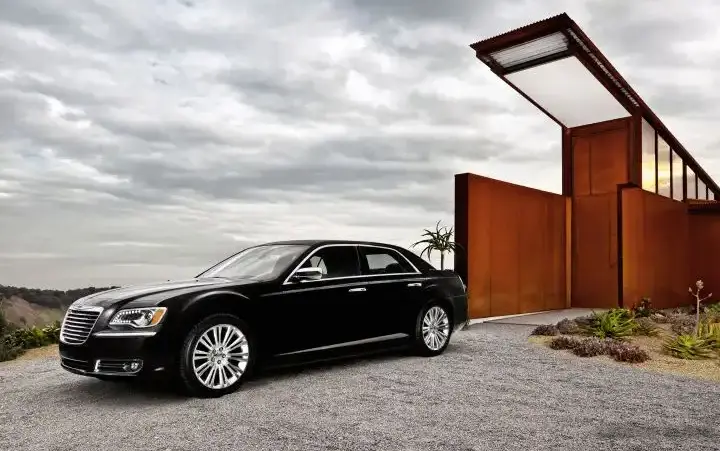
The Chrysler 300 Touring 2.7i V6 24V, produced from 2004 to 2010, represented a significant departure for Chrysler, aiming to blend American full-size comfort with a more practical, European-inspired wagon body style. This variant occupied the entry-level position within the 300 Touring range, offering a balance between affordability and the spaciousness expected of a large American car. It was part of the LH platform generation, initially designated as the 300M, but significantly redesigned and rebranded for the 2004 model year. The Touring trim, and specifically this 2.7-liter engine option, was targeted towards families and individuals prioritizing space and comfort over outright performance.
Technical Specifications
| Brand | Chrysler |
| Model | 300 |
| Generation | 300 Touring |
| Type (Engine) | 2.7 i V6 24V (193 Hp) |
| Start of production | 2004 |
| End of production | 2010 |
| Powertrain Architecture | Internal Combustion engine |
| Body type | Station wagon (estate) |
| Seats | 5 |
| Doors | 5 |
| Fuel consumption (urban) | 16.1 l/100 km (14.6 US mpg, 17.5 UK mpg, 6.2 km/l) |
| Fuel consumption (extra urban) | 8.4 l/100 km (28 US mpg, 33.6 UK mpg, 11.9 km/l) |
| Fuel consumption (combined) | 11.2 l/100 km (21 US mpg, 25.2 UK mpg, 8.9 km/l) |
| Fuel Type | Petrol (Gasoline) |
| Acceleration 0 – 100 km/h | 11.1 sec |
| Acceleration 0 – 62 mph | 11.1 sec |
| Acceleration 0 – 60 mph | 10.5 sec |
| Maximum speed | 209 km/h (129.87 mph) |
| Weight-to-power ratio | 8.9 kg/Hp, 111.9 Hp/tonne |
| Weight-to-torque ratio | 6.7 kg/Nm, 149.6 Nm/tonne |
| Power | 193 Hp @ 6400 rpm |
| Power per litre | 70.5 Hp/l |
| Torque | 258 Nm @ 4000 rpm (190.29 lb.-ft. @ 4000 rpm) |
| Engine layout | Front, Longitudinal |
| Engine Model/Code | EER |
| Engine displacement | 2736 cm3 (166.96 cu. in.) |
| Number of cylinders | 6 |
| Engine configuration | V-engine |
| Cylinder Bore | 86 mm (3.39 in.) |
| Piston Stroke | 78.5 mm (3.09 in.) |
| Compression ratio | 9.7:1 |
| Number of valves per cylinder | 4 |
| Fuel injection system | Multi-port manifold injection |
| Engine aspiration | Naturally aspirated engine |
| Valvetrain | DOHC |
| Engine oil capacity | 5.7 l (6.02 US qt | 5.02 UK qt) |
| Coolant | 9.4 l (9.93 US qt | 8.27 UK qt) |
| Kerb Weight | 1725 kg (3802.97 lbs.) |
| Trunk (boot) space – minimum | 603 l (21.29 cu. ft.) |
| Trunk (boot) space – maximum | 1602 l (56.57 cu. ft.) |
| Fuel tank capacity | 68 l (17.96 US gal | 14.96 UK gal) |
| Length | 4999 mm (196.81 in.) |
| Width | 1881 mm (74.06 in.) |
| Height | 1481 mm (58.31 in.) |
| Wheelbase | 3048 mm (120 in.) |
| Front track | 1600 mm (62.99 in.) |
| Rear (Back) track | 1603 mm (63.11 in.) |
| Drivetrain Architecture | The Internal combustion engine (ICE) drives the rear wheels of the vehicle. |
| Drive wheel | Rear wheel drive |
| Number of gears and type of gearbox | 4 gears, automatic transmission |
| Front suspension | Spring Strut |
| Rear suspension | Transverse stabilizer |
| Front brakes | Ventilated discs |
| Rear brakes | Disc |
| Assisting systems | ABS (Anti-lock braking system) |
| Steering type | Steering rack and pinion |
| Tires size | 225/60 R18 |
| Wheel rims size | 7.5J x 18 |
Powertrain & Engine Architecture
The heart of the 300 Touring 2.7i was the EER engine, a 2.7-liter (2736 cc) V6. This engine featured a 60-degree V-angle and utilized a cast iron block with aluminum cylinder heads. It employed a dual overhead camshaft (DOHC) valvetrain with four valves per cylinder, contributing to its 24-valve configuration. Fuel delivery was managed by a multi-port fuel injection system. The 2.7L V6 was known for its relatively smooth operation, but it wasn’t a powerhouse. It was paired exclusively with a four-speed automatic transmission, designed for comfortable cruising rather than sporty driving. This transmission was a traditional torque converter automatic, prioritizing smoothness and ease of use over fuel efficiency or rapid shifts. The engine’s design prioritized reliability and cost-effectiveness over cutting-edge performance.
Driving Characteristics
The 193 horsepower and 258 lb-ft of torque produced by the 2.7-liter V6 provided adequate, but not exhilarating, performance. Acceleration from 0-60 mph took around 10.5 seconds, making it slower than the V8-powered 300 models. The four-speed automatic transmission, while smooth, lacked the responsiveness of more modern transmissions with more gears. Gear ratios were tuned for comfortable highway cruising, resulting in a somewhat leisurely feel during acceleration. The rear-wheel-drive configuration provided a balanced driving experience, but the relatively soft suspension tuning prioritized ride comfort over sharp handling. Compared to the higher-output 3.5L V6 or the 5.7L HEMI V8, the 2.7L felt noticeably less powerful, particularly when fully loaded with passengers and cargo.
Equipment & Trim Levels
The 300 Touring 2.7i typically came standard with features such as air conditioning, power windows and locks, a CD player, and cloth upholstery. Safety features included ABS brakes and front airbags. Optional extras included leather upholstery, a premium sound system, power-adjustable seats, and a sunroof. The interior design was generally functional and comfortable, though it lacked the premium feel of the higher-trim 300 Limited models. The dashboard layout was straightforward and easy to use, with large, clearly marked controls. The wagon body style offered significantly more cargo space than the sedan version, making it a practical choice for families.
Chassis & Braking
The 300 Touring featured a traditional body-on-frame construction, contributing to its substantial weight. The front suspension utilized a spring strut design, while the rear suspension employed a multi-link setup with a transverse stabilizer bar. Braking duties were handled by ventilated discs at the front and solid discs at the rear. ABS was standard, providing enhanced braking control in emergency situations. The suspension tuning was geared towards providing a comfortable ride, absorbing bumps and imperfections in the road effectively. However, this came at the expense of handling precision, with noticeable body roll during cornering.
Market Reception & Comparison
The 300 Touring 2.7i was generally well-received as a practical and affordable option within the 300 lineup. Critics praised its spacious interior and comfortable ride, but noted its lack of performance compared to the V8 models. Fuel economy was reasonable for a full-size wagon, averaging around 21 mpg in combined driving. Compared to the 3.5L V6 version, the 2.7L offered lower initial cost but significantly less power. The 2.7L was often seen as a good choice for buyers who prioritized space and comfort over performance, while the V8 models appealed to those seeking a more powerful and engaging driving experience. Reliability was generally good, though some owners reported issues with the automatic transmission over time.
Legacy
The Chrysler 300 Touring 2.7i, while not the most powerful or technologically advanced vehicle of its time, remains a popular choice in the used car market due to its affordability, spaciousness, and relatively simple mechanical design. The 2.7L V6 engine, while not known for its longevity like some other engines, is generally reliable if properly maintained. Parts availability is good, and repair costs are typically reasonable. The wagon body style, increasingly rare in the American market, adds to its appeal for those seeking a practical and versatile vehicle. Today, it represents a unique blend of American size and style with a touch of European practicality.