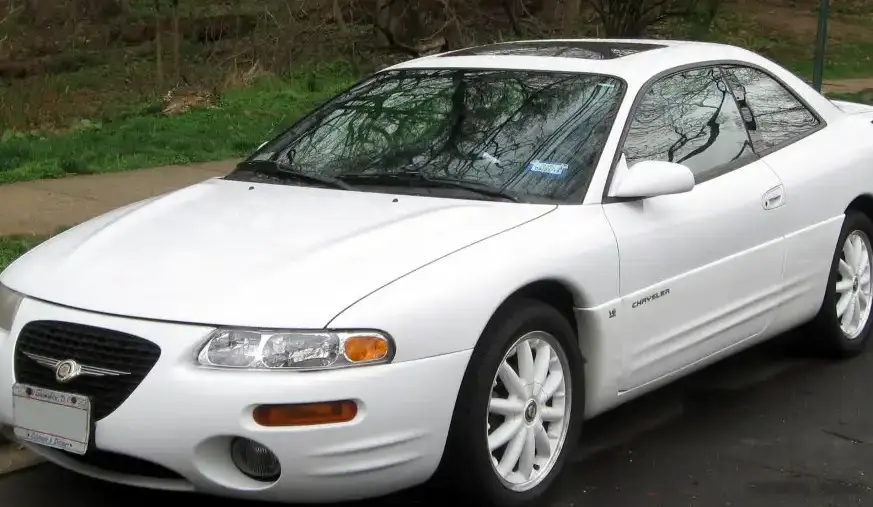
The Chrysler Cirrus Coupe 2.0i 16V, produced between 1995 and 2000, represented Chrysler’s attempt to enter the increasingly popular compact coupe market. Positioned as a more stylish alternative to the sedan version, the Cirrus Coupe aimed to attract buyers seeking a sporty, yet practical, vehicle. It was built on the ‘JH’ platform, shared with the Dodge Stratus Coupe and Plymouth Breeze, and represented a departure from Chrysler’s traditionally boxier designs. The 2.0i 16V variant, producing 132 horsepower, served as the base engine option for the coupe, offering a balance between affordability and acceptable performance. This model occupied the entry-level position in the Cirrus Coupe lineup, appealing to budget-conscious buyers.
Technical Specifications
| Brand | Chrysler |
| Model | Cirrus |
| Generation | Cirrus Coupe |
| Type (Engine) | 2.0 i 16V (132 Hp) |
| Start of production | 1995 |
| End of production | 2000 |
| Powertrain Architecture | Internal Combustion engine |
| Body type | Coupe |
| Seats | 2 |
| Doors | 4 |
| Fuel consumption (combined) | 6.4 l/100 km |
| Fuel consumption (US mpg) | 36.8 US mpg |
| Fuel consumption (UK mpg) | 44.1 UK mpg |
| Fuel consumption (km/l) | 15.6 km/l |
| Fuel Type | Petrol (Gasoline) |
| Acceleration 0 – 100 km/h | 10.9 sec |
| Acceleration 0 – 62 mph | 10.9 sec |
| Acceleration 0 – 60 mph | 10.4 sec |
| Maximum speed | 205 km/h (127.38 mph) |
| Weight-to-power ratio | 9.7 kg/Hp |
| Power per tonne | 102.7 Hp/tonne |
| Weight-to-torque ratio | 7.3 kg/Nm |
| Torque per tonne | 136.2 Nm/tonne |
| Power | 132 Hp @ 6000 rpm |
| Power per litre | 66.1 Hp/l |
| Torque | 175 Nm @ 5000 rpm (129.07 lb.-ft. @ 5000 rpm) |
| Engine layout | Front, Transverse |
| Engine Model/Code | A588 |
| Engine displacement | 1996 cm3 (121.8 cu. in.) |
| Number of cylinders | 4 |
| Engine configuration | Inline |
| Cylinder Bore | 87.5 mm (3.44 in.) |
| Piston Stroke | 83 mm (3.27 in.) |
| Compression ratio | 9.8:1 |
| Number of valves per cylinder | 4 |
| Fuel injection system | Multi-port manifold injection |
| Engine aspiration | Naturally aspirated |
| Valvetrain | OHC |
| Engine oil capacity | 4.3 l (4.54 US qt | 3.78 UK qt) |
| Coolant capacity | 8 l (8.45 US qt | 7.04 UK qt) |
| Kerb Weight | 1285 kg (2832.94 lbs.) |
| Max. weight | 1885 kg (4155.71 lbs.) |
| Max load | 600 kg (1322.77 lbs.) |
| Trunk (boot) space – minimum | 436 l (15.4 cu. ft.) |
| Fuel tank capacity | 60 l (15.85 US gal | 13.2 UK gal) |
| Length | 4746 mm (186.85 in.) |
| Width | 1822 mm (71.73 in.) |
| Height | 1374 mm (54.09 in.) |
| Wheelbase | 2743 mm (107.99 in.) |
| Front track | 1518 mm (59.76 in.) |
| Rear track | 1512 mm (59.53 in.) |
| Drivetrain Architecture | Front wheel drive |
| Number of gears | 5 gears, manual transmission |
| Front suspension | Double wishbone |
| Rear suspension | Double wishbone |
| Front brakes | Disc |
| Rear brakes | Drum |
| Assisting systems | ABS (Anti-lock braking system) |
| Steering type | Steering rack and pinion |
| Power steering | Hydraulic |
| Tires size | 185/65 R15 |
Powertrain & Engine Architecture
The heart of the Cirrus Coupe 2.0i was the Chrysler A588 engine, a 1.996-liter inline-four cylinder powerplant. This engine featured a single overhead camshaft (OHC) design operating 16 valves. Fuel delivery was handled by a multi-port fuel injection system, providing a reasonable balance of efficiency and performance for its time. The engine’s 9.8:1 compression ratio was fairly standard for naturally aspirated engines of the mid-1990s. The 2.0L engine was known for its relative simplicity and ease of maintenance. The five-speed manual transmission was the standard offering, providing drivers with a degree of control over the engine’s power band. The transmission’s gear ratios were tuned for a blend of acceleration and highway cruising, though it wasn’t particularly sporty in its feel.
Driving Characteristics
The 132 horsepower and 129 lb-ft of torque produced by the 2.0-liter engine translated to adequate, but not exhilarating, performance. Acceleration from 0-60 mph took around 10.4 seconds, making it competitive with other coupes in its class, but noticeably slower than higher-powered variants like those equipped with the optional V6 engine. The five-speed manual transmission allowed drivers to keep the engine in its optimal power range, but the engine lacked the low-end grunt of larger displacement engines. The car felt reasonably composed on the highway, with stable handling and a comfortable ride. However, the rear drum brakes, standard on this trim level, offered less stopping power and feel compared to the disc brakes found on higher-spec models.
Equipment & Trim Levels
The base Cirrus Coupe 2.0i 16V came with a fairly standard set of features for a vehicle in its price range. Interior appointments typically included cloth upholstery, a basic stereo system, and manual windows and locks. Air conditioning was often included, but could be optional depending on the specific package. Optional extras included power windows and locks, upgraded audio systems, and a sunroof. The interior design was functional but lacked the premium feel of more expensive coupes. The dashboard layout was straightforward and easy to use, with clearly marked controls.
Chassis & Braking
The Cirrus Coupe utilized a front-wheel-drive layout with independent double wishbone suspension at both the front and rear. This suspension setup provided a comfortable ride and decent handling characteristics. As mentioned previously, the base 2.0i model was equipped with disc brakes at the front and drum brakes at the rear. ABS (Anti-lock Braking System) was standard, enhancing safety by preventing wheel lockup during hard braking. The steering was rack-and-pinion with hydraulic power assist, providing a reasonably responsive steering feel.
Market Reception & Comparison
The Chrysler Cirrus Coupe 2.0i 16V received mixed reviews from automotive critics. While praised for its styling and comfortable ride, it was often criticized for its lack of power and somewhat bland interior. Compared to the V6-powered Cirrus Coupe, the 2.0i felt significantly underpowered. Fuel economy was a strong point, averaging around 36.8 US mpg in combined driving. Reliability was generally considered average for a domestic vehicle of the era, with some reports of minor electrical issues. The 2.0i model was primarily targeted at buyers who prioritized affordability and fuel efficiency over outright performance.
Legacy
Today, the Chrysler Cirrus Coupe 2.0i 16V is a relatively uncommon sight on the roads. While not a particularly collectible vehicle, well-maintained examples are starting to attract interest from enthusiasts seeking affordable classic coupes. The A588 engine is known for its durability, and with proper maintenance, can provide many years of reliable service. Parts availability is generally good, as many components were shared with other Chrysler, Dodge, and Plymouth models. The Cirrus Coupe represents a unique chapter in Chrysler’s history, showcasing the company’s attempt to compete in the growing coupe market of the 1990s.