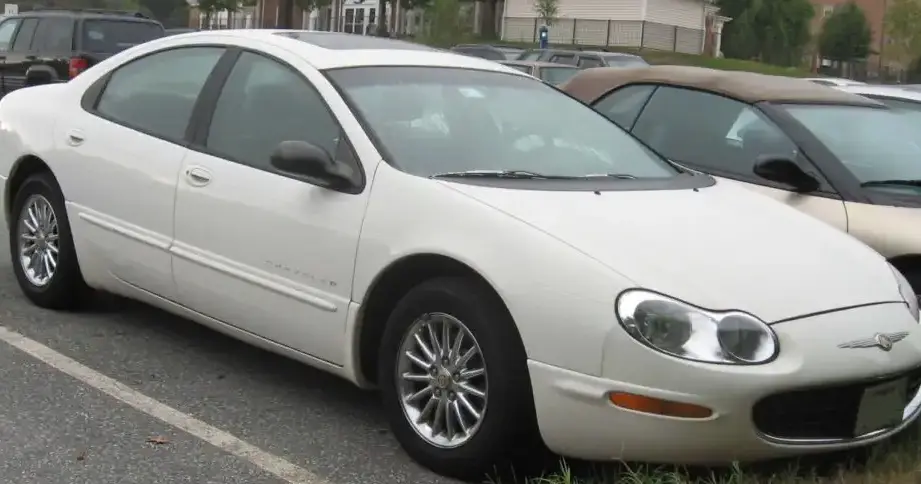
The Chrysler Concorde II, specifically the 2.7i V6 24V variant produced between 1997 and 2004, represented a significant evolution of Chrysler’s full-size sedan. Positioned as a mid-range offering within the Concorde lineup, it aimed to balance performance and fuel efficiency with a more accessible price point compared to the higher-trim models. This generation, internally designated as the LH platform, was a key part of Chrysler’s strategy to compete with domestic rivals like Ford and General Motors in the large sedan segment. The 2.7L engine and four-speed automatic transmission combination was a popular choice for buyers prioritizing comfortable cruising and everyday usability.
Technical Specifications
| Brand | Chrysler |
| Model | Concorde |
| Generation | Concorde II |
| Type (Engine) | 2.7 i V6 24V (203 Hp) |
| Start of production | 1997 |
| End of production | 2004 |
| Powertrain Architecture | Internal Combustion engine |
| Body type | Sedan |
| Seats | 5 |
| Doors | 4 |
| Fuel consumption (urban) | 11.8 l/100 km (19.9 US mpg) |
| Fuel consumption (extra urban) | 8.4 l/100 km (28 US mpg) |
| Fuel Type | Petrol (Gasoline) |
| Acceleration 0 – 100 km/h | 8.8 sec |
| Acceleration 0 – 62 mph | 8.8 sec |
| Acceleration 0 – 60 mph | 8.4 sec |
| Maximum speed | 187 km/h (116.2 mph) |
| Weight-to-power ratio | 7.7 kg/Hp |
| Weight-to-torque ratio | 6.1 kg/Nm |
| Power | 203 Hp @ 6000 rpm |
| Power per litre | 74.2 Hp/l |
| Torque | 258 Nm @ 4850 rpm (190.29 lb.-ft. @ 4850 rpm) |
| Engine layout | Front, Longitudinal |
| Engine displacement | 2736 cm3 (166.96 cu. in.) |
| Number of cylinders | 6 |
| Engine configuration | V-engine |
| Cylinder Bore | 86 mm (3.39 in.) |
| Piston Stroke | 78.5 mm (3.09 in.) |
| Compression ratio | 9.9:1 |
| Number of valves per cylinder | 4 |
| Fuel injection system | Multi-port manifold injection |
| Engine aspiration | Naturally aspirated engine |
| Valvetrain | DOHC |
| Engine oil capacity | 4.7 l (4.97 US qt | 4.14 UK qt) |
| Coolant | 8.9 l (9.4 US qt | 7.83 UK qt) |
| Kerb Weight | 1570 kg (3461.26 lbs.) |
| Trunk (boot) space – minimum | 530 l (18.72 cu. ft.) |
| Fuel tank capacity | 65 l (17.17 US gal | 14.3 UK gal) |
| Length | 5310 mm (209.06 in.) |
| Width | 1900 mm (74.8 in.) |
| Height | 1420 mm (55.91 in.) |
| Wheelbase | 2870 mm (112.99 in.) |
| Front track | 1575 mm (62.01 in.) |
| Rear (Back) track | 1575 mm (62.01 in.) |
| Drivetrain Architecture | The Internal combustion engine (ICE) drives the front wheels of the vehicle. |
| Drive wheel | Front wheel drive |
| Number of gears and type of gearbox | 4 gears, automatic transmission |
| Front suspension | Coil spring |
| Rear suspension | Coil spring |
| Front brakes | Ventilated discs |
| Rear brakes | Disc |
| Assisting systems | ABS (Anti-lock braking system) |
| Steering type | Steering rack and pinion |
| Tires size | 225/60 R16 |
Powertrain & Engine Architecture
The heart of the Concorde II 2.7i was the Chrysler 2.7L V6 engine. This engine, part of Chrysler’s modular engine family, featured a 60-degree V-angle and a dual overhead camshaft (DOHC) design with four valves per cylinder. The engine code varied slightly depending on the year, but generally fell within the EGE or EDZ designations. It utilized a multi-port fuel injection system, delivering fuel directly to each intake port for optimized combustion. The 24-valve configuration contributed to a relatively high power output for its displacement. Paired with this engine was a four-speed automatic transmission, a Chrysler 42RE unit. This transmission was known for its smooth shifting characteristics, prioritizing comfort over outright performance. The transmission’s gear ratios were tuned for relaxed highway cruising, with a focus on maintaining low engine speeds at typical interstate velocities.
Driving Characteristics
The 203 horsepower and 190 lb-ft of torque provided by the 2.7L V6 and automatic transmission delivered adequate, though not exhilarating, performance. Acceleration from 0-60 mph typically took around 8.4 to 8.8 seconds. The automatic transmission, while smooth, did result in some power loss compared to the available manual transmission options in other Concorde trims. The gear ratios were spaced to favor fuel economy and comfortable cruising, meaning the engine could feel somewhat strained during aggressive acceleration or when climbing hills. Compared to the more powerful 3.5L V6, the 2.7L offered a more economical driving experience, but at the expense of outright speed and responsiveness. The front-wheel-drive configuration provided predictable handling, but lacked the dynamic capabilities of rear-wheel-drive alternatives.
Equipment & Trim Levels
The 2.7i trim of the Concorde II typically included standard features such as air conditioning, power windows and locks, a CD player, and cloth upholstery. Safety features included dual front airbags and ABS brakes. Optional extras included leather upholstery, a sunroof, upgraded sound systems, and alloy wheels. The interior design was generally functional and comfortable, though not particularly luxurious. The dashboard layout was straightforward and easy to use, with clearly labeled controls. The 2.7i trim was often seen as the entry-level or mid-range option, appealing to buyers who wanted a spacious and comfortable sedan without the added cost of premium features.
Chassis & Braking
The Concorde II utilized a front-engine, front-wheel-drive layout with an independent coil spring suspension at all four corners. The suspension was tuned for a comfortable ride, prioritizing smoothness over sporty handling. Front brakes were ventilated discs, providing adequate stopping power, while rear brakes were solid discs. The ABS system helped to maintain steering control during hard braking. Stabilizer bars were included at both the front and rear to reduce body roll during cornering, though the Concorde II was not designed to be a performance-oriented vehicle. The chassis was designed to provide a stable and predictable driving experience, even when fully loaded with passengers and cargo.
Market Reception & Comparison
The Concorde II 2.7i was generally well-received by critics as a practical and comfortable family sedan. However, it was often criticized for its lack of sporty handling and its relatively modest performance compared to some of its competitors. Fuel economy was considered to be average for its class, with EPA estimates ranging around 19 mpg city and 28 mpg highway. Compared to the 3.5L V6-powered Concorde, the 2.7i offered better fuel economy but significantly less power. The 2.7L engine was generally considered to be reliable, but some owners reported issues with oil consumption as the engine aged. The automatic transmission was also generally reliable, but required regular fluid changes to maintain optimal performance.
Legacy
The Chrysler Concorde II 2.7i, while not a standout performer, remains a relatively affordable and practical used car option. The 2.7L engine, when properly maintained, can provide many years of reliable service. However, potential buyers should be aware of the potential for oil consumption issues and should ensure that the transmission fluid has been regularly changed. The Concorde II represents a significant chapter in Chrysler’s history, showcasing the company’s commitment to building spacious and comfortable family sedans. Today, these vehicles are often sought after by enthusiasts looking for a classic American car with a comfortable ride and a relatively simple mechanical design.