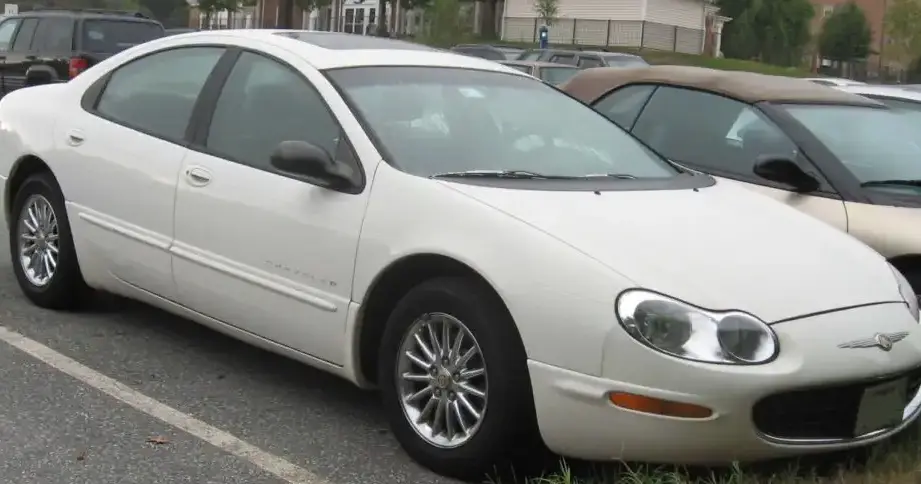
The Chrysler Concorde II 3.2i V6 24V, produced from 1997 to 2002, represented a significant evolution of the original Concorde, continuing Chrysler’s commitment to the large American sedan. Positioned as a mid-to-upper trim level within the Concorde II range, the 3.2i offered a balance of performance and comfort, appealing to buyers seeking a more refined driving experience than the base 2.5L engine provided. It was a key model during a period where Chrysler was attempting to establish itself as a premium American brand, competing with offerings from Ford and General Motors. The Concorde II, built on the LH platform, aimed to deliver a modern, spacious, and technologically advanced vehicle for the family sedan market.
Technical Specifications
| Brand | Chrysler |
| Model | Concorde |
| Generation | Concorde II |
| Type (Engine) | 3.2 i V6 24V (228 Hp) |
| Start of production | 1997 |
| End of production | 2002 |
| Powertrain Architecture | Internal Combustion engine |
| Body type | Sedan |
| Seats | 5 |
| Doors | 4 |
| Fuel consumption (urban) | 15 l/100 km (15.7 US mpg) |
| Fuel consumption (extra urban) | 9 l/100 km (26.1 US mpg) |
| Fuel Type | Petrol (Gasoline) |
| Acceleration 0 – 100 km/h | 9.5 sec |
| Acceleration 0 – 62 mph | 9.5 sec |
| Acceleration 0 – 60 mph | 9 sec |
| Maximum speed | 210 km/h (130.49 mph) |
| Weight-to-power ratio | 6.9 kg/Hp |
| Weight-to-torque ratio | 5.1 kg/Nm |
| Power | 228 Hp @ 6300 rpm |
| Power per litre | 70.6 Hp/l |
| Torque | 305 Nm @ 3800 rpm (224.96 lb.-ft. @ 3800 rpm) |
| Engine layout | Front, Longitudinal |
| Engine displacement | 3231 cm3 (197.17 cu. in.) |
| Number of cylinders | 6 |
| Engine configuration | V-engine |
| Cylinder Bore | 92 mm (3.62 in.) |
| Piston Stroke | 81 mm (3.19 in.) |
| Compression ratio | 9.5:1 |
| Number of valves per cylinder | 4 |
| Fuel injection system | Multi-port manifold injection |
| Engine aspiration | Naturally aspirated engine |
| Valvetrain | DOHC |
| Engine oil capacity | 4.7 l (4.97 US qt | 4.14 UK qt) |
| Coolant | 8.9 l (9.4 US qt | 7.83 UK qt) |
| Kerb Weight | 1570 kg (3461.26 lbs.) |
| Trunk (boot) space | 530 l (18.72 cu. ft.) |
| Fuel tank capacity | 68 l (17.96 US gal | 14.96 UK gal) |
| Length | 5310 mm (209.06 in.) |
| Width | 1900 mm (74.8 in.) |
| Height | 1420 mm (55.91 in.) |
| Wheelbase | 2870 mm (112.99 in.) |
| Front track | 1575 mm (62.01 in.) |
| Rear track | 1575 mm (62.01 in.) |
| Drivetrain Architecture | Front wheel drive |
| Number of gears | 4 |
| Gearbox type | Automatic transmission |
| Front suspension | Coil spring |
| Rear suspension | Coil spring |
| Front brakes | Ventilated discs |
| Rear brakes | Disc |
| Assisting systems | ABS (Anti-lock braking system) |
| Steering type | Steering rack and pinion |
| Tires size | 225/60 R16 |
Powertrain & Engine Architecture
The heart of the Concorde II 3.2i was the 3.2-liter (197.17 cubic inches) EGE V6 engine. This engine, internally designated as the 3.2L High Output, was a 60-degree V6 featuring a dual overhead camshaft (DOHC) valvetrain with four valves per cylinder. The engine utilized a multi-port fuel injection system, delivering fuel directly to each cylinder for optimized combustion. The 3.2L V6 produced 228 horsepower at 6300 rpm and 305 Nm (224.96 lb-ft) of torque at 3800 rpm. This engine was a significant upgrade over the base 2.5L V6, offering noticeably improved acceleration and overall performance. Paired with the 3.2L engine was a four-speed automatic transmission, designed for smooth and comfortable shifting. This transmission was a crucial component in delivering the engine’s power to the front wheels.
Driving Characteristics
The Concorde II 3.2i with the automatic transmission offered a comfortable and refined driving experience. While not a sports sedan, the 228 hp engine provided adequate power for highway cruising and passing maneuvers. Acceleration from 0 to 60 mph was achieved in around 9 seconds, which was competitive for its class at the time. The automatic transmission, while smooth, wasn’t particularly sporty, prioritizing comfort over aggressive shifting. Compared to the manual transmission equipped versions (available on other Concorde trims), the automatic resulted in a slight performance decrease, but offered greater convenience for everyday driving. The gear ratios were tuned for fuel efficiency and relaxed cruising, rather than maximizing acceleration. The front-wheel-drive configuration provided predictable handling, although it lacked the dynamic capabilities of rear-wheel-drive competitors.
Equipment & Trim Levels
The 3.2i trim level of the Concorde II typically included a generous array of standard features. These included air conditioning, power windows and locks, a premium sound system, cruise control, and a tilt steering wheel. Interior upholstery was typically cloth, with leather options available as an upgrade. The dashboard featured a straightforward layout with easy-to-read gauges. Optional extras included a sunroof, upgraded sound systems, and automatic temperature control. The 3.2i often featured upgraded interior trim and exterior accents compared to the base models, signifying its position as a more premium offering. Features like upgraded wheels and body-colored side moldings were common distinctions.
Chassis & Braking
The Concorde II utilized a front-engine, front-wheel-drive layout with an independent coil spring suspension at all four corners. The suspension was tuned for a comfortable ride, absorbing bumps and imperfections in the road effectively. The front brakes were ventilated discs, providing ample stopping power, while the rear brakes were solid discs. An anti-lock braking system (ABS) was standard, enhancing safety and control during emergency braking situations. The chassis was designed to provide a stable and predictable driving experience, prioritizing comfort and isolation from road noise and vibrations. Stabilizer bars were included to reduce body roll during cornering. The suspension geometry was optimized for a balance between ride comfort and handling stability.
Market Reception & Comparison
The Chrysler Concorde II 3.2i was generally well-received by automotive critics. It was praised for its spacious interior, comfortable ride, and refined engine. However, some critics noted that the handling wasn’t as sharp as some of its competitors, and the automatic transmission could feel somewhat sluggish. Compared to the base 2.5L engine, the 3.2i offered a significant performance improvement, justifying the higher price tag for buyers seeking more power. Fuel economy was reasonable for a large sedan, averaging around 15 mpg in the city and 26 mpg on the highway. Compared to the higher-performance versions of other Chrysler models, like the 300M, the Concorde II 3.2i offered a more balanced blend of comfort and performance, appealing to a broader range of buyers. It positioned itself as a comfortable, family-oriented alternative to sportier offerings.
Legacy
The Chrysler Concorde II 3.2i, while not a collector’s item, remains a relatively reliable and affordable used car. The 3.2L V6 engine is known for its durability, although regular maintenance is essential to prevent issues. Common problems include oil leaks and occasional sensor failures. The automatic transmission is generally reliable, but may require servicing after high mileage. Today, these vehicles are often sought after by those looking for a comfortable and spacious American sedan at a reasonable price. The Concorde II 3.2i represents a transitional period for Chrysler, showcasing the company’s attempt to blend American comfort with modern technology and performance. Its lasting appeal lies in its combination of size, comfort, and relatively straightforward mechanical design, making it a practical choice for budget-conscious buyers.