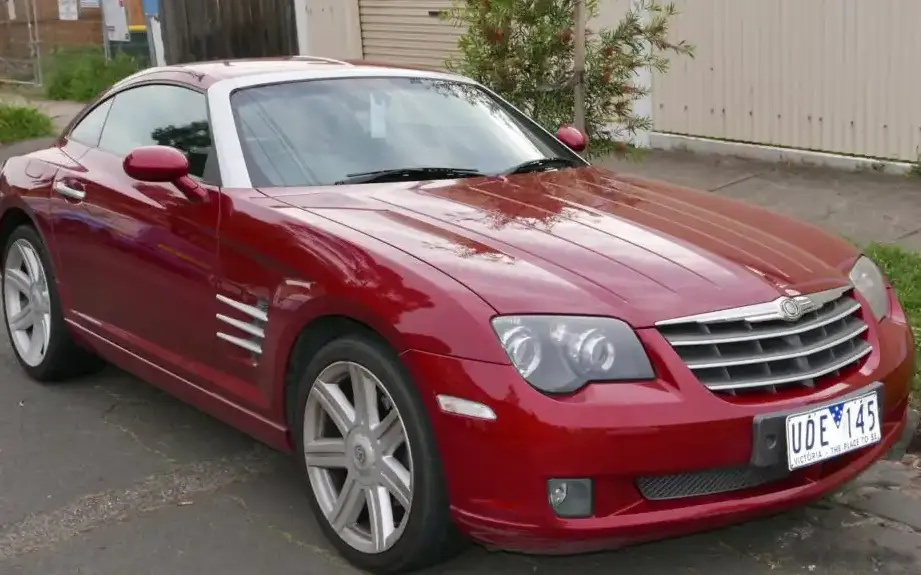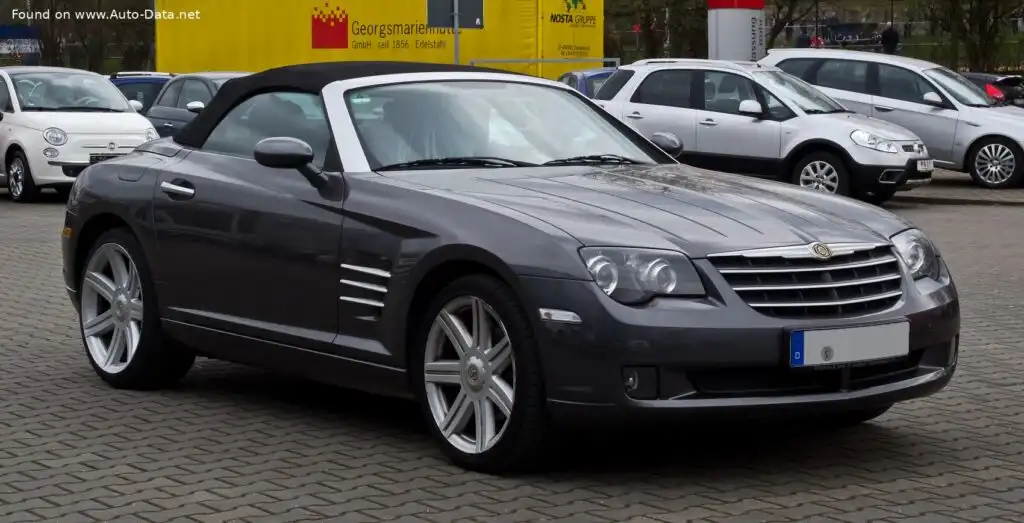
The Chrysler Crossfire Roadster 3.2i V6 18V, produced from 2004 to 2007, represented a bold attempt by DaimlerChrysler to inject some sporting flair into the Chrysler lineup. Based heavily on the Mercedes-Benz SLK platform (R170 series), the Crossfire aimed to offer a unique, affordable roadster experience for the North American market. The Roadster variant, introduced after the initial coupe, capitalized on the growing demand for open-top motoring. This 215 horsepower version occupied the top tier of the Crossfire range, offering a significant performance upgrade over the base 2.4L four-cylinder models. It was positioned as a premium offering, appealing to buyers seeking a stylish and relatively quick sports car.
Technical Specifications
| Brand | Chrysler |
| Model | Crossfire |
| Generation | Crossfire Roadster |
| Type (Engine) | 3.2i V6 18V (215 Hp) |
| Start of production | 2004 |
| End of production | 2007 |
| Powertrain Architecture | Internal Combustion engine |
| Body type | Cabriolet |
| Seats | 2 |
| Doors | 2 |
| Fuel consumption (urban) | 15.4 l/100 km (15.3 US mpg, 18.3 UK mpg, 6.5 km/l) |
| Fuel consumption (extra urban) | 7.6 l/100 km (30.9 US mpg, 37.2 UK mpg, 13.2 km/l) |
| Fuel consumption (combined) | 10.4 l/100 km (22.6 US mpg, 27.2 UK mpg, 9.6 km/l) |
| CO2 emissions | 250 g/km |
| Fuel Type | Petrol (Gasoline) |
| Acceleration 0 – 100 km/h | 6.5 sec |
| Acceleration 0 – 62 mph | 6.5 sec |
| Acceleration 0 – 60 mph | 6.2 sec |
| Maximum speed | 250 km/h (155.34 mph) |
| Weight-to-power ratio | 6.6 kg/Hp, 152.5 Hp/tonne |
| Weight-to-torque ratio | 4.5 kg/Nm, 219.9 Nm/tonne |
| Power | 215 Hp @ 5700 rpm |
| Power per litre | 67.2 Hp/l |
| Torque | 310 Nm @ 3000 rpm (228.64 lb.-ft. @ 3000 rpm) |
| Engine layout | Front, Longitudinal |
| Engine Model/Code | M112 E32 |
| Engine displacement | 3199 cm3 (195.21 cu. in.) |
| Number of cylinders | 6 |
| Engine configuration | V-engine |
| Cylinder Bore | 89.9 mm (3.54 in.) |
| Piston Stroke | 84 mm (3.31 in.) |
| Compression ratio | 10:1 |
| Number of valves per cylinder | 3 |
| Fuel injection system | Multi-port manifold injection |
| Engine aspiration | Naturally aspirated engine |
| Valvetrain | OHC |
| Engine oil capacity | 8 l (8.45 US qt | 7.04 UK qt) |
| Coolant | 11.2 l (11.83 US qt | 9.85 UK qt) |
| Kerb Weight | 1410 kg (3108.52 lbs.) |
| Max. weight | 1665 kg (3670.7 lbs.) |
| Max load | 255 kg (562.18 lbs.) |
| Trunk (boot) space – minimum | 105 l (3.71 cu. ft.) |
| Trunk (boot) space – maximum | 190 l (6.71 cu. ft.) |
| Fuel tank capacity | 60 l (15.85 US gal | 13.2 UK gal) |
| Length | 4060 mm (159.84 in.) |
| Width | 1765 mm (69.49 in.) |
| Height | 1305 mm (51.38 in.) |
| Wheelbase | 2400 mm (94.49 in.) |
| Front track | 1495 mm (58.86 in.) |
| Rear (Back) track | 1500 mm (59.06 in.) |
| Minimum turning circle | 10.6 m (34.78 ft.) |
| Drivetrain Architecture | Rear wheel drive |
| Drive wheel | Rear wheel drive |
| Number of gears | 6 gears, manual transmission |
| Front suspension | Double wishbone |
| Rear suspension | Spring Strut |
| Front brakes | Ventilated discs |
| Rear brakes | Disc |
| Assisting systems | ABS (Anti-lock braking system) |
| Tires size | 225/40 R18; 255/35 R19 |
| Wheel rims size | 7.5J x 18; 9J x 19 |
Powertrain & Engine Architecture
The heart of the Crossfire Roadster 3.2i is the Mercedes-Benz M112 E32 engine, a 3.2-liter naturally aspirated V6. This engine, a staple in many Mercedes-Benz models of the era, is known for its smooth power delivery and robust construction. It features a single overhead camshaft (SOHC) design per cylinder bank, utilizing three valves per cylinder (two intake, one exhaust). The M112 employs multi-port fuel injection, delivering fuel directly into the intake ports. The engine’s 60-degree V-angle contributes to its relatively compact size and balanced operation. The 3.2L engine produced 215 horsepower at 5700 rpm and 310 Nm (228.64 lb-ft) of torque at 3000 rpm. The engine is longitudinally mounted, driving the rear wheels. The standard transmission for this variant was a 6-speed manual, although an optional 5-speed automatic transmission was available. The automatic, while offering convenience, did slightly diminish acceleration times compared to the manual.
Driving Characteristics
The 3.2i Roadster offered a noticeably more engaging driving experience than the base 2.4L models. Acceleration to 60 mph took approximately 6.2 seconds, making it competitive with other sports cars of its time. The rear-wheel-drive layout provided a balanced feel, although the relatively short wheelbase could make it feel a bit twitchy on uneven surfaces. The manual transmission offered precise shifts and allowed drivers to fully exploit the engine’s powerband. The automatic, while smooth, felt less responsive and required more planning when overtaking. The suspension, tuned for a balance between comfort and handling, provided a firm but not overly harsh ride. Steering was direct and well-weighted, contributing to a confident feel in corners.
Equipment & Trim Levels
The Crossfire Roadster 3.2i typically came well-equipped, even as standard. Features included leather upholstery, air conditioning, power windows and locks, and a premium sound system. Optional extras included a hardtop convertible roof (providing better security and weather protection), upgraded audio systems, and various cosmetic enhancements. Interior trim options included different leather colors and wood or metallic accents. The Roadster generally featured a more refined interior than the coupe, with a focus on comfort and style.
Chassis & Braking
The Crossfire Roadster utilized a modified version of the Mercedes-Benz SLK chassis. The front suspension featured a double wishbone design, while the rear employed a multi-link setup. This configuration provided good handling characteristics and a relatively comfortable ride. Braking duties were handled by ventilated discs at the front and solid discs at the rear, equipped with ABS (Anti-lock Braking System). The braking system was generally considered adequate for the car’s performance, although some reviewers noted a lack of ultimate stopping power compared to more focused sports cars.
Market Reception & Comparison
The Chrysler Crossfire Roadster 3.2i received mixed reviews from automotive critics. While praised for its styling and performance, it was often criticized for its compromised interior space and the perceived lack of a distinct Chrysler identity. Compared to the 2.4L models, the 3.2i offered a significant performance boost, but at a higher price point. Against competitors like the Mazda MX-5 Miata and BMW Z4, the Crossfire offered a more powerful engine but lacked the same level of refinement and handling precision. Fuel economy was also a concern, with combined fuel consumption averaging around 22.6 US mpg.
Legacy
The Chrysler Crossfire, while not a commercial blockbuster, remains a distinctive and somewhat polarizing vehicle. The 3.2i Roadster, with its potent V6 engine, is generally considered the most desirable variant. The M112 engine has proven to be relatively reliable, although regular maintenance is crucial. Common issues include oil leaks and occasional sensor failures. On the used car market, the Crossfire Roadster 3.2i can be found at relatively affordable prices, making it an attractive option for buyers seeking a unique and stylish roadster. Its blend of Mercedes-Benz engineering and Chrysler styling continues to appeal to a niche audience of enthusiasts.