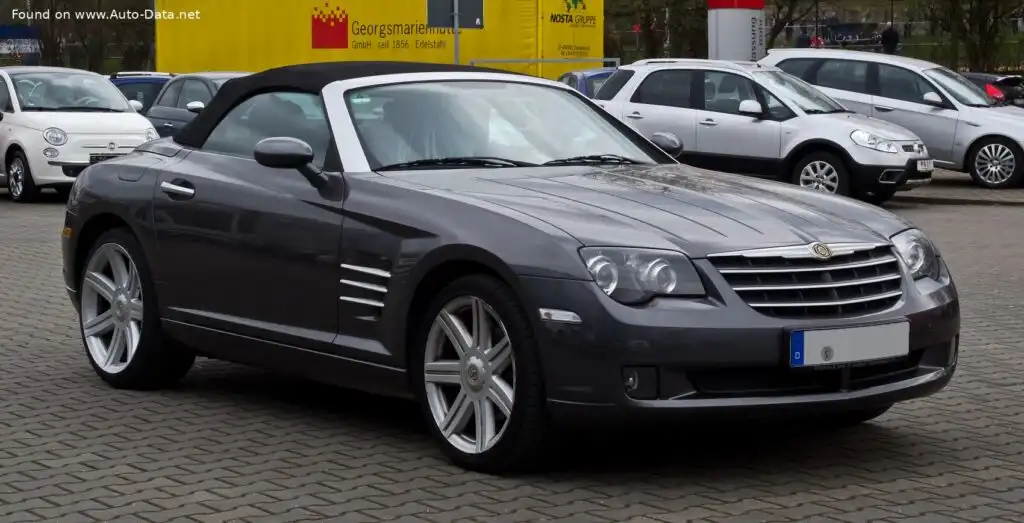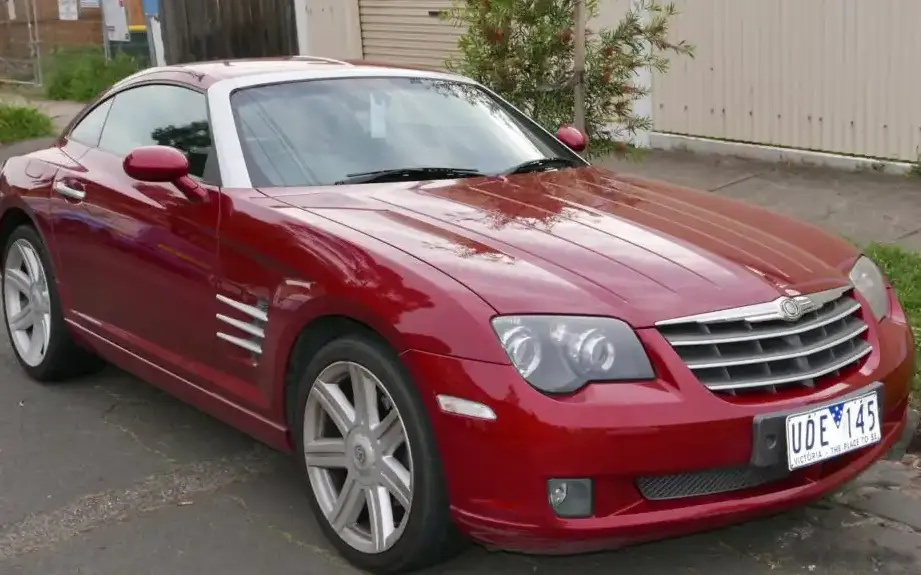
The Chrysler Crossfire SRT-6 3.2i, produced from 2004 to 2006, represented the high-performance variant of the Crossfire model line. Built in Pacheco, Mexico, by DaimlerChrysler, the SRT-6 aimed to inject a dose of serious performance into the stylish, yet somewhat polarizing, two-seat roadster. It was positioned as the flagship model, offering a significant upgrade over the standard 2.2-liter four-cylinder and 3.2-liter naturally aspirated V6 versions. The Crossfire itself was a unique vehicle, leveraging components from the Mercedes-Benz SLK platform, but wrapped in a distinctly American design language. The SRT-6, with its supercharged engine and aggressive styling cues, was intended to appeal to enthusiasts seeking a sporty and exclusive driving experience.
Technical Specifications
| Brand | Chrysler |
| Model | Crossfire |
| Generation | Crossfire |
| Type (Engine) | SRT-6 3.2i V6 (330 Hp) Automatic |
| Start of production | 2004 |
| End of production | 2006 |
| Powertrain Architecture | Internal Combustion engine |
| Body type | Coupe |
| Seats | 2 |
| Doors | 2 |
| Fuel consumption (economy) – urban | 15.9 l/100 km (14.8 US mpg, 17.8 UK mpg, 6.3 km/l) |
| Fuel consumption (economy) – extra urban | 8.2 l/100 km (28.7 US mpg, 34.4 UK mpg, 12.2 km/l) |
| Fuel consumption (economy) – combined | 11.0 l/100 km (21.4 US mpg, 25.7 UK mpg, 9.1 km/l) |
| CO2 emissions | 264 g/km |
| Fuel Type | Petrol (Gasoline) |
| Acceleration 0 – 100 km/h | 5.3 sec |
| Acceleration 0 – 62 mph | 5.3 sec |
| Acceleration 0 – 60 mph | 5 sec |
| Maximum speed | 255 km/h (158.45 mph) |
| Emission standard | Euro 4 |
| Weight-to-power ratio | 4.4 kg/Hp, 226.8 Hp/tonne |
| Weight-to-torque ratio | 3.5 kg/Nm, 288.7 Nm/tonne |
| Power | 330 Hp @ 6100 rpm |
| Power per litre | 103.2 Hp/l |
| Torque | 420 Nm @ 3500 rpm (309.78 lb.-ft. @ 3500 rpm) |
| Engine layout | Front, Longitudinal |
| Engine Model/Code | M112 E32 |
| Engine displacement | 3199 cm3 (195.21 cu. in.) |
| Number of cylinders | 6 |
| Engine configuration | V-engine |
| Cylinder Bore | 89.9 mm (3.54 in.) |
| Piston Stroke | 84 mm (3.31 in.) |
| Compression ratio | 9:1 |
| Number of valves per cylinder | 2 |
| Fuel injection system | Multi-port manifold injection |
| Engine aspiration | Supercharger, Intercooler |
| Valvetrain | OHC |
| Engine oil capacity | 8 l (8.45 US qt | 7.04 UK qt) |
| Coolant | 11.2 l (11.83 US qt | 9.85 UK qt) |
| Kerb Weight | 1455 kg (3207.73 lbs.) |
| Max. weight | 1755 kg (3869.11 lbs.) |
| Max load | 300 kg (661.39 lbs.) |
| Trunk (boot) space – minimum | 215 l (7.59 cu. ft.) |
| Fuel tank capacity | 60 l (15.85 US gal | 13.2 UK gal) |
| Length | 4058 mm (159.76 in.) |
| Width | 1766 mm (69.53 in.) |
| Width including mirrors | 1960 mm (77.17 in.) |
| Height | 1296 mm (51.02 in.) |
| Wheelbase | 2400 mm (94.49 in.) |
| Front track | 1493 mm (58.78 in.) |
| Rear (Back) track | 1502 mm (59.13 in.) |
| Minimum turning circle | 10.6 m (34.78 ft.) |
| Drivetrain Architecture | Rear wheel drive |
| Drive wheel | Rear wheel drive |
| Number of gears and type of gearbox | 5 gears, automatic transmission |
| Front suspension | Double wishbone |
| Rear suspension | Spring Strut |
| Front brakes | Ventilated discs |
| Rear brakes | Disc |
| Assisting systems | ABS (Anti-lock braking system) |
| Tires size | Front wheel tires: 225/40 R18, Rear wheel tires: 255/35 R19 |
| Wheel rims size | Front wheel rims: 7.5J x 18, Rear wheel rims: 8J x 19 |
Powertrain & Engine Architecture
The heart of the SRT-6 is the M112 E32 3.2-liter V6 engine, sourced from Mercedes-Benz. This engine is notable for its supercharger, an Eaton Roots-type blower, which significantly boosts power output. The engine utilizes multi-port fuel injection and a single overhead camshaft (OHC) design per cylinder bank. The supercharger, coupled with an intercooler, delivers instant throttle response and a broad torque curve. The five-speed automatic transmission, also sourced from Mercedes-Benz, was specifically tuned to handle the increased power and torque of the SRT-6. While not known for lightning-fast shifts, it provided smooth and relatively reliable operation. The engine’s longitudinal mounting and rear-wheel-drive configuration contributed to the car’s balanced handling characteristics.
Driving Characteristics
The SRT-6 offered a dramatically different driving experience compared to the standard Crossfire models. The supercharged V6 delivered a potent 330 horsepower, resulting in a 0-60 mph time of around 5 seconds. The automatic transmission, while not a performance-oriented unit, provided adequate gear changes for spirited driving. The car felt planted and stable, thanks to its relatively low center of gravity and well-tuned suspension. However, the ride quality was firm, reflecting the car’s performance focus. Compared to the naturally aspirated 3.2-liter V6, the SRT-6 offered significantly more acceleration and a more engaging driving experience. The manual transmission versions of the standard 3.2L offered a more connected feel, but the SRT-6’s supercharged power more than compensated for the automatic’s slight lack of engagement.
Equipment & Trim Levels
The SRT-6 came standard with a number of premium features, including leather upholstery, power-adjustable seats, automatic climate control, and a premium sound system. Exterior styling cues included unique front and rear fascias, side skirts, and a rear spoiler. The interior featured aluminum trim and SRT-specific badging. Optional extras included a navigation system, upgraded audio, and various cosmetic enhancements. The SRT-6 was essentially a fully equipped vehicle, with few options available beyond personalization items.
Chassis & Braking
The Crossfire SRT-6 utilized a double wishbone suspension setup at the front and a multi-link spring strut suspension at the rear. This configuration provided a good balance of handling and ride comfort, although the emphasis was clearly on performance. The braking system consisted of ventilated discs at all four corners, providing ample stopping power. Anti-lock brakes (ABS) were standard. The SRT-6 featured larger tires – 225/40 R18 at the front and 255/35 R19 at the rear – mounted on unique alloy wheels, further enhancing grip and handling.
Market Reception & Comparison
The Crossfire SRT-6 received mixed reviews from automotive critics. While praised for its performance and distinctive styling, it was often criticized for its compromised interior space and somewhat artificial feel. Fuel economy was also a concern, with combined fuel consumption averaging around 21.4 US mpg. Compared to other sports cars in its price range, such as the Porsche Boxster and BMW Z4, the Crossfire SRT-6 offered a unique blend of American muscle and European engineering. However, its reliability record was somewhat spotty, with some owners reporting issues with the supercharger and electrical systems.
Legacy
The Chrysler Crossfire SRT-6 remains a relatively rare and collectible vehicle. While not a mainstream success, it has gained a following among enthusiasts who appreciate its unique styling and potent performance. The M112 engine, while known for potential issues with the supercharger’s intercooler pump, is generally considered robust when properly maintained. Today, the SRT-6 can be found on the used car market at relatively affordable prices, making it an attractive option for those seeking a distinctive and engaging sports car experience. Its blend of American bravado and Mercedes-Benz engineering continues to make it a memorable and somewhat controversial vehicle in automotive history.