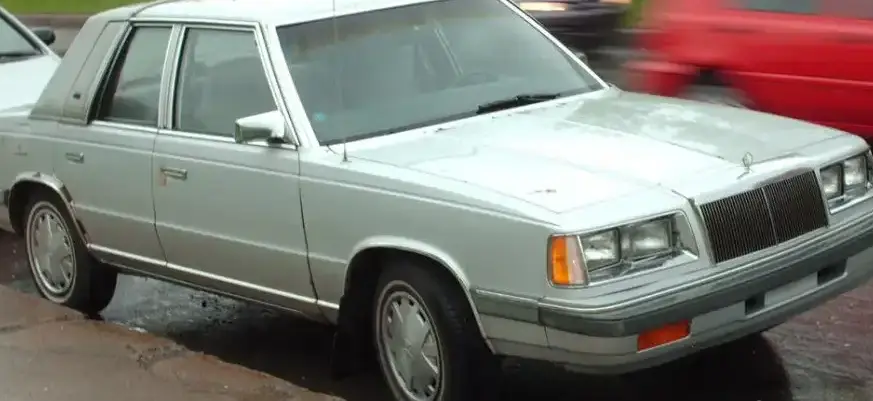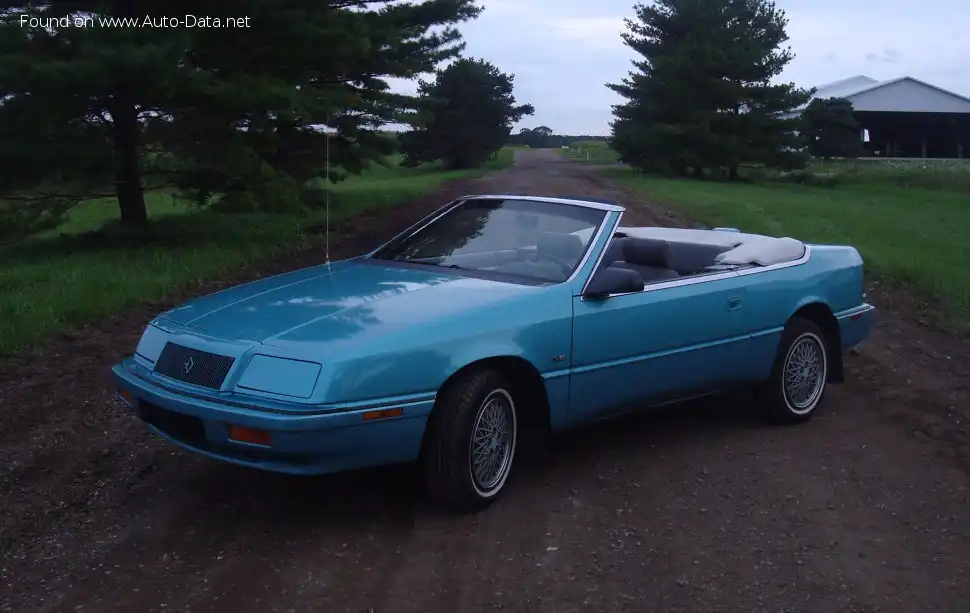
The Chrysler LeBaron Cabrio 2.5i, produced between 1986 and 1993, represented a significant entry for Chrysler into the affordable convertible market. Part of the second generation LeBaron (1987-1995), the Cabrio was based on the K-car platform, and aimed to deliver open-air motoring to a broader audience. The 2.5i variant, equipped with a 2.5-liter inline-four engine producing 101 horsepower, served as the base engine option for the Cabriolet, positioning it as an accessible and relatively economical choice within the LeBaron lineup. It was a key model in Chrysler’s attempt to recapture a segment largely dominated by imports.
Technical Specifications
| Brand | Chrysler |
| Model | LE Baron |
| Generation | LE Baron Cabrio |
| Type (Engine) | 2.5 i (101 Hp) |
| Start of production | 1986 year |
| End of production | 1993 year |
| Powertrain Architecture | Internal Combustion engine |
| Body type | Cabriolet |
| Seats | 4 |
| Doors | 2 |
| Fuel consumption (urban) | 13 l/100 km (18.1 US mpg, 21.7 UK mpg, 7.7 km/l) |
| Fuel consumption (extra urban) | 8 l/100 km (29.4 US mpg, 35.3 UK mpg, 12.5 km/l) |
| Fuel Type | Petrol (Gasoline) |
| Maximum speed | 165 km/h (102.53 mph) |
| Weight-to-power ratio | 13.7 kg/Hp (73.2 Hp/tonne) |
| Weight-to-torque ratio | 7.5 kg/Nm (132.6 Nm/tonne) |
| Power | 101 Hp @ 4800 rpm |
| Power per litre | 40.4 Hp/l |
| Torque | 183 Nm @ 2800 rpm (134.97 lb.-ft. @ 2800 rpm) |
| Engine layout | Front, Transverse |
| Engine displacement | 2501 cm3 (152.62 cu. in.) |
| Number of cylinders | 4 |
| Engine configuration | Inline |
| Cylinder Bore | 87.5 mm (3.44 in.) |
| Piston Stroke | 104 mm (4.09 in.) |
| Compression ratio | 9:1 |
| Number of valves per cylinder | 2 |
| Fuel injection system | Single-point injection |
| Engine aspiration | Naturally aspirated engine |
| Valvetrain | OHC |
| Kerb Weight | 1380 kg (3042.38 lbs.) |
| Trunk (boot) space (minimum) | 292 l (10.31 cu. ft.) |
| Fuel tank capacity | 53 l (14 US gal | 11.66 UK gal) |
| Length | 4694 mm (184.8 in.) |
| Width | 1757 mm (69.17 in.) |
| Height | 1331 mm (52.4 in.) |
| Wheelbase | 2554 mm (100.55 in.) |
| Front track | 1464 mm (57.64 in.) |
| Rear (Back) track | 1464 mm (57.64 in.) |
| Drivetrain Architecture | The Internal combustion engine (ICE) drives the front wheels of the vehicle. |
| Drive wheel | Front wheel drive |
| Number of gears and type of gearbox | 3 gears, automatic transmission |
| Front suspension | Wishbone |
| Rear suspension | Coil spring |
| Front brakes | Ventilated discs |
| Rear brakes | Disc |
| Assisting systems | ABS (Anti-lock braking system) |
| Steering type | Steering rack and pinion |
| Power steering | Hydraulic Steering |
| Tires size | 195/70 R14 |
Powertrain & Engine Architecture
The heart of the LeBaron Cabrio 2.5i was the 2.5-liter inline-four cylinder engine, internally designated as the 2.5L. This engine, part of Chrysler’s family of four-cylinder engines, featured a single overhead camshaft (OHC) design and two valves per cylinder. Fuel delivery was handled by a single-point fuel injection system, a relatively common technology in the mid-1980s. While not as sophisticated as multi-port fuel injection, it offered improved efficiency and emissions compared to carbureted systems. The engine produced 101 horsepower at 4800 rpm and 183 Nm (135 lb-ft) of torque at 2800 rpm. The engine was transversely mounted in the front of the vehicle, driving the front wheels. Paired with the 2.5L engine was a three-speed automatic transmission. This transmission, while providing ease of use, was not known for its performance or efficiency compared to later four-speed automatics or manual transmissions.
Driving Characteristics
The LeBaron Cabrio 2.5i with the automatic transmission offered a comfortable, but not particularly sporty, driving experience. Acceleration was adequate for everyday driving, but the 101 horsepower engine and three-speed automatic meant that passing maneuvers required planning. The automatic transmission’s gear ratios were geared towards fuel economy rather than performance. Compared to the optional turbocharged 2.5-liter engine or the later 3.0-liter V6, the 2.5i automatic was noticeably slower. The front-wheel-drive configuration provided predictable handling, but the relatively soft suspension tuning prioritized ride comfort over sharp cornering. The steering, while hydraulically assisted, lacked the precision found in more performance-oriented vehicles.
Equipment & Trim Levels
The 2.5i Cabrio typically came standard with features like air conditioning, power steering, and a basic AM/FM stereo. The interior featured cloth upholstery, and the dashboard layout was functional but not luxurious. Optional extras included upgraded sound systems, leather upholstery, power windows and locks, and a cruise control. The LeBaron Cabrio was positioned as a relatively affordable convertible, so many examples were equipped with the base level of equipment. The convertible top was manually operated, a cost-saving measure compared to power-operated tops found on more expensive convertibles.
Chassis & Braking
The LeBaron Cabrio utilized a front-wheel-drive chassis with an independent front suspension featuring wishbone components and a coil-spring rear suspension. The braking system consisted of ventilated discs at the front and solid discs at the rear. An anti-lock braking system (ABS) was available as an option, enhancing safety. The suspension was tuned for ride comfort, resulting in a relatively soft and compliant ride. The tires were typically 195/70R14 size, providing a balance of comfort and handling.
Market Reception & Comparison
The LeBaron Cabrio 2.5i was generally well-received as an affordable and stylish convertible. Critics praised its open-air driving experience and relatively low price point. However, the 2.5-liter engine and three-speed automatic transmission were often criticized for their lack of performance. Compared to the turbocharged 2.5-liter or V6-powered models, the 2.5i offered significantly less power and acceleration. Fuel economy was reasonable for the time, averaging around 18 mpg in the city and 29 mpg on the highway. Reliability was generally good, although the single-point fuel injection system could require occasional maintenance. The 2.5i appealed to buyers who prioritized affordability and style over outright performance.
Legacy
The Chrysler LeBaron Cabrio 2.5i remains a popular choice among classic car enthusiasts and those seeking an affordable entry into the world of convertible ownership. The 2.5-liter engine and three-speed automatic transmission are relatively simple and reliable, making them relatively easy to maintain. However, parts availability can be a challenge, particularly for less common components. The LeBaron Cabrio helped to revive the American convertible market and paved the way for future Chrysler convertibles. Today, well-maintained examples of the 2.5i Cabrio are sought after by collectors and enthusiasts who appreciate their classic styling and open-air driving experience. While not a performance icon, the LeBaron Cabrio 2.5i holds a significant place in automotive history as an accessible and enjoyable convertible of its era.