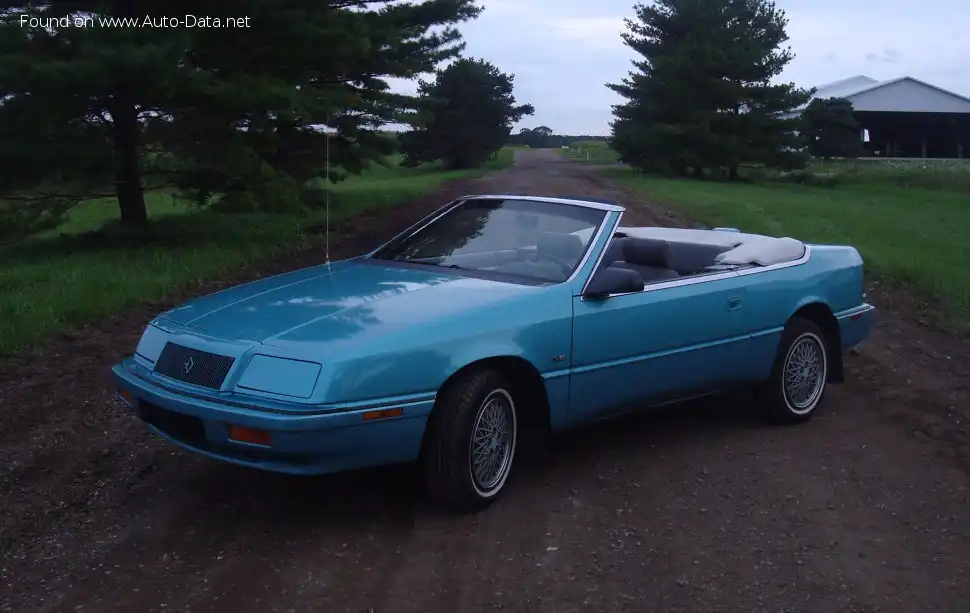
The Chrysler LeBaron Coupe 2.5i Turbo, produced from 1989 to 1995, represented a performance-oriented variant within the second generation of the LeBaron. Positioned as a step up from the naturally aspirated models, the 2.5i Turbo offered a significant boost in power and a more engaging driving experience. This coupe utilized the Chrysler’s J-body platform, sharing underpinnings with other models like the Dodge Daytona and Chrysler Conquest, but distinguished itself with its more luxurious appointments and focus on grand touring. The 2.5i Turbo, paired with a 3-speed automatic transmission, aimed to deliver a balance of performance and convenience for the American market.
Technical Specifications
| Brand | Chrysler |
| Model | LeBaron |
| Generation | LeBaron Coupe |
| Type (Engine) | 2.5 i Turbo (155 Hp) Automatic 3-speed |
| Start of production | 1989 |
| End of production | 1995 |
| Powertrain Architecture | Internal Combustion engine |
| Body type | Coupe |
| Seats | 4 |
| Doors | 2 |
| Fuel consumption (urban) | 13.6 l/100 km (17.3 US mpg) |
| Fuel consumption (extra urban) | 7.8 l/100 km (30.2 US mpg) |
| Fuel consumption (combined) | 10 l/100 km (23.5 US mpg) |
| Fuel Type | Petrol (Gasoline) |
| Acceleration 0 – 100 km/h | 8.7 sec |
| Acceleration 0 – 62 mph | 8.7 sec |
| Acceleration 0 – 60 mph | 8.3 sec |
| Maximum speed | 198 km/h (123.03 mph) |
| Weight-to-power ratio | 8.9 kg/Hp |
| Weight-to-torque ratio | 4.8 kg/Nm |
| Power | 155 Hp @ 4800 rpm |
| Power per litre | 62 Hp/l |
| Torque | 284 Nm @ 2400 rpm (209.47 lb.-ft. @ 2400 rpm) |
| Engine layout | Front, Transverse |
| Engine displacement | 2501 cm3 (152.62 cu. in.) |
| Number of cylinders | 4 |
| Engine configuration | Inline |
| Cylinder Bore | 87.5 mm (3.44 in.) |
| Piston Stroke | 104 mm (4.09 in.) |
| Compression ratio | 7.8:1 |
| Number of valves per cylinder | 2 |
| Fuel injection system | Multi-port manifold injection |
| Engine aspiration | Turbocharger |
| Valvetrain | OHC |
| Engine oil capacity | 4.4 l (4.65 US qt | 3.87 UK qt) |
| Coolant capacity | 8.5 l (8.98 US qt | 7.48 UK qt) |
| Kerb Weight | 1375 kg (3031.36 lbs.) |
| Max. weight | 1840 kg (4056.51 lbs.) |
| Max load | 465 kg (1025.15 lbs.) |
| Trunk (boot) space – minimum | 292 l (10.31 cu. ft.) |
| Fuel tank capacity | 53 l (14 US gal | 11.66 UK gal) |
| Length | 4694 mm (184.8 in.) |
| Width | 1758 mm (69.21 in.) |
| Height | 1372 mm (54.02 in.) |
| Wheelbase | 2554 mm (100.55 in.) |
| Front track | 1462 mm (57.56 in.) |
| Rear (Back) track | 1464 mm (57.64 in.) |
| Drivetrain Architecture | Front wheel drive |
| Number of gears | 3 |
| Gearbox type | Automatic transmission |
| Front suspension | Wishbone |
| Rear suspension | Coil spring |
| Front brakes | Ventilated discs |
| Rear brakes | Disc |
| Assisting systems | ABS (Anti-lock braking system) |
| Steering type | Steering rack and pinion |
| Power steering | Hydraulic Steering |
| Tires size | 195/70 R14 |
Powertrain & Engine Architecture
The heart of the LeBaron Coupe 2.5i Turbo was the Chrysler 2.5-liter inline-four cylinder engine. Internally designated with codes like the 525, this engine featured a turbocharger and multi-port fuel injection. The turbocharger, a Garrett T25, provided a significant boost in power over the naturally aspirated 2.5-liter engine found in other LeBaron models. The engine utilized a 7.8:1 compression ratio and an overhead camshaft (OHC) valvetrain with two valves per cylinder. The 3-speed automatic transmission, a Chrysler A727 variant, was chosen for its durability and ease of use, catering to the American preference for automatic transmissions. While not known for its sporting character, the A727 provided smooth shifts and adequate performance when paired with the turbocharged engine. The transmission’s gear ratios were optimized for both acceleration and highway cruising.
Driving Characteristics
The 155 horsepower and 209 lb-ft of torque delivered by the 2.5i Turbo engine provided a noticeable improvement in acceleration compared to the base LeBaron models. Zero to sixty mph times were consistently reported in the low 8-second range, making it a relatively quick coupe for its time. However, the automatic transmission did slightly diminish the engine’s potential, as a manual transmission would have likely resulted in quicker acceleration. The turbocharger did exhibit some lag, meaning there was a slight delay between pressing the accelerator and feeling the full boost of power. Once the turbo spooled up, however, the engine delivered a strong surge of acceleration. The suspension, while comfortable, was tuned more for ride quality than handling, resulting in some body roll during cornering. Overall, the driving experience was best described as relaxed and capable, rather than sporty and engaging.
Equipment & Trim Levels
The LeBaron Coupe 2.5i Turbo typically came well-equipped, reflecting its position as a premium trim level. Standard features included air conditioning, power windows and locks, cruise control, and an upgraded sound system. Interior upholstery was typically cloth, but leather options were available. The dashboard featured a full array of gauges, including a boost gauge to monitor turbocharger performance. Optional extras included a sunroof, upgraded stereo systems, and alloy wheels. The interior design aimed for a luxurious feel, with comfortable seating and a generally well-appointed cabin.
Chassis & Braking
The LeBaron Coupe utilized a front-wheel-drive layout with an independent wishbone front suspension and a coil-spring rear suspension. The front brakes were ventilated discs, providing adequate stopping power, while the rear brakes were solid discs. ABS (Anti-lock Braking System) was standard, enhancing safety and control during hard braking. The chassis was relatively lightweight, contributing to the car’s decent acceleration. However, the suspension was not particularly sophisticated, and the car did not offer the same level of handling precision as some of its European competitors.
Market Reception & Comparison
The LeBaron Coupe 2.5i Turbo was generally well-received by automotive critics, who praised its performance and comfortable ride. However, some critics noted the turbo lag and the somewhat dated interior design. Compared to other trims in the LeBaron lineup, the 2.5i Turbo offered a significant performance advantage, but at a higher price point. Fuel economy was reasonable for a turbocharged vehicle of its era, averaging around 23.5 mpg in combined driving. Reliability was generally good, although the turbocharger did require more maintenance than a naturally aspirated engine. Compared to competitors like the Ford Mustang and Chevrolet Camaro, the LeBaron Coupe offered a more refined and luxurious driving experience, but lacked the same level of sporting appeal.
Legacy
The Chrysler LeBaron Coupe 2.5i Turbo remains a popular choice among enthusiasts seeking a classic American coupe with a bit of extra performance. The 2.5-liter turbocharged engine is known for its durability and potential for modification. While parts availability can be a challenge, many components are still readily available through aftermarket suppliers. Today, well-maintained examples of the LeBaron Coupe 2.5i Turbo are becoming increasingly collectible, representing a unique and affordable entry point into the world of classic turbocharged cars. The powertrain, while not groundbreaking, proved to be relatively reliable and continues to provide enjoyable performance for those who appreciate its unique character.