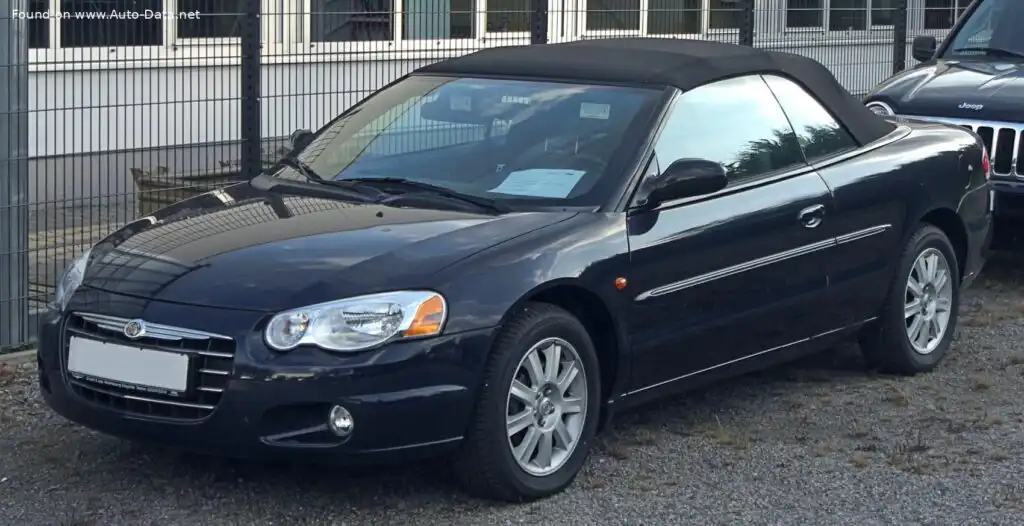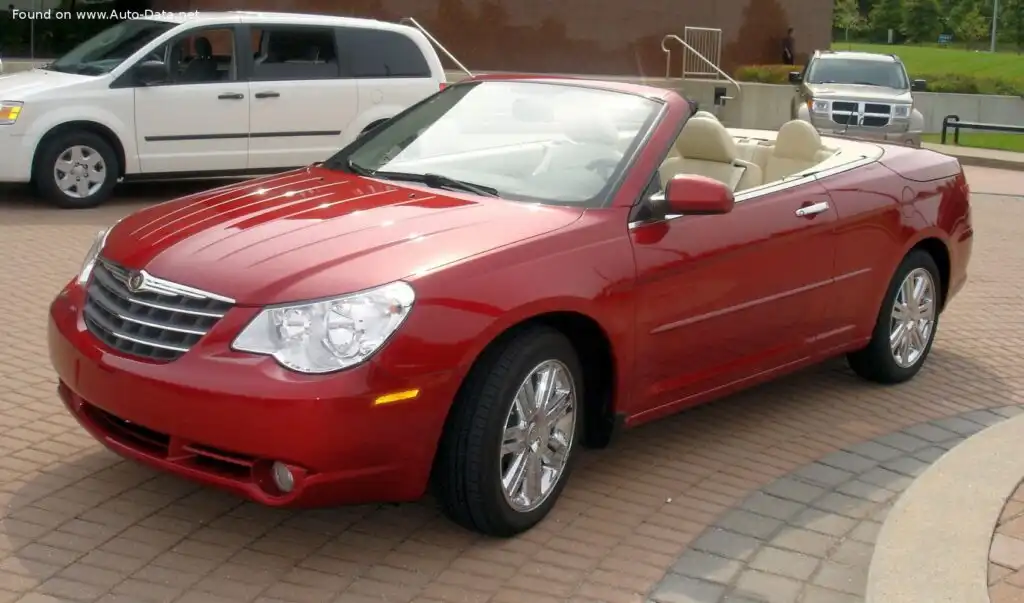
The Chrysler Sebring Sedan (JS) 2.2 CRD Automatic, produced between 2006 and 2010, represented a foray into diesel power for the North American market Sebring lineup. Positioned as a fuel-efficient alternative to the gasoline-powered models, this variant aimed to appeal to drivers seeking improved mileage without sacrificing the comfort and features expected of a mid-size sedan. It was part of the JS generation Sebring, which itself was a significant redesign for the model, sharing a platform with the Dodge Avenger and the Mitsubishi Galant. The 2.2 CRD trim occupied a middle ground in the Sebring range, offering a balance between affordability and equipment.
Technical Specifications
| Brand | Chrysler |
| Model | Sebring |
| Generation | Sebring Sedan (JS) |
| Type (Engine) | 2.2 CRD (150 Hp) Automatic |
| Start of production | 2006 |
| End of production | 2010 |
| Powertrain Architecture | Internal Combustion engine |
| Body type | Sedan |
| Seats | 5 |
| Doors | 4 |
| Fuel Type | Diesel |
| Emission standard | Euro 5 |
| Power | 150 Hp @ 4000 rpm |
| Power per litre | 69.8 Hp/l |
| Torque | 300 Nm @ 1600 rpm / 221.27 lb.-ft. @ 1600 rpm |
| Engine layout | Front, Transverse |
| Engine displacement | 2148 cm3 / 131.08 cu. in. |
| Number of cylinders | 4 |
| Engine configuration | Inline |
| Cylinder Bore | 88 mm / 3.46 in. |
| Piston Stroke | 88.3 mm / 3.48 in. |
| Compression ratio | 18:1 |
| Number of valves per cylinder | 4 |
| Fuel injection system | Diesel Commonrail |
| Engine aspiration | Turbocharger, Intercooler |
| Valvetrain | OHC |
| Engine oil capacity | 7 l / 7.4 US qt | 6.16 UK qt |
| Coolant | 9 l / 9.51 US qt | 7.92 UK qt |
| Trunk (boot) space – minimum | 441 l / 15.57 cu. ft. |
| Fuel tank capacity | 64 l / 16.91 US gal | 14.08 UK gal |
| Length | 4850 mm / 190.94 in. |
| Width | 1843 mm / 72.56 in. |
| Height | 1497 mm / 58.94 in. |
| Wheelbase | 2767 mm / 108.94 in. |
| Front track | 1570 mm / 61.81 in. |
| Rear (Back) track | 1570 mm / 61.81 in. |
| Drivetrain Architecture | The Internal combustion engine (ICE) drives the front wheels of the vehicle. |
| Drive wheel | Front wheel drive |
| Number of gears and type of gearbox | 4 gears, automatic transmission |
| Front suspension | Independent type McPherson |
| Rear suspension | Several levers and rods |
| Front brakes | Ventilated discs |
| Rear brakes | Disc |
| Assisting systems | ABS (Anti-lock braking system) |
| Steering type | Steering rack and pinion |
| Power steering | Hydraulic Steering |
Powertrain & Engine Architecture
The heart of the Sebring 2.2 CRD was the Volkswagen-sourced 2.0-liter inline-four cylinder diesel engine, designated as the 4HW. While marketed as a 2.2-liter, the actual displacement was 2148cc. This engine utilized a common rail direct injection system, delivering fuel at extremely high pressures for optimized combustion. A turbocharger with an intercooler was employed to boost power output and improve torque across a wider RPM range. The engine featured an overhead camshaft (OHC) valvetrain with four valves per cylinder, contributing to its efficiency and responsiveness. The four-speed automatic transmission, while adequate, was a point of criticism, as more modern automatics offered smoother shifts and more gears for improved fuel economy. The transmission was designed to handle the diesel engine’s torque characteristics, but it wasn’t known for its sportiness.
Driving Characteristics
The 150 horsepower and 300 Nm (221 lb-ft) of torque provided by the 2.2 CRD engine delivered respectable, if not exhilarating, performance. Acceleration was adequate for everyday driving, with the automatic transmission providing smooth, if somewhat slow, gear changes. Compared to the gasoline-powered Sebring models, the diesel offered significantly better low-end torque, making it easier to accelerate from a standstill or pass other vehicles. However, the four-speed automatic limited the engine’s ability to stay in its optimal power band, especially at highway speeds. The manual transmission versions of the 2.0 CRD offered a more engaging driving experience and slightly better fuel economy. The Sebring 2.2 CRD wasn’t designed for spirited driving; its focus was on fuel efficiency and comfortable cruising.
Equipment & Trim Levels
The 2.2 CRD trim of the Sebring typically included standard features such as air conditioning, power windows and locks, a CD player with an auxiliary input, and anti-lock brakes (ABS). Higher trim levels offered upgrades like leather upholstery, a sunroof, upgraded audio systems, and alloy wheels. The interior design was generally functional and comfortable, though the materials used were not particularly luxurious. The Sebring aimed to provide a good value proposition, offering a reasonable level of equipment for its price point. Optional extras included a navigation system and premium sound system.
Chassis & Braking
The Sebring 2.2 CRD utilized an independent McPherson strut suspension in the front and a multi-link suspension in the rear. This setup provided a comfortable ride quality, absorbing bumps and imperfections in the road effectively. The front brakes were ventilated discs, while the rear brakes were solid discs. The hydraulic power steering offered light and easy steering, making it convenient for city driving. The suspension was tuned for comfort rather than sporty handling, resulting in a slight degree of body roll during cornering. Stabilizer bars were included to help reduce body roll and improve stability.
Market Reception & Comparison
The Chrysler Sebring 2.2 CRD received mixed reviews. Critics praised its fuel efficiency and comfortable ride, but criticized the dated four-speed automatic transmission and the somewhat unrefined engine noise. Compared to its gasoline-powered siblings, the 2.2 CRD offered significantly better fuel economy, making it an attractive option for drivers who prioritized mileage. However, the higher initial cost of the diesel engine and the potential for higher maintenance costs (due to the more complex diesel technology) were drawbacks. The Sebring 2.2 CRD competed with other mid-size sedans offering diesel engines, such as the Volkswagen Passat and the Opel/Vauxhall Vectra.
Legacy
The Chrysler Sebring 2.2 CRD, while not a sales success in the US market, represented an attempt by Chrysler to offer a fuel-efficient diesel option to American consumers. The 4HW engine proved to be relatively reliable, although like all diesel engines, it required regular maintenance and proper fuel quality to ensure longevity. Today, these vehicles are relatively rare on the used car market. Those that remain are often sought after by diesel enthusiasts and individuals looking for a unique and fuel-efficient vehicle. The Sebring 2.2 CRD serves as a reminder of Chrysler’s brief experiment with diesel power in the North American market during the mid-2000s.