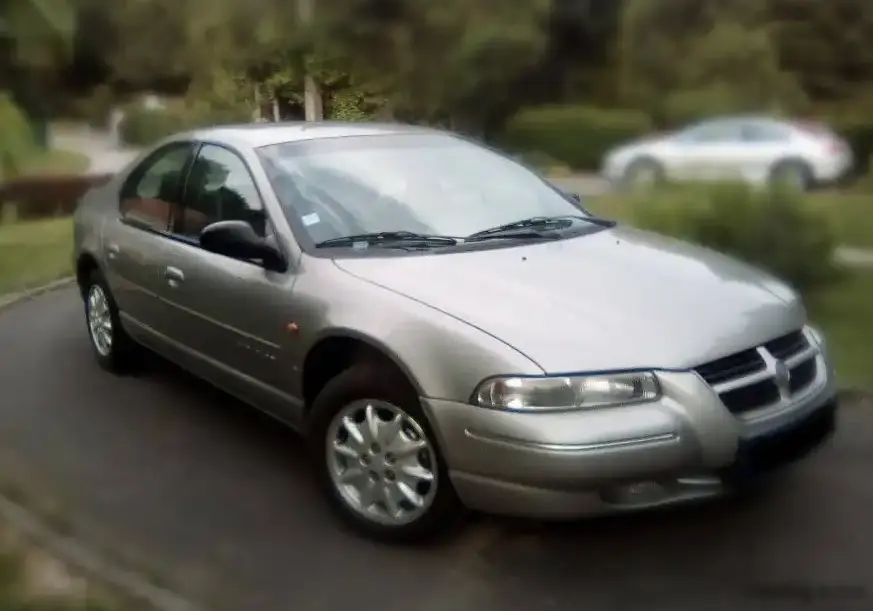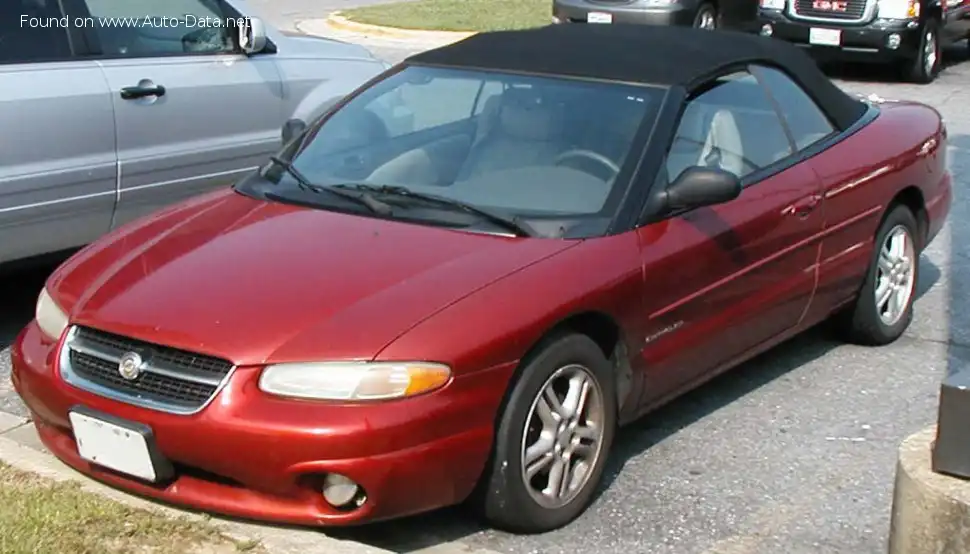
The Chrysler Stratus Cabrio (JX) 2.0 LE, produced between 1996 and 2000, represented Chrysler’s entry into the affordable mid-size convertible market. Part of the first generation Stratus lineup, the JX designation specifically refers to the cabriolet body style. This model aimed to provide open-air motoring at a relatively accessible price point, competing with offerings from Ford and Mazda. The 2.0 LE trim sat as a mid-range option, offering a balance between performance and features, positioned above the base model and below any potential higher-performance variants. It was built on the JA platform, shared with the Dodge Avenger and Plymouth Breeze.
Technical Specifications
| Brand | Chrysler |
| Model | Stratus |
| Generation | Stratus Cabrio (JX) |
| Type | 2.0 LE (131 Hp) |
| Start of production | 1996 |
| End of production | 2000 |
| Powertrain Architecture | Internal Combustion engine |
| Body type | Cabriolet |
| Seats | 4 |
| Doors | 2 |
| Fuel consumption (urban) | 12.7 l/100 km (18.5 US mpg, 22.2 UK mpg, 7.9 km/l) |
| Fuel consumption (extra urban) | 7.4 l/100 km (31.8 US mpg, 38.2 UK mpg, 13.5 km/l) |
| Fuel consumption (combined) | 9.3 l/100 km (25.3 US mpg, 30.4 UK mpg, 10.8 km/l) |
| CO2 emissions | 215 g/km |
| Fuel Type | Petrol (Gasoline) |
| Acceleration 0 – 100 km/h | 10.9 sec |
| Acceleration 0 – 62 mph | 10.9 sec |
| Acceleration 0 – 60 mph | 10.4 sec |
| Maximum speed | 193 km/h (119.92 mph) |
| Weight-to-power ratio | 12.1 kg/Hp, 82.6 Hp/tonne |
| Weight-to-torque ratio | 9.3 kg/Nm, 107.9 Nm/tonne |
| Power | 131 Hp @ 5900 rpm |
| Power per litre | 65.6 Hp/l |
| Torque | 171 Nm @ 4950 rpm (126.12 lb.-ft. @ 4950 rpm) |
| Engine layout | Front, Transverse |
| Engine displacement | 1996 cm3 (121.8 cu. in.) |
| Number of cylinders | 4 |
| Engine configuration | Inline |
| Cylinder Bore | 87.5 mm (3.44 in.) |
| Piston Stroke | 83 mm (3.27 in.) |
| Compression ratio | 9.8:1 |
| Number of valves per cylinder | 4 |
| Fuel injection system | Multi-port manifold injection |
| Engine aspiration | Naturally aspirated |
| Valvetrain | OHC |
| Kerb Weight | 1585 kg (3494.33 lbs.) |
| Max. weight | 1890 kg (4166.74 lbs.) |
| Max load | 305 kg (672.41 lbs.) |
| Trunk (boot) space – minimum | 292 l (10.31 cu. ft.) |
| Fuel tank capacity | 60 l (15.85 US gal | 13.2 UK gal) |
| Length | 4902 mm (192.99 in.) |
| Width | 1780 mm (70.08 in.) |
| Height | 1392 mm (54.8 in.) |
| Wheelbase | 2692 mm (105.98 in.) |
| Front track | 1528 mm (60.16 in.) |
| Rear (Back) track | 1528 mm (60.16 in.) |
| Drivetrain Architecture | Front wheel drive |
| Number of gears | 5 gears, manual transmission |
| Front suspension | Double wishbone |
| Rear suspension | Double wishbone |
| Front brakes | Ventilated discs |
| Rear brakes | Disc |
| Assisting systems | ABS (Anti-lock braking system) |
| Steering type | Steering rack and pinion |
| Power steering | Hydraulic Steering |
| Tires size | 215/55 R16 |
Powertrain & Engine Architecture
The Stratus 2.0 LE Cabriolet was powered by Chrysler’s 2.0-liter inline-four cylinder engine. This engine, internally designated as the 420A, was a relatively simple, naturally aspirated design featuring a single overhead camshaft (OHC) and multi-port fuel injection. The 9.8:1 compression ratio was typical for the era, balancing performance and fuel efficiency. The engine produced 131 horsepower at 5900 rpm and 171 Nm (126 lb-ft) of torque at 4950 rpm. The five-speed manual transmission was standard, offering a reasonably direct connection to the engine. The transmission’s gear ratios were tuned for a balance of acceleration and highway cruising, though it wasn’t particularly sporty. The engine’s design prioritized reliability and affordability over outright performance.
Driving Characteristics
The 2.0L engine in the Stratus Cabrio provided adequate, but not exhilarating, performance. Acceleration from 0-60 mph took around 10.4 seconds, making it competitive with other similarly priced convertibles. The manual transmission allowed for reasonable driver control, but the engine lacked the low-end torque found in larger displacement engines. The car felt most comfortable cruising at highway speeds, where the engine settled into a relaxed rhythm. Compared to potential V6-powered Stratus models, the 2.0L version felt noticeably less powerful, particularly when accelerating or climbing hills. However, the lighter weight of the 2.0L engine compared to the V6 did contribute to slightly improved handling and fuel economy.
Equipment & Trim Levels
The 2.0 LE trim included standard features such as air conditioning, power windows and locks, and an AM/FM stereo. The interior typically featured cloth upholstery, though leather was available as an option. The dashboard layout was functional but not particularly luxurious. Optional extras included a power convertible top, upgraded sound systems, and alloy wheels. The 2.0 LE aimed to provide a comfortable and well-equipped driving experience without the higher price tag of more premium trims.
Chassis & Braking
The Stratus Cabriolet utilized a front-wheel-drive layout with independent double wishbone suspension at all four corners. This suspension setup provided a reasonably comfortable ride, absorbing bumps and imperfections in the road surface effectively. The front brakes were ventilated discs, providing adequate stopping power, while the rear brakes were solid discs. Anti-lock braking system (ABS) was standard, enhancing safety. The steering was rack-and-pinion with hydraulic power assist, offering a light and responsive feel. The standard tire size was 215/55 R16, providing a good balance of grip and ride comfort.
Market Reception & Comparison
The Chrysler Stratus Cabrio 2.0 LE was generally well-received as an affordable and stylish convertible. Critics praised its comfortable ride and well-equipped interior, but noted that the 2.0-liter engine lacked the power of some competitors. Fuel economy was considered average for the class. Compared to the V6-powered Stratus, the 2.0L version offered better fuel efficiency but significantly less performance. The 2.0L model appealed to buyers who prioritized affordability and fuel economy over outright speed and acceleration.
Legacy
The Chrysler Stratus Cabriolet, particularly the 2.0 LE variant, has become a relatively affordable entry point into classic convertible ownership. The 420A engine is generally considered reliable, though routine maintenance is essential to prevent issues. Common problems include oil leaks and sensor failures. Parts availability is generally good, though some trim-specific components may be difficult to find. Today, these cars are often sought after by enthusiasts looking for a stylish and affordable open-air driving experience. While not a performance icon, the Stratus Cabrio 2.0 LE represents a significant moment in Chrysler’s history, offering a taste of convertible motoring to a wider audience.