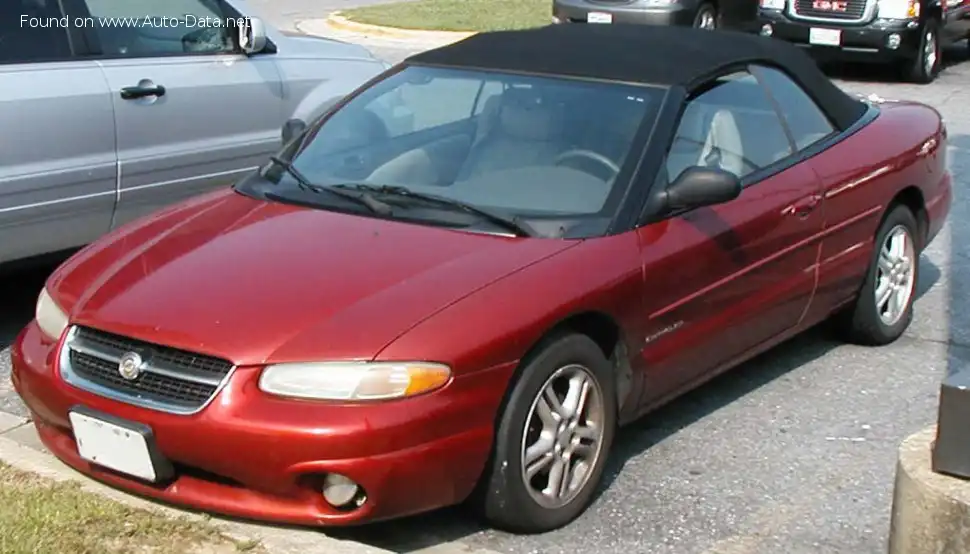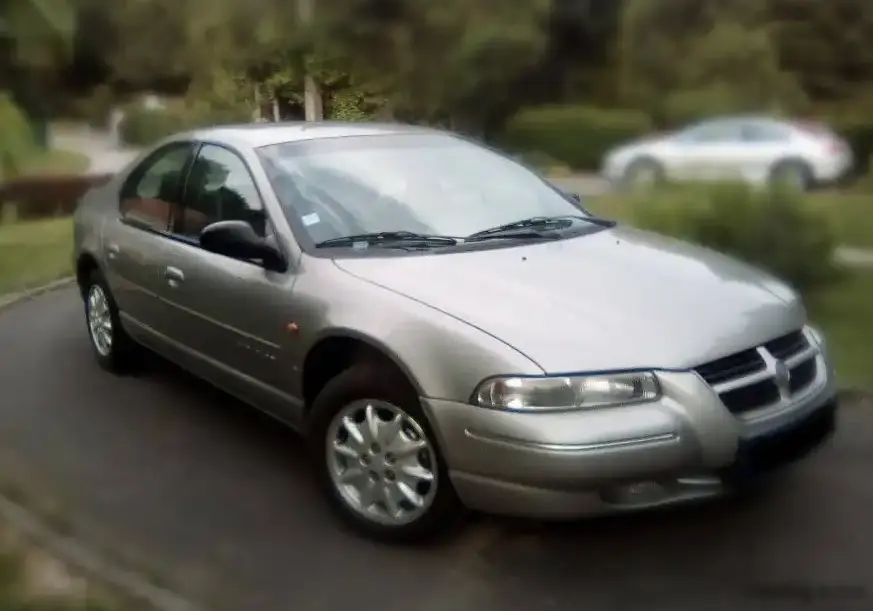
The Chrysler Stratus (JA) 2.0 LE, produced between 1995 and 2000, represented a key offering in Chrysler’s mid-size sedan lineup. Positioned as a step up from the base models, the 2.0 LE provided a balance of affordability and features for the American family car market. It was part of the first generation (JA) Stratus, which shared its platform with the Dodge Avenger and Plymouth Breeze – collectively known as the “JA” platform cars. This generation aimed to modernize Chrysler’s offerings and compete with established rivals like the Honda Accord and Toyota Camry.
Technical Specifications
| Brand | Chrysler |
| Model | Stratus |
| Generation | Stratus (JA) |
| Type | 2.0 LE (131 Hp) |
| Start of production | 1995 |
| End of production | 2000 |
| Powertrain Architecture | Internal Combustion engine |
| Body type | Sedan |
| Seats | 5 |
| Doors | 4 |
| Fuel consumption (urban) | 12.6 l/100 km (18.7 US mpg) |
| Fuel consumption (extra urban) | 7 l/100 km (33.6 US mpg) |
| Fuel consumption (combined) | 9.0 l/100 km (26.1 US mpg) |
| CO2 emissions | 212 g/km |
| Fuel Type | Petrol (Gasoline) |
| Acceleration 0 – 100 km/h | 10.9 sec |
| Acceleration 0 – 62 mph | 10.9 sec |
| Acceleration 0 – 60 mph | 10.4 sec |
| Maximum speed | 205 km/h (127.38 mph) |
| Weight-to-power ratio | 10.3 kg/Hp |
| Weight-to-torque ratio | 7.9 kg/Nm |
| Power | 131 Hp @ 5900 rpm |
| Torque | 171 Nm @ 4950 rpm (126.12 lb.-ft. @ 4950 rpm) |
| Engine layout | Front, Transverse |
| Engine Model/Code | A588 |
| Engine displacement | 1996 cm3 (121.8 cu. in.) |
| Number of cylinders | 4 |
| Engine configuration | Inline |
| Cylinder Bore | 87.5 mm (3.44 in.) |
| Piston Stroke | 83 mm (3.27 in.) |
| Compression ratio | 9.8:1 |
| Number of valves per cylinder | 4 |
| Fuel injection system | Multi-port manifold injection |
| Engine aspiration | Naturally aspirated |
| Valvetrain | OHC |
| Engine oil capacity | 4.25 l (4.49 US qt | 3.74 UK qt) |
| Kerb Weight | 1346 kg (2967.42 lbs.) |
| Max. weight | 1865 kg (4111.62 lbs.) |
| Max load | 519 kg (1144.2 lbs.) |
| Trunk (boot) space – minimum | 445 l (15.72 cu. ft.) |
| Fuel tank capacity | 60 l (15.85 US gal | 13.2 UK gal) |
| Length | 4746 mm (186.85 in.) |
| Width | 1822 mm (71.73 in.) |
| Height | 1374 mm (54.09 in.) |
| Wheelbase | 2747 mm (108.15 in.) |
| Front track | 1518 mm (59.76 in.) |
| Rear track | 1518 mm (59.76 in.) |
| Drivetrain Architecture | Front wheel drive |
| Number of gears | 5 gears, manual transmission |
| Front suspension | Independent type McPherson |
| Rear suspension | Independent multi-link suspension |
| Front brakes | Ventilated discs |
| Rear brakes | Disc |
| Assisting systems | ABS (Anti-lock braking system) |
| Steering type | Steering rack and pinion |
| Power steering | Hydraulic |
| Tires size | 195/65 R15 91V |
INTRODUCTION
The Chrysler Stratus 2.0 LE, launched in 1995, was a significant model for Chrysler as it moved towards more contemporary designs. It aimed to appeal to a broader audience than previous Chrysler sedans, offering a more aerodynamic exterior and a more spacious interior. The “LE” designation indicated a mid-range trim level, offering a step up in features and comfort compared to the base model. The 2.0-liter engine option was intended to provide a balance between fuel efficiency and acceptable performance for everyday driving. The JA platform, shared with the Dodge Avenger and Plymouth Breeze, allowed Chrysler to leverage economies of scale and offer a competitive price point.
Powertrain & Engine Architecture
The heart of the Stratus 2.0 LE was the Chrysler A588 2.0-liter inline-four cylinder engine. This engine, a naturally aspirated unit, featured multi-port fuel injection and an overhead camshaft (OHC) valvetrain. The 9.8:1 compression ratio was typical for the era, balancing performance and fuel economy. The engine produced 131 horsepower at 5900 rpm and 171 Nm (126.12 lb.-ft.) of torque at 4950 rpm. The engine was transversely mounted in the front of the vehicle, driving the front wheels. The 2.0 LE was equipped with a 5-speed manual transmission as standard, offering drivers a degree of control over the engine’s power delivery. While an automatic transmission was available, it was often criticized for diminishing the car’s already modest acceleration.
Driving Characteristics
The Stratus 2.0 LE with the 5-speed manual transmission offered adequate, though not exhilarating, performance. Acceleration from 0-60 mph took around 10.4 seconds, which was competitive for its class but lagged behind some of the more performance-oriented rivals. The engine felt relatively smooth at cruising speeds, but could become noisy under hard acceleration. The manual transmission’s gear ratios were spaced to prioritize fuel economy, resulting in a somewhat lethargic feel in lower gears. Compared to the V6-powered Stratus models, the 2.0 LE felt significantly underpowered, particularly when fully loaded with passengers and cargo. The automatic transmission version further reduced performance, making the car feel sluggish in most driving situations.
Equipment & Trim Levels
The 2.0 LE trim level included a number of standard features designed to enhance comfort and convenience. These typically included air conditioning, power windows and locks, an AM/FM stereo with cassette player, and cloth upholstery. Optional extras included a power sunroof, upgraded sound system, and alloy wheels. The interior design was fairly basic, but functional, with a focus on providing a comfortable and practical space for passengers. The dashboard layout was straightforward, with easy-to-read gauges and well-placed controls. The LE trim offered a noticeable step up in interior materials and finish compared to the base model.
Chassis & Braking
The Stratus 2.0 LE utilized an independent McPherson strut suspension in the front and an independent multi-link suspension in the rear. This suspension setup provided a reasonably comfortable ride, absorbing bumps and imperfections in the road surface effectively. The front brakes were ventilated discs, while the rear brakes were solid discs, providing adequate stopping power for the vehicle’s weight and performance. Anti-lock braking system (ABS) was standard, enhancing safety by preventing wheel lockup during hard braking. The steering was rack and pinion with hydraulic power assist, offering a responsive and precise steering feel.
Market Reception & Comparison
The Chrysler Stratus 2.0 LE received mixed reviews from automotive critics. While praised for its spacious interior and comfortable ride, it was often criticized for its lack of power and somewhat unrefined driving experience. Compared to the V6-powered Stratus models, the 2.0 LE was seen as a more economical choice, but at the expense of performance. Fuel economy was a strong point, with the 2.0 LE achieving around 26.1 US mpg in combined driving. Reliability was generally considered average for the era, with some reports of minor mechanical issues. The 2.0 LE appealed to buyers who prioritized affordability and fuel efficiency over outright performance.
Legacy
The Chrysler Stratus 2.0 LE, while not a standout performer, played an important role in Chrysler’s efforts to modernize its sedan lineup. The A588 2.0-liter engine proved to be reasonably durable, and many examples are still on the road today. However, due to its age and relatively low resale value, the Stratus 2.0 LE is rarely seen as a collector’s item. In the used car market, these vehicles are typically found at very affordable prices, making them a potentially economical option for budget-conscious buyers. Maintenance costs are generally low, but finding replacement parts can sometimes be challenging due to the vehicle’s age.