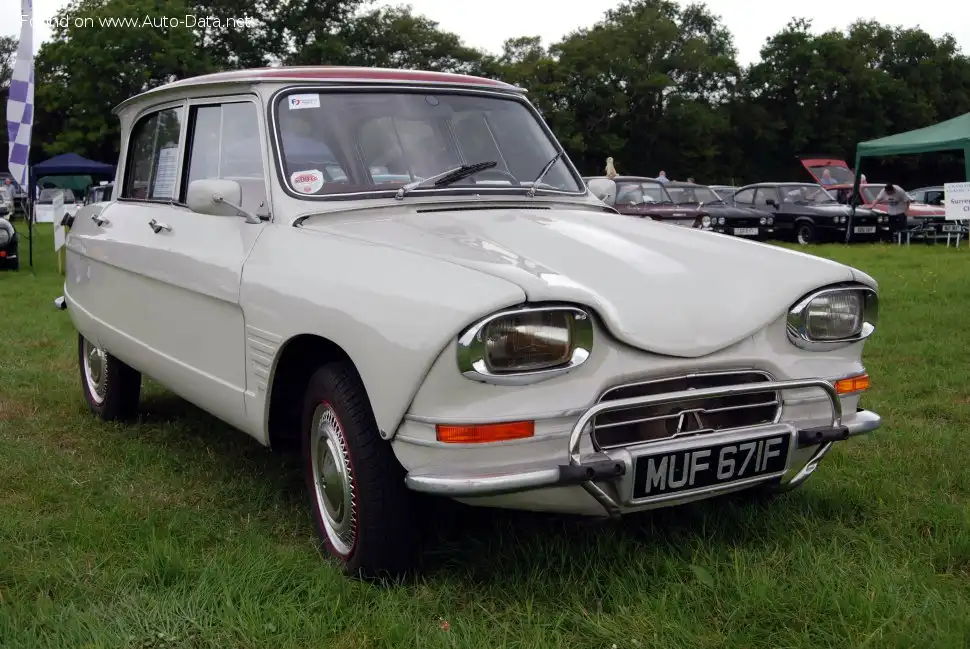
The Citroën Ami 6 is a small family car that was manufactured and marketed by Citroën from 1961 to 1969. Positioned between the minimalist 2CV and the executive DS models, the Ami 6 was conceived to fill a significant gap in the French automaker’s lineup. Known for its deeply unconventional styling, particularly the reverse-raked rear window of the Berline (saloon) model, the Ami 6 was a commercial success, becoming the best-selling car in France in 1966. Over its production run, the vehicle saw several mechanical improvements, culminating in the introduction of the more powerful Citroen AMI 6 0.6 (35 Hp) variant in its final years, which offered enhanced performance for the increasingly demanding driver.
History and Development
In the post-war era, Citroën’s model range was notably polarized. At the entry-level was the utilitarian and hugely popular 2CV, designed as four wheels under an umbrella to motorize rural France. At the top end was the technologically advanced and avant-garde DS, a vehicle far beyond the financial reach of the average French family. Recognizing the vast middle-market void, Citroën management initiated Project AM in the mid-1950s to develop a comfortable, modern, and affordable mid-range car.
The project was led by the same team responsible for the iconic Traction Avant, 2CV, and DS. Flaminio Bertoni, Citroën’s head of design, was tasked with creating the body, while André Lefèbvre, the engineering mastermind, was responsible for the technical aspects. The brief was challenging: the new car had to be based on the aging 2CV’s chassis to save costs, yet it needed to offer significantly more space, comfort, and performance without being classified in a higher road tax bracket in France (which was based on engine displacement).
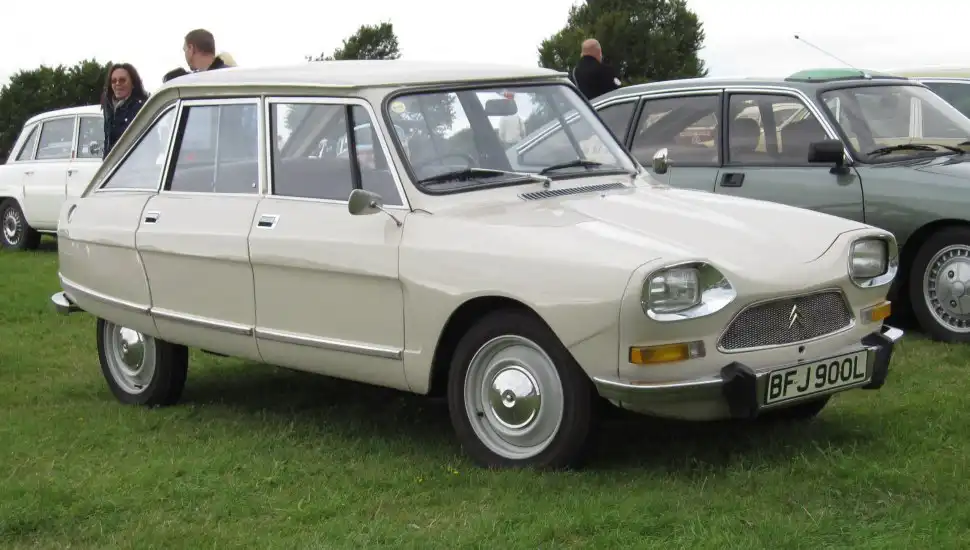
The result was the Ami 6, unveiled in April 1961. The most debated feature was its Z-line reverse-canted rear windscreen on the Berline model. While aesthetically shocking to many, Bertoni defended it on practical grounds. It allowed for a large boot opening, ample rear headroom, and kept the rear window clear of rain and dirt without needing a wiper. The front of the car was equally distinctive, featuring large, rectangular headlamps, a first for a volume production car.
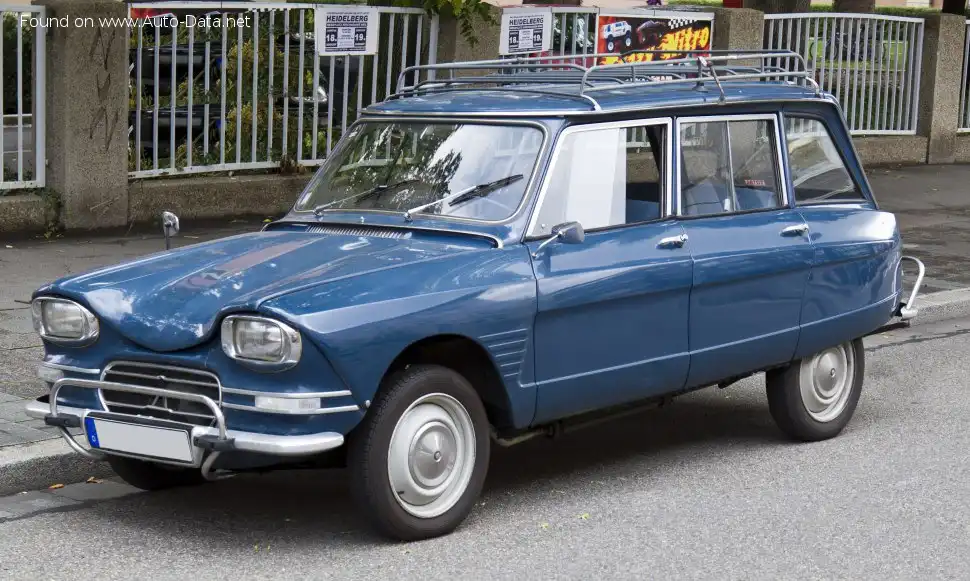
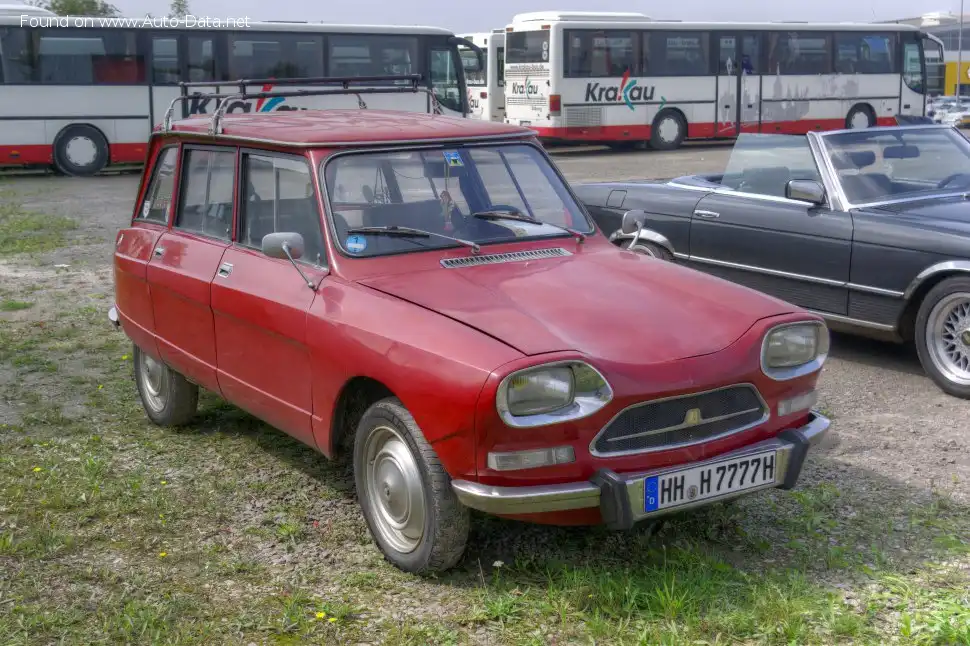
Despite initial mixed reactions to its styling, the Ami 6’s exceptional ride comfort, courtesy of its 2CV-derived interconnected suspension, and its spacious interior won over the public. Sales were initially slow but began to climb steadily. In 1964, Citroën introduced an estate version, the Ami 6 Break, which featured a much more conventional roofline. This highly practical model quickly outsold the Berline and propelled the Ami 6 to the top of the French sales charts.
The final major update came in 1968 with the introduction of a more powerful engine. This new powerplant led to the definitive late-model version, the Citroen AMI 6 0.6 (35 Hp), which replaced the previous 22 hp unit and gave the car the livelier performance it needed to keep pace with modernizing traffic.
Design and Features
The design of the Ami 6 was a study in functional eccentricity, a hallmark of Citroën during this era.
Exterior:
The Berline’s silhouette was its most defining characteristic. The reverse-raked clair-voyant rear window was not merely a stylistic whim. It was an integral part of a design that maximized interior volume and luggage space on a very small wheelbase (2.4 metres), identical to the 2CV. The large, thin-pillared glasshouse provided excellent visibility. The bonnet featured a distinctive concave pressing in the centre. The body panels were unstressed, attached to the underlying platform chassis, which allowed for a lightweight construction. The car’s narrow track and tall stance, dictated by its 2CV underpinnings, gave it a unique on-road presence.
Interior:
Inside, the Ami 6 was far more luxurious than the spartan 2CV. It featured more comfortable, deeply padded seats, full door cards, and a more comprehensive dashboard. The signature Citroën single-spoke steering wheel was present, designed for both style and improved safety in an era before airbags. The gear lever was a push-pull type mounted on the dashboard, a feature carried over from the 2CV, which created a flat, unobstructed floor. The windows were horizontally sliding panes, another cost-saving measure from its smaller sibling. Overall, the emphasis was on functional simplicity and maximizing usable space.
Powertrain and Performance of the Citroen AMI 6 0.6 (35 Hp)
The 1968 introduction of the M28 engine was the most significant mechanical upgrade in the Ami 6’s history, creating the Citroen AMI 6 0.6 (35 Hp). This engine was an evolution of the air-cooled, two-cylinder boxer unit that had powered the 2CV and early Ami 6 models.
Engine Specifications:
The M28 engine featured a displacement of 602 cc (36.7 cubic inches), achieved with a bore of 74 mm and a stroke of 70 mm. This flat-twin, or boxer, configuration provided excellent primary balance, resulting in surprisingly smooth operation for a two-cylinder engine. Fed by a single carburettor and with a compression ratio of 9.0:1, it was a simple, robust, and naturally aspirated design.
The key improvement was its power output. It produced 35 horsepower (Hp) at 5,750 rpm and 46 Newton-metres (33.9 lb-ft) of torque at 4,750 rpm. This represented a substantial increase over the 22 hp of the original 602 cc engine and made the car far more capable. The power-to-weight ratio improved to 55.6 Hp per tonne, allowing the vehicle to reach a maximum speed of 123 km/h (76 mph), a significant jump from the earlier models which struggled to exceed 100 km/h.
Transmission and Drivetrain:
Power was sent to the front wheels through a four-speed manual transmission. The front-wheel-drive architecture, a Citroën staple, provided predictable handling and excellent traction in poor weather conditions. The gear selection was managed via the unique dashboard-mounted lever, which operated the gearbox through a series of rods.
Chassis, Suspension, and Brakes:
The Ami 6 was built on a separate platform chassis to which the non-structural body was bolted. This was the same basic architecture as the 2CV. The suspension system was the car’s dynamic highlight. It employed a fully independent, interconnected hydro-pneumatic system. Coil springs housed in cylinders were linked front-to-back on each side of the car, allowing the movement of a front wheel to influence the corresponding rear wheel. This setup provided an exceptionally soft, long-travel ride that could absorb road imperfections like few other cars, regardless of price. The downside was pronounced body roll during cornering, a characteristic that required driver familiarization but did not compromise the car’s surprisingly tenacious road-holding.
Braking was handled by drum brakes on all four wheels. To reduce unsprung weight and improve ride quality, the front brakes were mounted inboard, next to the transaxle. Steering was a direct and unassisted rack-and-pinion system.
Legacy and Successor
The Citroën Ami 6 was a resounding success, with a total production of 1,039,384 units over its eight-year lifespan. Its combination of unique style, remarkable comfort, practicality (especially in Break form), and low running costs appealed to a broad segment of the French market.
By the late 1960s, however, its design was beginning to look dated. In 1969, Citroën launched its successor, the Ami 8. The Ami 8 was essentially a major restyling of the Ami 6, retaining its mechanical underpinnings, including the excellent 35 hp engine from the final Ami 6 models. It featured a much more conventional fastback roofline, replacing the Z-line, which gave it broader international appeal.
Today, the Ami 6, particularly the Citroen AMI 6 0.6 (35 Hp) Berline, is a sought-after classic car. Its polarising design, once a point of contention, is now celebrated as a prime example of Citroën’s most creative and audacious period. It stands as a testament to an era when automotive design prioritized innovative engineering and character over conformity.
—
Citroen AMI 6 0.6 (35 Hp) – Full Technical Specifications (1968-1969)
| Specification Category | Detail | Metric | Imperial |
| :— | :— | :— | :— |
| General Information | | | |
| | Brand | Citroën | |
| | Model | AMI | |
| | Generation | AMI 6 Berline | |
| | Engine Variant | 0.6 (35 Hp) | |
| | Start of Production | 1968 | |
| | End of Production | 1969 | |
| | Body Type | Sedan / Saloon (Berline) | |
| | Seating Capacity | 4 | |
| | Doors | 4 | |
| Engine Specifications | | | |
| | Engine Model Code | M28 | |
| | Engine Layout | Front, Longitudinal | |
| | Engine Displacement | 602 cm³ | 36.74 cu. in. |
| | Engine Configuration | 2-Cylinder Boxer (Flat-Twin) | |
| | Cylinder Bore | 74 mm | 2.91 in. |
| | Piston Stroke | 70 mm | 2.76 in. |
| | Compression Ratio | 9.0:1 | |
| | Valvetrain | OHV, 2 valves per cylinder | |
| | Aspiration | Naturally Aspirated | |
| | Fuel System | Carburettor | |
| | Cooling System | Air-cooled | |
| | Maximum Power | 35 Hp @ 5750 rpm | |
| | Maximum Torque | 46 Nm @ 4750 rpm | 33.93 lb-ft @ 4750 rpm |
| | Power per Litre | 58.1 Hp/l | |
| Performance | | | |
| | Fuel Type | Petrol / Gasoline | |
| | Top Speed | 123 km/h | 76.4 mph |
| | Weight-to-Power Ratio | 18.0 kg/Hp | 55.6 Hp/tonne |
| | Weight-to-Torque Ratio | 13.7 kg/Nm | 73.0 Nm/tonne |
| Drivetrain | | | |
| | Drive Wheel | Front Wheel Drive (FWD) | |
| | Gearbox Type | Manual Transmission | |
| | Number of Gears | 4 | |
| Chassis, Brakes & Suspension | | | |
| | Front Suspension | Independent, interconnected hydro-pneumatic | |
| | Rear Suspension | Independent, interconnected hydro-pneumatic | |
| | Front Brakes | Drum (inboard) | |
| | Rear Brakes | Drum | |
| | Steering | Rack and Pinion | |
| Dimensions & Weights | | | |
| | Length | 3940 mm | 155.12 in. |
| | Width | 1520 mm | 59.84 in. |
| | Height | 1485 mm | 58.46 in. |
| | Wheelbase | 2400 mm | 94.49 in. |
| | Front Track | 1260 mm | 49.61 in. |
| | Rear Track | 1220 mm | 48.03 in. |
| | Turning Circle | 11.4 m | 37.4 ft. |
| | Aerodynamic Drag (Cd) | ~0.40 | |
| | Kerb Weight | 630 kg | 1389 lbs. |
| | Gross Vehicle Weight | 990 kg | 2183 lbs. |
| | Maximum Payload | 360 kg | 794 lbs. |
| Capacities | | | |
| | Trunk / Boot Space | 330 litres | 11.65 cu. ft. |
| | Fuel Tank Capacity | 25 litres | 6.6 US gal / 5.5 UK gal |
| | Engine Oil Capacity | 2.2 litres | 2.32 US qt / 1.94 UK qt |