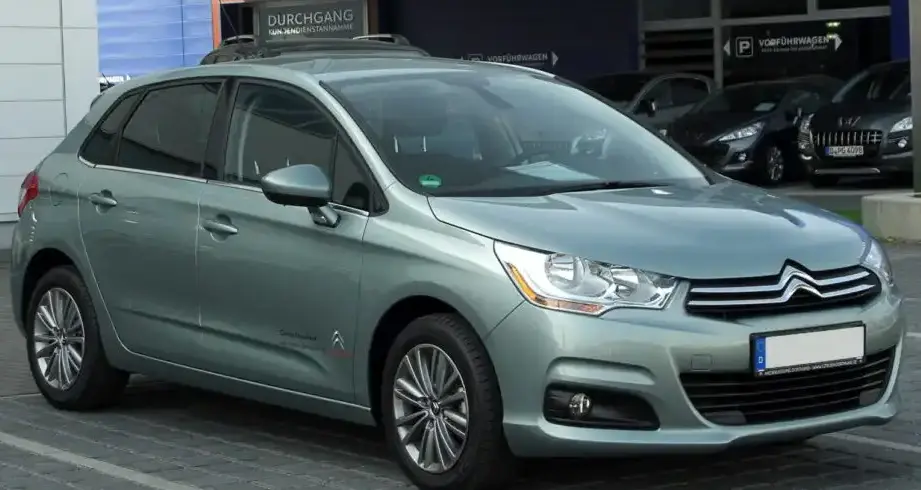
The Citroën C4 II Hatchback 1.6 e-HDI, produced between 2011 and 2012, represented a key offering in Citroën’s compact family car lineup. This variant, powered by the PSA Group’s 1.6-liter diesel engine, was positioned as a fuel-efficient and practical option within the second generation of the C4 (B7) platform. The C4 II, launched in 2010, aimed to provide a more refined and comfortable driving experience than its predecessor, and the 1.6 e-HDI model played a significant role in attracting buyers seeking lower running costs. It was part of the Phase I refresh of the model, offering updated styling and technology.
Technical Specifications
| Brand | Citroen |
| Model | C4 |
| Generation | C4 II Hatchback (Phase I, 2010) |
| Type (Engine) | 1.6 e-HDI (112 Hp) |
| Start of production | 2011 |
| End of production | 2012 |
| Powertrain Architecture | Internal Combustion engine |
| Body type | Hatchback |
| Seats | 5 |
| Doors | 5 |
| Fuel consumption (urban) | 4.4 l/100 km (53.5 US mpg, 64.2 UK mpg, 22.7 km/l) |
| Fuel consumption (extra urban) | 3.5 l/100 km (67.2 US mpg, 80.7 UK mpg, 28.6 km/l) |
| Fuel consumption (combined) | 3.8 l/100 km (61.9 US mpg, 74.3 UK mpg, 26.3 km/l) |
| CO2 emissions | 100 g/km |
| Fuel Type | Diesel |
| Acceleration 0 – 100 km/h | 11.3 sec |
| Acceleration 0 – 62 mph | 11.3 sec |
| Acceleration 0 – 60 mph | 10.7 sec |
| Maximum speed | 190 km/h (118.06 mph) |
| Emission standard | Euro 5 |
| Weight-to-power ratio | 11.4 kg/Hp, 87.8 Hp/tonne |
| Weight-to-torque ratio | 4.7 kg/Nm, 211.8 Nm/tonne |
| Power | 112 Hp @ 3600 rpm |
| Power per litre | 71.8 Hp/l |
| Torque | 270 Nm @ 1750 rpm (199.14 lb.-ft. @ 1750 rpm) |
| Engine layout | Front, Transverse |
| Engine Model/Code | 9HR DV6FC |
| Engine displacement | 1560 cm3 (95.2 cu. in.) |
| Number of cylinders | 4 |
| Engine configuration | Inline |
| Cylinder Bore | 75 mm (2.95 in.) |
| Piston Stroke | 88.3 mm (3.48 in.) |
| Compression ratio | 16:1 |
| Number of valves per cylinder | 2 |
| Fuel injection system | Diesel Commonrail |
| Engine aspiration | Turbocharger, Intercooler |
| Engine oil capacity | 3.8 l (4.02 US qt | 3.34 UK qt) |
| Kerb Weight | 1275 kg (2810.89 lbs.) |
| Max. weight | 1810 kg (3990.37 lbs.) |
| Max load | 535 kg (1179.47 lbs.) |
| Trunk (boot) space – minimum | 380 l (13.42 cu. ft.) |
| Trunk (boot) space – maximum | 1183 l (41.78 cu. ft.) |
| Fuel tank capacity | 60 l (15.85 US gal | 13.2 UK gal) |
| Permitted trailer load with brakes (8%) | 1550 kg (3417.17 lbs.) |
| Permitted trailer load with brakes (12%) | 1300 kg (2866.01 lbs.) |
| Permitted trailer load without brakes | 675 kg (1488.12 lbs.) |
| Permitted towbar download | 75 kg (165.35 lbs.) |
| Length | 4329 mm (170.43 in.) |
| Width | 1789 mm (70.43 in.) |
| Width including mirrors | 2050 mm (80.71 in.) |
| Height | 1489-1502 mm (58.62 – 59.13 in.) |
| Wheelbase | 2608 mm (102.68 in.) |
| Front track | 1522-1536 mm (59.92 – 60.47 in.) |
| Rear (Back) track | 1515-1529 mm (59.65 – 60.2 in.) |
| Front overhang | 935 mm (36.81 in.) |
| Rear overhang | 786 mm (30.94 in.) |
| Drag coefficient (Cd) | 0.30 |
| Minimum turning circle (turning diameter) | 10.7 m (35.1 ft.) |
| Drivetrain Architecture | The Internal combustion engine (ICE) drives the front wheels of the vehicle. |
| Drive wheel | Front wheel drive |
| Number of gears and type of gearbox | 6 gears, manual transmission |
| Front suspension | Independent, type McPherson with coil spring and anti-roll bar |
| Rear suspension | Semi-independent, coil spring |
| Front brakes | Ventilated discs |
| Rear brakes | Disc |
| Assisting systems | ABS (Anti-lock braking system) |
| Steering type | Steering rack and pinion |
| Tires size | 205/55 R16; 225/45 R17 |
| Wheel rims size | 16; 17 |
Powertrain & Engine Architecture
The heart of the C4 1.6 e-HDI is the PSA Group’s DV6 engine family, specifically the 9HR (DV6FC) variant. This 1.6-liter, four-cylinder diesel engine utilizes common-rail direct injection and a turbocharger with an intercooler to deliver a balance of power and efficiency. The ‘e-HDI’ designation signifies the inclusion of Stop & Start technology, designed to reduce fuel consumption and emissions in urban driving. The engine produces 112 horsepower at 3600 rpm and 270 Nm (199 lb-ft) of torque at 1750 rpm. The engine features a 16:1 compression ratio and 2 valves per cylinder. The engine’s durability was generally good, though early versions of the DV6 engine were known for potential issues with the exhaust gas recirculation (EGR) valve and diesel particulate filter (DPF).
The C4 1.6 e-HDI was exclusively offered with a 6-speed manual transmission. This gearbox was chosen to maximize fuel economy and provide a reasonably engaging driving experience. The gear ratios were tuned for efficiency, prioritizing lower engine speeds at highway cruising.
Driving Characteristics
The 1.6 e-HDI engine, paired with the 6-speed manual transmission, provided adequate performance for everyday driving. Acceleration from 0-60 mph took around 10.7 seconds, and top speed was approximately 118 mph. While not a particularly sporty setup, the engine delivered sufficient torque for comfortable overtaking and merging onto highways. The manual transmission allowed for greater driver control compared to an automatic, and the well-spaced gear ratios helped to keep the engine within its optimal power band. Compared to higher-powered C4 variants, such as those with the 2.0-liter HDi engine, the 1.6 e-HDI felt less responsive, particularly at higher speeds. However, its fuel economy advantage was significant.
Equipment & Trim Levels
The C4 1.6 e-HDI typically came equipped with a reasonable level of standard features. These included air conditioning, power windows, central locking, a CD stereo system, and ABS brakes. Higher trim levels, such as Exclusive, added features like alloy wheels, automatic headlights and wipers, a multi-function steering wheel, and upgraded interior trim. Optional extras included a navigation system, parking sensors, and a panoramic sunroof.
Chassis & Braking
The C4 II utilized a McPherson strut front suspension and a semi-independent coil spring rear suspension. This setup provided a comfortable ride quality, absorbing bumps and imperfections in the road surface effectively. The front brakes were ventilated discs, while the rear brakes were solid discs. ABS was standard, providing enhanced braking performance and stability. The C4’s chassis was designed to prioritize comfort and refinement over outright handling prowess.
Market Reception & Comparison
The Citroën C4 1.6 e-HDI was generally well-received by critics for its fuel efficiency and low running costs. It was seen as a practical and sensible choice for buyers seeking a comfortable and economical family car. Compared to other C4 variants, the 1.6 e-HDI offered the best fuel economy, but at the expense of some performance. The 2.0-liter HDi models provided more power and a more engaging driving experience, but were also more expensive to purchase and operate. The 1.6 e-HDI competed with other compact hatchbacks, such as the Ford Focus, Volkswagen Golf, and Peugeot 308, all of which offered similar levels of practicality and efficiency.
Legacy
The 1.6 e-HDI engine, while generally reliable, has been known to exhibit issues with the DPF and EGR valve, particularly on vehicles that have primarily been used for short journeys. Regular maintenance, including ensuring the DPF is regenerated properly, is crucial for long-term reliability. Today, used C4 1.6 e-HDI models represent a relatively affordable option for buyers seeking a fuel-efficient and practical family car. However, potential buyers should be aware of the potential issues with the DPF and EGR valve and factor in the cost of potential repairs. The C4 II, and specifically this engine variant, helped cement Citroën’s reputation for comfortable and economical vehicles.