Technical Specifications
| Brand | Citroen |
| Model | C4 |
| Generation | C4 L Sedan (Phase I, 2012) |
| Type (Engine) | 1.8 16V (139 Hp) |
| Start of production | 2013 |
| End of production | 2016 |
| Powertrain Architecture | Internal Combustion engine |
| Body type | Sedan |
| Seats | 5 |
| Doors | 4 |
| Fuel consumption (combined) | 7.1 l/100 km (33.1 US mpg, 39.8 UK mpg, 14.1 km/l) |
| Fuel Type | Petrol (Gasoline) |
| Maximum speed | 195 km/h (121.17 mph) |
| Emission standard | Euro 4 |
| Weight-to-power ratio | 9.9 kg/Hp, 100.7 Hp/tonne |
| Weight-to-torque ratio | 8 kg/Nm, 124.5 Nm/tonne |
| Power | 139 Hp @ 6300 rpm |
| Power per litre | 76.7 Hp/l |
| Torque | 172 Nm @ 3500 rpm (126.86 lb.-ft. @ 3500 rpm) |
| Engine layout | Front, Transverse |
| Engine Model/Code | EC8 |
| Engine displacement | 1813 cm3 (110.64 cu. in.) |
| Number of cylinders | 4 |
| Engine configuration | Inline |
| Number of valves per cylinder | 4 |
| Fuel injection system | Multi-port manifold injection |
| Engine aspiration | Naturally aspirated engine |
| Valvetrain | DOHC |
| Kerb Weight | 1381 kg (3044.58 lbs) |
| Trunk (boot) space – minimum | 440 l (15.54 cu. ft.) |
| Fuel tank capacity | 60 l (15.85 US gal | 13.2 UK gal) |
| Length | 4621 mm (181.93 in) |
| Width | 1779 mm (70.04 in) |
| Width with mirrors folded | 1918 mm (75.51 in) |
| Width including mirrors | 2058 mm (81.02 in) |
| Height | 1498-1508 mm (58.98 – 59.37 in) |
| Wheelbase | 2708 mm (106.61 in) |
| Front track | 1526-1520 mm (60.08 – 59.84 in) |
| Rear (Back) track | 1521-1515 mm (59.88 – 59.65 in) |
| Front overhang | 961 mm (37.83 in) |
| Rear overhang | 952 mm (37.48 in) |
| Drivetrain Architecture | Front wheel drive, Internal Combustion engine |
| Drive wheel | Front wheel drive |
| Number of gears and type of gearbox | 5 gears, manual transmission |
| Front suspension | Independent, type McPherson with coil spring and anti-roll bar |
| Rear suspension | Semi-independent, coil spring |
| Front brakes | Ventilated discs |
| Rear brakes | Disc |
| Assisting systems | ABS (Anti-lock braking system) |
| Steering type | Steering rack and pinion |
| Power steering | Electric Steering |
| Tires size | 215/55 R16 |
| Wheel rims size | 16 |
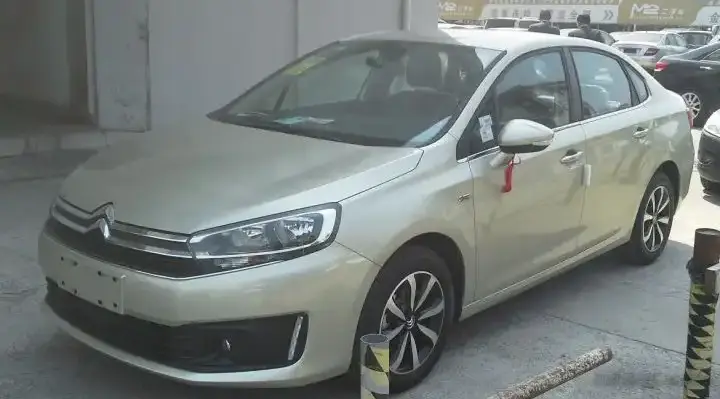
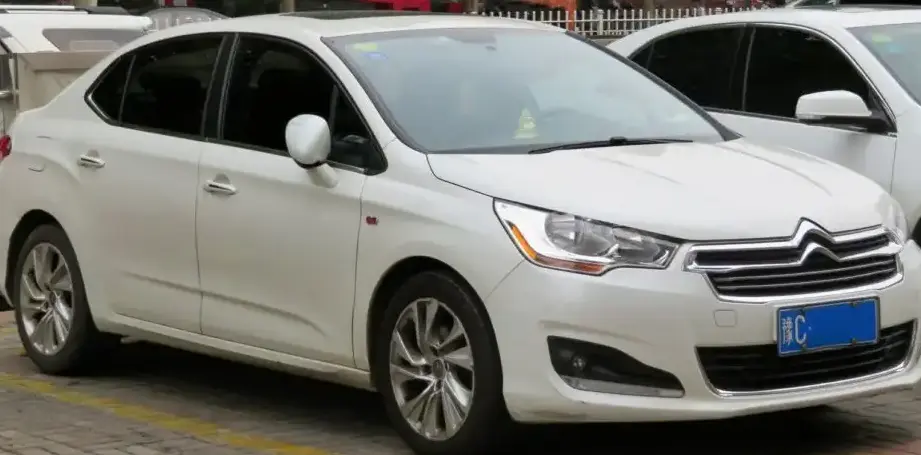
The Citroen C4 L Sedan, launched in 2012 and produced through 2016 (Phase I), was specifically designed to cater to the demands of emerging markets, particularly China. It represented a departure from the more compact European C4 hatchback, offering a traditional sedan body style with increased rear passenger space. The 1.8 16V variant, producing 139 horsepower, was a key engine option, providing a balance between performance and fuel efficiency. It was positioned as a practical and comfortable choice for families and business users seeking a reliable and spacious sedan.
Powertrain & Engine Architecture
The heart of this C4 L Sedan variant is the EC8 engine, a 1.8-liter inline-four cylinder gasoline engine. This engine utilizes a double overhead camshaft (DOHC) valvetrain with four valves per cylinder, contributing to its relatively efficient power output. The engine employs multi-point fuel injection, a common technology at the time, delivering fuel directly into the intake ports. The 1.8 16V engine is naturally aspirated, meaning it doesn’t rely on turbocharging or supercharging for increased power. This results in a more linear power delivery, though it lacks the immediate boost of forced induction. The engine is transversely mounted in the front of the vehicle, driving the front wheels. The five-speed manual transmission was the standard offering for this trim, providing a direct connection between the engine and the wheels. The transmission’s gear ratios were tuned for a balance of fuel economy and everyday drivability.
Driving Characteristics
The 139 horsepower and 172 Nm (126.86 lb-ft) of torque offered by the 1.8 16V engine provided adequate performance for typical driving conditions. Acceleration was respectable, but not particularly sporty. The five-speed manual transmission allowed drivers to maintain optimal engine speed for various driving scenarios. Compared to potential higher-output versions (which varied by market), this variant prioritized fuel economy and ease of use over outright performance. The manual transmission offered more driver engagement than an automatic, but also required more effort in stop-and-go traffic. The relatively lightweight construction of the C4 L Sedan helped to mitigate the effects of the engine’s modest power output, resulting in a reasonably responsive driving experience. The suspension tuning focused on comfort, providing a smooth ride over uneven road surfaces.
Equipment & Trim Levels
The C4 L Sedan 1.8 16V typically came equipped with a reasonable level of standard features. These generally included air conditioning, power windows, power door locks, and a basic audio system with USB connectivity. Interior upholstery was typically cloth, with a focus on durability and practicality. Higher trim levels, available as options, could add features such as alloy wheels, a more advanced audio system, automatic climate control, and rear parking sensors. The dashboard layout was functional and straightforward, prioritizing ease of use. Safety features included ABS (Anti-lock Braking System) and front airbags as standard equipment.
Chassis & Braking
The C4 L Sedan utilized a McPherson strut suspension setup at the front, providing a good balance of ride comfort and handling. The rear suspension employed a semi-independent coil spring arrangement, which was cost-effective and provided adequate comfort for passengers. The braking system consisted of ventilated discs at the front and solid discs at the rear, offering sufficient stopping power for the vehicle’s weight and performance. Electric power steering was standard, providing light and easy steering input. The 215/55 R16 tires offered a good compromise between grip and ride comfort.
Market Reception & Comparison
The Citroen C4 L Sedan, and specifically the 1.8 16V variant, was generally well-received in its target markets. Critics praised its spacious interior, comfortable ride, and reasonable fuel economy. However, some reviewers noted that the engine lacked the refinement and power of some of its competitors. Compared to other trims in the C4 L Sedan lineup, the 1.8 16V offered a more affordable entry point, making it accessible to a wider range of buyers. Its fuel economy was generally better than that of the more powerful engine options, but its performance was correspondingly lower. Reliability reports were generally positive, with the 1.8 16V engine proving to be a durable and dependable unit.
Legacy
The Citroen C4 L Sedan, while not a global model, played a significant role in Citroen’s expansion into emerging markets. The 1.8 16V engine proved to be a reliable and relatively fuel-efficient powerplant. In the used car market, these vehicles are often sought after for their affordability, spaciousness, and practicality. Maintenance costs are generally reasonable, and parts availability is typically good. While not a performance icon, the C4 L Sedan 1.8 16V remains a viable option for buyers seeking a comfortable and dependable compact sedan.