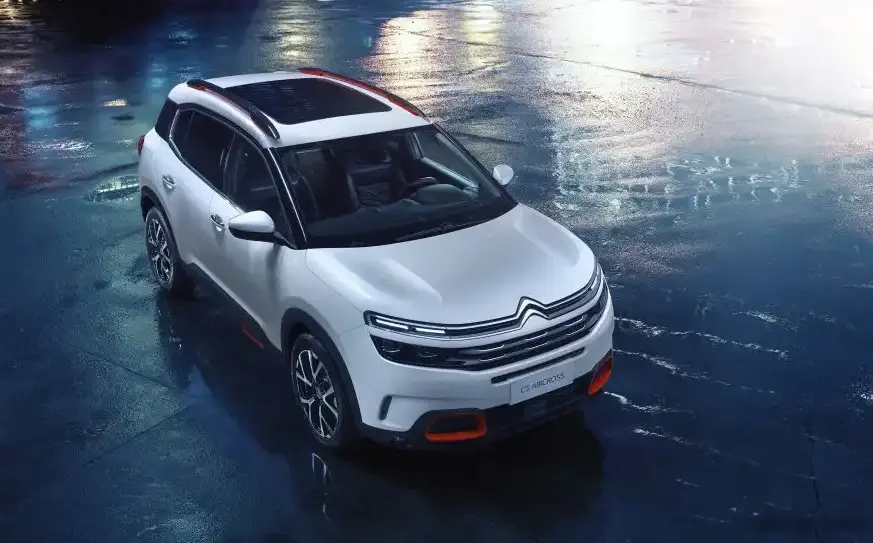
The Citroën C5 I Break 2.0 HDi, produced between 2001 and 2004, represents a significant offering in the mid-size station wagon segment. Part of the first generation (X3/X4) C5 range, the Break (estate) body style prioritized practicality and comfort. This particular variant, equipped with the 2.0-liter HDi diesel engine producing 110 horsepower, was positioned as a fuel-efficient and capable option for families and those requiring substantial cargo space. It sat within the C5 lineup alongside petrol engines and a more powerful 138 hp version of the 2.0 HDi, as well as a 1.8L petrol engine, offering a balance between performance and economy.
Technical Specifications
| Brand | Citroen |
| Model | C5 |
| Generation | C5 I Break (Phase I, 2000) |
| Type (Engine) | 2.0 HDi (110 Hp) |
| Start of production | 2001 |
| End of production | 2004 |
| Powertrain Architecture | Internal Combustion engine |
| Body type | Station wagon (estate) |
| Seats | 5 |
| Doors | 5 |
| Fuel consumption (urban) | 7.6 l/100 km (30.9 US mpg, 37.2 UK mpg, 13.2 km/l) |
| Fuel consumption (extra urban) | 4.6 l/100 km (51.1 US mpg, 61.4 UK mpg, 21.7 km/l) |
| Fuel consumption (combined) | 5.7 l/100 km (41.3 US mpg, 49.6 UK mpg, 17.5 km/l) |
| CO2 emissions | 149 g/km |
| Fuel Type | Diesel |
| Acceleration 0 – 100 km/h | 13.3 sec |
| Acceleration 0 – 62 mph | 13.3 sec |
| Acceleration 0 – 60 mph | 12.6 sec |
| Maximum speed | 187 km/h (116.2 mph) |
| Emission standard | Euro 3 |
| Weight-to-power ratio | 13.1 kg/Hp, 76.5 Hp/tonne |
| Weight-to-torque ratio | 5.6 kg/Nm, 177.3 Nm/tonne |
| Power | 110 Hp @ 4000 rpm |
| Power per litre | 55.1 Hp/l |
| Torque | 255 Nm @ 1750 rpm (188.08 lb.-ft. @ 1750 rpm) |
| Engine layout | Front, Transverse |
| Engine Model/Code | RHZ DW10ATED |
| Engine displacement | 1997 cm3 (121.86 cu. in.) |
| Number of cylinders | 4 |
| Engine configuration | Inline |
| Cylinder Bore | 85 mm (3.35 in.) |
| Piston Stroke | 88 mm (3.46 in.) |
| Compression ratio | 17.6:1 |
| Number of valves per cylinder | 2 |
| Fuel injection system | Diesel Commonrail |
| Engine aspiration | Turbocharger, Intercooler |
| Valvetrain | OHC |
| Engine oil capacity | 4.5 l (4.76 US qt | 3.96 UK qt) |
| Coolant | 10.7 l (11.31 US qt | 9.41 UK qt) |
| Kerb Weight | 1438 kg (3170.25 lbs.) |
| Max. weight | 2038 kg (4493.02 lbs.) |
| Max load | 600 kg (1322.77 lbs.) |
| Trunk (boot) space – minimum | 563 l (19.88 cu. ft.) |
| Trunk (boot) space – maximum | 1658 l (58.55 cu. ft.) |
| Fuel tank capacity | 68 l (17.96 US gal | 14.96 UK gal) |
| Max. roof load | 75 kg (165.35 lbs.) |
| Permitted trailer load with brakes (8%) | 1600 kg (3527.4 lbs.) |
| Permitted trailer load with brakes (12%) | 1500 kg (3306.93 lbs.) |
| Permitted trailer load without brakes | 750 kg (1653.47 lbs.) |
| Permitted towbar download | 75 kg (165.35 lbs.) |
| Length | 4760 mm (187.4 in.) |
| Width | 1770 mm (69.69 in.) |
| Width including mirrors | 2100 mm (82.68 in.) |
| Height | 1520-1560 mm (59.84 – 61.42 in.) |
| Wheelbase | 2750 mm (108.27 in.) |
| Front track | 1540 mm (60.63 in.) |
| Rear (Back) track | 1510 mm (59.45 in.) |
| Front overhang | 970 mm (38.19 in.) |
| Rear overhang | 1040 mm (40.94 in.) |
| Minimum turning circle | 12.46 m (40.88 ft.) |
| Drivetrain Architecture | The Internal combustion engine (ICE) drives the front wheels of the vehicle. |
| Drive wheel | Front wheel drive |
| Number of gears and type of gearbox | 5 gears, manual transmission |
| Front suspension | Independent type McPherson |
| Rear suspension | Semi-independent, coil spring |
| Front brakes | Ventilated discs |
| Rear brakes | Disc |
| Assisting systems | ABS (Anti-lock braking system) |
| Steering type | Steering rack and pinion |
| Power steering | Hydraulic Steering |
| Tires size | 195/65 R15 |
| Wheel rims size | 6.5J x 15 |
INTRODUCTION
The Citroën C5 I Break 2.0 HDi (2001-2004) is a station wagon variant of the first-generation C5, a car designed to replace the aging Xantia and BX models. Built on the PSA Group’s 1HX0/A3 platform, the C5 aimed to offer a blend of comfort, practicality, and modern technology. The Break body style, specifically, catered to buyers needing a versatile vehicle with ample cargo capacity. The 2.0 HDi engine, a key component of Citroën’s diesel strategy, provided a balance of performance and fuel efficiency, making it a popular choice in European markets.
Powertrain & Engine Architecture
The heart of this C5 variant is the DW10ATED engine, commonly referred to as the 2.0 HDi. This engine, designated RHZ in some markets, is a four-cylinder, inline diesel engine displacing 1997cc. It utilizes a common rail direct injection system, delivering fuel at extremely high pressure for improved combustion and reduced emissions. The engine features an overhead camshaft (OHC) valvetrain with two valves per cylinder. A turbocharger with an intercooler is employed to boost power and torque. The 110 horsepower output is achieved at 4000 rpm, while the peak torque of 255 Nm (188 lb-ft) is available from just 1750 rpm, providing strong low-end pulling power. The engine is transversely mounted in the front of the vehicle. The C5 Break 2.0 HDi typically came equipped with a five-speed manual transmission, although an automatic transmission was also available, albeit less common. The automatic transmission was a four-speed unit, designed for smooth operation but sacrificing some efficiency compared to the manual.
Driving Characteristics
The 2.0 HDi 110 hp engine in the C5 Break delivers adequate, though not exhilarating, performance. Acceleration from 0-60 mph takes around 12.6 seconds, and top speed is approximately 116 mph. The engine’s strong low-end torque makes it well-suited for everyday driving and overtaking maneuvers. The five-speed manual transmission allows for efficient gear selection, maximizing fuel economy and keeping the engine within its optimal power band. The automatic transmission, while providing convenience, results in slightly slower acceleration and increased fuel consumption due to torque converter losses. The C5’s renowned hydropneumatic suspension (depending on trim level) contributes to a remarkably comfortable ride, absorbing bumps and imperfections in the road with ease. Steering is light and precise, making the car easy to maneuver in urban environments.
Equipment & Trim Levels
The C5 I Break 2.0 HDi typically came with a reasonable level of standard equipment. This included power steering, central locking, electric front windows, and an RDS stereo. Higher trim levels, such as Exclusive, added features like automatic climate control, alloy wheels, rear parking sensors, and upgraded interior trim. Interior upholstery was typically cloth, with leather options available on higher-spec models. The dashboard layout is functional and ergonomically designed, with clear instrumentation. Optional extras included a sunroof, satellite navigation, and a premium sound system.
Chassis & Braking
The C5 I Break features independent front suspension using a McPherson strut setup, providing good handling and ride comfort. The rear suspension is a semi-independent torsion beam arrangement, which is cost-effective and provides adequate stability. Braking is handled by ventilated discs on the front wheels and solid discs on the rear. Anti-lock Braking System (ABS) is standard, enhancing safety during emergency braking. The C5’s hydropneumatic suspension (available on certain trims) is a defining feature, offering self-leveling and adjustable ride height, further enhancing ride quality and stability.
Market Reception & Comparison
The Citroën C5 I Break 2.0 HDi was generally well-received by automotive critics. It was praised for its comfortable ride, spacious interior, and fuel-efficient engine. Compared to the 1.8L petrol version, the 2.0 HDi offered significantly better fuel economy and more torque, making it a more practical choice for long-distance driving. The more powerful 138 hp 2.0 HDi provided noticeably quicker acceleration, but at the expense of slightly higher fuel consumption and a higher purchase price. The C5 Break competed with other mid-size station wagons such as the Ford Mondeo Estate, Volkswagen Passat Variant, and Peugeot 406 Break.
Legacy
The DW10ATED engine, found in the C5 I Break 2.0 HDi, is known for its durability and reliability, provided it is properly maintained. Common issues include injector problems and turbocharger wear, but these are generally addressable with routine servicing. Today, the C5 I Break 2.0 HDi represents an affordable and practical classic car. Its comfortable ride, spacious interior, and fuel efficiency continue to appeal to buyers seeking a versatile and reliable station wagon. Parts availability is generally good, and the car’s relatively simple mechanical design makes it accessible for DIY maintenance and repairs. However, potential buyers should be aware of the age-related issues common to older vehicles, such as corrosion and wear and tear on suspension components.