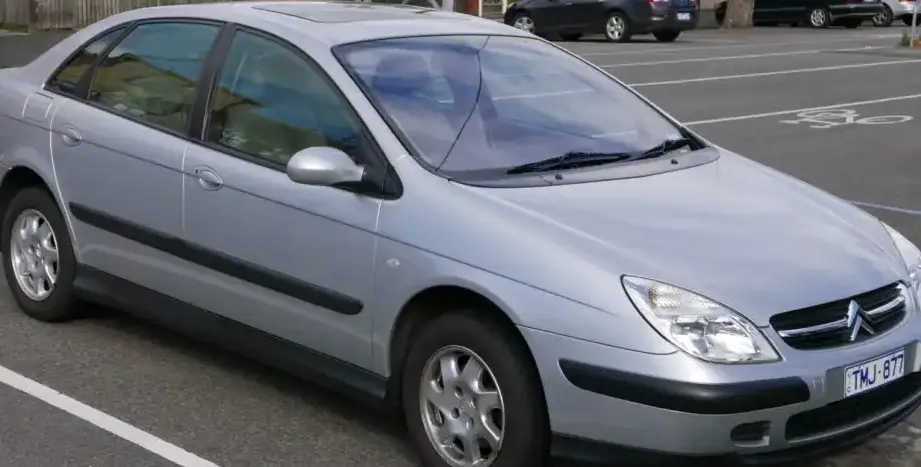
The Citroën C5 I, launched in 2000, represented a significant step forward for the French automaker, aiming to compete directly with established mid-size family cars like the Ford Mondeo and Volkswagen Passat. The first generation C5 (designated X10) offered a blend of comfort, technology, and practicality. Within the C5 range, the 2.0 HDi 110 horsepower automatic variant, produced between 2000 and 2004, occupied a middle ground, offering a balance between fuel efficiency, relaxed cruising, and affordability. It was positioned as a more economical and comfortable alternative to the higher-powered petrol engines and the more performance-oriented HDi variants.
Technical Specifications
| Brand | Citroen |
| Model | C5 |
| Generation | C5 I (Phase I, 2000) |
| Type (Engine) | 2.0 HDi (110 Hp) Automatic |
| Start of production | 2000 year |
| End of production | 2004 year |
| Powertrain Architecture | Internal Combustion engine |
| Body type | Sedan |
| Seats | 5 |
| Doors | 4 |
| Fuel consumption (economy) – urban | 8.9 l/100 km (26.4 US mpg, 31.7 UK mpg, 11.2 km/l) |
| Fuel consumption (economy) – extra urban | 5.1 l/100 km (46.1 US mpg, 55.4 UK mpg, 19.6 km/l) |
| Fuel consumption (economy) – combined | 6.5 l/100 km (36.2 US mpg, 43.5 UK mpg, 15.4 km/l) |
| CO2 emissions | 173 g/km |
| Fuel Type | Diesel |
| Acceleration 0 – 100 km/h | 13.9 sec |
| Acceleration 0 – 62 mph | 13.9 sec |
| Acceleration 0 – 60 mph | 13.2 sec |
| Maximum speed | 188 km/h (116.82 mph) |
| Emission standard | Euro 3 |
| Weight-to-power ratio | 12.8 kg/Hp, 78 Hp/tonne |
| Weight-to-torque ratio | 5.6 kg/Nm, 177.3 Nm/tonne |
| Power | 110 Hp @ 4000 rpm |
| Power per litre | 55.1 Hp/l |
| Torque | 250 Nm @ 1750 rpm (184.39 lb.-ft. @ 1750 rpm) |
| Engine layout | Front, Transverse |
| Engine Model/Code | RHZ DW10ATED |
| Engine displacement | 1997 cm3 (121.86 cu. in.) |
| Number of cylinders | 4 |
| Engine configuration | Inline |
| Cylinder Bore | 85 mm (3.35 in.) |
| Piston Stroke | 88 mm (3.46 in.) |
| Compression ratio | 18:1 |
| Number of valves per cylinder | 2 |
| Fuel injection system | Diesel Commonrail |
| Engine aspiration | Turbocharger |
| Engine oil capacity | 4.5 l (4.76 US qt | 3.96 UK qt) |
| Coolant | 10.7 l (11.31 US qt | 9.41 UK qt) |
| Kerb Weight | 1410 kg (3108.52 lbs.) |
| Max. weight | 1910 kg (4210.83 lbs.) |
| Max load | 500 kg (1102.31 lbs.) |
| Trunk (boot) space – minimum | 456 l (16.1 cu. ft.) |
| Fuel tank capacity | 68 l (17.96 US gal | 14.96 UK gal) |
| Max. roof load | 75 kg (165.35 lbs.) |
| Permitted trailer load with brakes (8%) | 1600 kg (3527.4 lbs.) |
| Permitted trailer load with brakes (12%) | 1500 kg (3306.93 lbs.) |
| Permitted trailer load without brakes | 740 kg (1631.42 lbs.) |
| Permitted towbar download | 75 kg (165.35 lbs.) |
| Length | 4618 mm (181.81 in.) |
| Width | 1770 mm (69.69 in.) |
| Width including mirrors | 2100 mm (82.68 in.) |
| Height | 1476 mm (58.11 in.) |
| Wheelbase | 2750 mm (108.27 in.) |
| Front track | 1544 mm (60.79 in.) |
| Rear (Back) track | 1509 mm (59.41 in.) |
| Front overhang | 971 mm (38.23 in.) |
| Rear overhang | 897 mm (35.31 in.) |
| Minimum turning circle (turning diameter) | 11.39 m (37.37 ft.) |
| Drivetrain Architecture | The Internal combustion engine (ICE) drives the front wheels of the vehicle. |
| Drive wheel | Front wheel drive |
| Number of gears and type of gearbox | 4 gears, automatic transmission |
| Front suspension | Independent type McPherson |
| Rear suspension | Semi-independent, coil spring |
| Front brakes | Ventilated discs |
| Rear brakes | Disc |
| Assisting systems | ABS (Anti-lock braking system) |
| Steering type | Steering rack and pinion |
| Power steering | Hydraulic Steering |
| Tires size | 195/65 R15 |
| Wheel rims size | 6J x 15 |
Powertrain & Engine Architecture
The heart of this C5 variant is the DW10ATED engine, a 2.0-liter four-cylinder diesel engine. This engine, often identified by the RHZ code in this specific application, was a mainstay of the PSA Group (Peugeot-Citroën) during the early 2000s. It utilizes a common rail direct injection system, delivering fuel at extremely high pressure for improved combustion efficiency and reduced emissions. The engine features a single overhead camshaft (SOHC) operating two valves per cylinder. The turbocharger, a key component for boosting power output, is a variable geometry turbo (VGT) which optimizes boost pressure across the engine’s rev range. The automatic transmission is a four-speed unit, designed for smooth operation and ease of use. While not offering the responsiveness of a manual gearbox, it suited the relaxed character of this particular C5 trim.
Driving Characteristics
The 2.0 HDi 110 hp automatic C5 prioritizes comfort and fuel economy over outright performance. Acceleration from 0-60 mph takes around 13.2 seconds, and top speed is around 117 mph. The four-speed automatic transmission, while smooth, has relatively widely spaced gear ratios. This means that while it provides adequate acceleration in most situations, it can feel somewhat sluggish when needing to make quick overtakes. Compared to the manual versions of the same engine, the automatic suffers a slight performance penalty due to transmission losses. The torque, however, is readily available from low engine speeds (250 Nm at 1750 rpm), making it a capable cruiser and providing sufficient power for everyday driving. The suspension, a hallmark of Citroën vehicles, delivers a comfortable and compliant ride, absorbing bumps and imperfections in the road surface effectively.
Equipment & Trim Levels
The 2.0 HDi 110 hp automatic C5 typically came equipped with a reasonable level of standard features. These included power windows, central locking, air conditioning, and an RDS stereo. Interior upholstery was generally cloth, with options for upgraded materials available. Dashboard design was functional and ergonomically laid out, with a focus on ease of use. Optional extras included features like leather upholstery, a sunroof, and upgraded audio systems. Safety features, such as ABS and front airbags, were standard.
Chassis & Braking
The C5 I utilized a McPherson strut front suspension and a semi-independent coil spring rear suspension. This setup provided a good balance between ride comfort and handling. The front brakes were ventilated discs, offering good stopping power, while the rear brakes were solid discs. The hydraulic power steering provided light and precise steering feel. The C5’s chassis was designed to prioritize comfort, and while it wasn’t a particularly sporty car, it offered stable and predictable handling.
Market Reception & Comparison
The 2.0 HDi 110 hp automatic C5 was generally well-received by critics as a comfortable and economical family car. It was praised for its ride quality, fuel efficiency, and spacious interior. However, some reviewers noted the lack of outright performance and the somewhat dated feel of the four-speed automatic transmission. Compared to the more powerful HDi variants (like the 138 hp version), this trim offered lower running costs but sacrificed performance. Against competitors like the Ford Mondeo and Volkswagen Passat, the C5 offered a unique blend of French comfort and practicality, often at a more competitive price point.
Legacy
The DW10ATED engine, in its various iterations, proved to be a durable and reliable unit. The 2.0 HDi 110 hp version, while not the most powerful, is known for its longevity and relatively low maintenance costs. Today, these C5s can be found on the used car market at affordable prices. Common issues include wear and tear on suspension components and potential problems with the electronic systems. However, with regular maintenance, these cars can provide reliable and comfortable transportation for many years. The C5 I, and particularly this 2.0 HDi automatic variant, represents a significant chapter in Citroën’s history, showcasing the brand’s commitment to comfort and innovation.