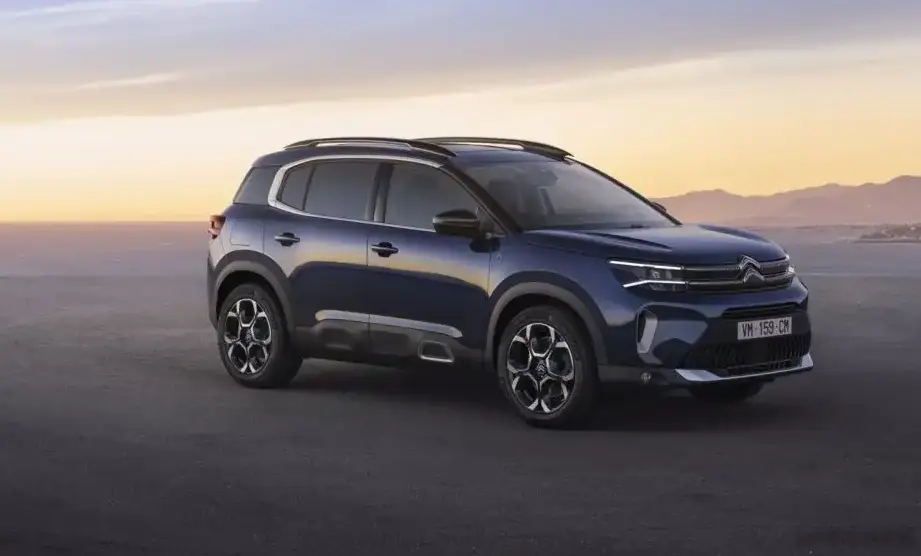
The Citroën C5 I (Phase II), specifically the 2.2 HDi Biturbo 170 hp variant with an automatic transmission, represented a significant offering in the European mid-size sedan market from 2007 to 2008. Positioned as a higher-end trim within the C5 range, it aimed to provide a blend of performance, comfort, and advanced technology. This model was part of the first generation (X7) C5, which debuted in 2001 and received a substantial facelift in 2004, designated as Phase II. The C5, in general, was Citroën’s flagship, intended to compete with vehicles like the Ford Mondeo, Peugeot 607, and Volkswagen Passat, offering a distinctly French approach to ride quality and design.
Technical Specifications
| Brand | Citroën |
| Model | C5 |
| Generation | C5 I (Phase II, 2004) |
| Type (Engine) | 2.2 HDi Biturbo (170 Hp) FAP Automatic |
| Start of production | 2007 |
| End of production | 2008 |
| Powertrain Architecture | Internal Combustion engine |
| Body type | Sedan |
| Seats | 5 |
| Doors | 4 |
| Fuel consumption (urban) | 10.3 l/100 km (22.8 US mpg / 27.4 UK mpg / 9.7 km/l) |
| Fuel consumption (extra urban) | 5.6 l/100 km (42 US mpg / 50.4 UK mpg / 17.9 km/l) |
| Fuel consumption (combined) | 7.3 l/100 km (32.2 US mpg / 38.7 UK mpg / 13.7 km/l) |
| Fuel Type | Diesel |
| Acceleration 0 – 100 km/h | 10.3 sec |
| Acceleration 0 – 62 mph | 10.3 sec |
| Acceleration 0 – 60 mph | 9.8 sec |
| Maximum speed | 222 km/h (137.94 mph) |
| Emission standard | Euro 4 |
| Weight-to-power ratio | 9.5 kg/Hp |
| Weight-to-torque ratio | 4.3 kg/Nm |
| Power | 170 Hp @ 4000 rpm |
| Power per litre | 78 Hp/l |
| Torque | 370 Nm @ 1500 rpm (272.9 lb.-ft. @ 1500 rpm) |
| Engine layout | Front, Transverse |
| Engine Model/Code | 4HT DW12BTED4 |
| Engine displacement | 2179 cm3 (132.97 cu. in.) |
| Number of cylinders | 4 |
| Engine configuration | Inline |
| Cylinder Bore | 85 mm (3.35 in.) |
| Piston Stroke | 96 mm (3.78 in.) |
| Compression ratio | 16.6:1 |
| Number of valves per cylinder | 4 |
| Fuel injection system | Diesel Commonrail |
| Engine aspiration | BiTurbo, Intercooler |
| Valvetrain | DOHC |
| Engine oil capacity | 5.25 l (5.55 US qt / 4.62 UK qt) |
| Coolant capacity | 10.7 l (11.31 US qt / 9.41 UK qt) |
| Kerb Weight | 1608 kg (3545.03 lbs.) |
| Max. weight | 2085 kg (4596.64 lbs.) |
| Max load | 477 kg (1051.6 lbs.) |
| Trunk (boot) space – minimum | 471 l (16.63 cu. ft.) |
| Trunk (boot) space – maximum | 1315 l (46.44 cu. ft.) |
| Fuel tank capacity | 67 l (17.7 US gal / 14.74 UK gal) |
| Max. roof load | 75 kg (165.35 lbs.) |
| Permitted towbar download | 75 kg (165.35 lbs.) |
| Length | 4745 mm (186.81 in.) |
| Width | 1780 mm (70.08 in.) |
| Height | 1476 mm (58.11 in.) |
| Wheelbase | 2750 mm (108.27 in.) |
| Front track | 1528 mm (60.16 in.) |
| Rear track | 1495 mm (58.86 in.) |
| Front overhang | 1033 mm (40.67 in.) |
| Rear overhang | 962 mm (37.87 in.) |
| Minimum turning circle | 12.43 m (40.78 ft.) |
| Drivetrain | Front wheel drive |
| Number of gears | 6 |
| Gearbox type | Automatic transmission |
| Front suspension | Independent, McPherson with coil spring and anti-roll bar |
| Rear suspension | Semi-independent, coil spring |
| Front brakes | Ventilated discs |
| Rear brakes | Disc |
| Assisting systems | ABS (Anti-lock braking system) |
| Tires size | 215/55 R16 |
| Wheel rims size | 16 |
Powertrain & Engine Architecture
The heart of this C5 variant is the 4HT DW12BTED4 engine, a 2.2-liter inline-four cylinder diesel. The “DW12” designation identifies it as part of the PSA Group’s (Peugeot Citroën) engine family. The “BTED4” suffix indicates the Biturbo Diesel Engine with 4 valves per cylinder. This engine utilizes a common rail direct injection system, delivering fuel at extremely high pressure for optimized combustion. The key feature is the twin-turbocharger setup. A smaller turbocharger provides quick response at low engine speeds, minimizing turbo lag, while a larger turbocharger contributes to higher power output at higher RPMs. An intercooler is employed to cool the compressed air from the turbochargers, increasing air density and further enhancing performance. The engine also incorporates a Diesel Particulate Filter (DPF), denoted by the “FAP” in the model name, to reduce particulate matter emissions and meet Euro 4 standards. The automatic transmission is a six-speed unit, designed to provide smooth shifts and efficient power delivery.
Driving Characteristics
The 170 hp and 370 Nm (273 lb-ft) of torque offered a respectable level of performance for a mid-size sedan. While not overtly sporty, the biturbo setup provided a noticeable improvement in responsiveness compared to naturally aspirated or single-turbo diesel C5 models. Acceleration from 0-60 mph took around 9.8 seconds, and top speed was rated at 138 mph. The automatic transmission, while convenient, did slightly diminish the sense of driver control compared to the available manual gearbox. Gear ratios were tuned for a balance between fuel efficiency and usable power in everyday driving situations. The C5’s renowned hydropneumatic suspension (though evolving towards more conventional setups in later years) contributed to a remarkably comfortable ride, absorbing bumps and imperfections in the road surface effectively.
Equipment & Trim Levels
The 2.2 HDi Biturbo Automatic typically came well-equipped, reflecting its position as a higher-spec trim. Standard features often included climate control, power windows and mirrors, a CD stereo system, and alloy wheels. Higher trim levels, or with optional packages, could add features like leather upholstery, a sunroof, parking sensors, and upgraded audio systems. Interior materials were generally of good quality, with a focus on comfort and ergonomics. The dashboard layout was functional and relatively uncluttered, typical of Citroën’s design philosophy at the time.
Chassis & Braking
The C5 I utilized a McPherson strut front suspension and a semi-independent torsion beam rear suspension. This setup provided a good balance between ride comfort and handling. The front brakes were ventilated discs, offering good stopping power, while the rear brakes were solid discs. Anti-lock Braking System (ABS) was standard. The C5’s suspension was tuned to prioritize ride comfort, resulting in a softer, more compliant ride than some of its more performance-oriented competitors. Stabilizer bars were fitted to both the front and rear axles to reduce body roll during cornering.
Market Reception & Comparison
The 2.2 HDi Biturbo Automatic C5 was generally well-received by automotive critics. It was praised for its comfortable ride, refined engine, and good fuel economy. However, some reviewers noted that the automatic transmission could feel slightly sluggish at times, and the overall driving experience wasn’t as engaging as some of its rivals. Compared to the lower-powered 1.8-liter and 2.0-liter diesel variants, the 2.2 HDi Biturbo offered a significant performance upgrade. It also provided a more refined driving experience than the more basic trims. Fuel economy was competitive, averaging around 32-39 mpg in combined driving. Reliability was generally good, although the complex turbocharger system and DPF could potentially require maintenance over the long term.
Legacy
The Citroën C5 I 2.2 HDi Biturbo Automatic, while not a high-volume seller, remains a respected vehicle among enthusiasts. The DW12BTED4 engine, when properly maintained, proved to be a durable and reliable powerplant. Today, these vehicles can be found on the used car market at relatively affordable prices. Potential buyers should be aware of the maintenance requirements of the DPF and turbochargers. The C5’s unique blend of comfort, technology, and French flair continues to appeal to those seeking an alternative to more mainstream mid-size sedans. Its comfortable ride and relatively strong performance make it a viable option for those looking for a well-equipped and refined used car.