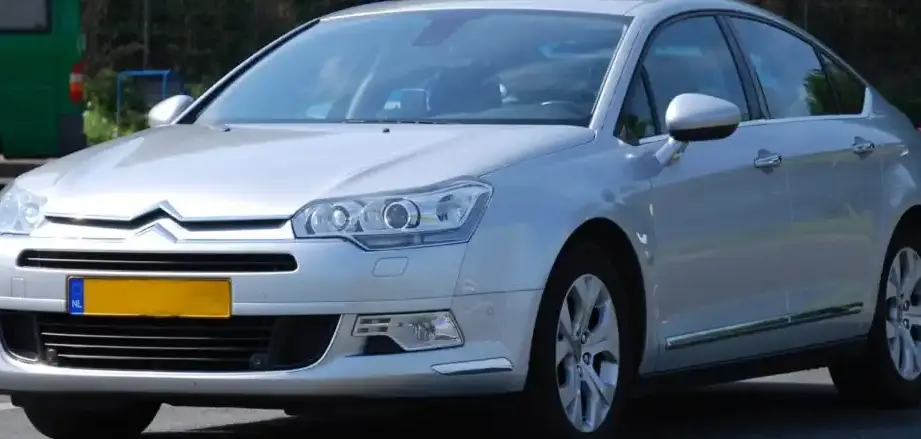
The Citroën C5 II, specifically the 2.0 16V (140 hp) automatic variant produced between 2008 and 2009, represents a mid-cycle offering within the second generation of Citroën’s large family car. Introduced as part of the Phase I refresh of the C5 II (designated internally as X7), this model aimed to provide a balance of comfort, practicality, and reasonable performance for buyers seeking a refined driving experience. Positioned as a mid-range trim, it slotted between the more economical 1.8-liter engine options and the more powerful 2.2-liter and V6 models. The C5 II competed primarily with vehicles like the Ford Mondeo, Volkswagen Passat, and Peugeot 407 in the European market, offering a distinctly French approach to ride quality and interior design.
Technical Specifications
| Brand | Citroen |
| Model | C5 |
| Generation | C5 II (Phase I, 2008) |
| Type (Engine) | 2.0 16V (140 Hp) Automatic |
| Start of production | 2008 |
| End of production | 2009 |
| Powertrain Architecture | Internal Combustion engine |
| Body type | Sedan |
| Seats | 5 |
| Doors | 4 |
| Fuel consumption (urban) | 12.7 l/100 km (18.5 US mpg, 22.2 UK mpg, 7.9 km/l) |
| Fuel consumption (extra urban) | 6.7 l/100 km (35.1 US mpg, 42.2 UK mpg, 14.9 km/l) |
| Fuel consumption (combined) | 8.9 l/100 km (26.4 US mpg, 31.7 UK mpg, 11.2 km/l) |
| CO2 emissions | 212 g/km |
| Fuel Type | Petrol (Gasoline) |
| Acceleration 0 – 100 km/h | 12.8 sec |
| Acceleration 0 – 62 mph | 12.8 sec |
| Acceleration 0 – 60 mph | 12.2 sec |
| Maximum speed | 205 km/h (127.38 mph) |
| Emission standard | Euro 4 |
| Weight-to-power ratio | 11.3 kg/Hp, 88.4 Hp/tonne |
| Weight-to-torque ratio | 7.9 kg/Nm, 126.3 Nm/tonne |
| Power | 140 Hp @ 6000 rpm |
| Power per litre | 70.1 Hp/l |
| Torque | 200 Nm @ 4000 rpm (147.51 lb.-ft. @ 4000 rpm) |
| Engine layout | Front, Transverse |
| Engine Model/Code | RFJ EW10A |
| Engine displacement | 1997 cm3 (121.86 cu. in.) |
| Number of cylinders | 4 |
| Engine configuration | Inline |
| Cylinder Bore | 85 mm (3.35 in.) |
| Piston Stroke | 88 mm (3.46 in.) |
| Compression ratio | 10.8:1 |
| Number of valves per cylinder | 4 |
| Fuel injection system | Multi-port manifold injection |
| Engine aspiration | Naturally aspirated engine |
| Valvetrain | DOHC |
| Engine oil capacity | 5 l (5.28 US qt | 4.4 UK qt) |
| Coolant | 9.8 l (10.36 US qt | 8.62 UK qt) |
| Kerb Weight | 1583 kg (3489.92 lbs.) |
| Max. weight | 2090 kg (4607.66 lbs.) |
| Max load | 507 kg (1117.74 lbs.) |
| Trunk (boot) space – minimum | 439 l (15.5 cu. ft.) |
| Fuel tank capacity | 71 l (18.76 US gal | 15.62 UK gal) |
| Max. roof load | 80 kg (176.37 lbs.) |
| Permitted trailer load with brakes (12%) | 1500 kg (3306.93 lbs.) |
| Permitted trailer load without brakes | 750 kg (1653.47 lbs.) |
| Permitted towbar download | 69 kg (152.12 lbs.) |
| Length | 4779 mm (188.15 in.) |
| Width | 1860 mm (73.23 in.) |
| Width including mirrors | 2096 mm (82.52 in.) |
| Height | 1451-1458 mm (57.13 – 57.4 in.) |
| Wheelbase | 2815 mm (110.83 in.) |
| Front track | 1586 mm (62.44 in.) |
| Rear (Back) track | 1557 mm (61.3 in.) |
| Front overhang | 1054 mm (41.5 in.) |
| Rear overhang | 910 mm (35.83 in.) |
| Minimum turning circle | 11.7 m (38.39 ft.) |
| Drivetrain Architecture | The Internal combustion engine (ICE) drives the front wheels of the vehicle. |
| Drive wheel | Front wheel drive |
| Number of gears and type of gearbox | 4 gears, automatic transmission |
| Front suspension | Double wishbone |
| Rear suspension | Independent multi-link suspension |
| Front brakes | Ventilated discs |
| Rear brakes | Disc |
| Assisting systems | ABS (Anti-lock braking system) |
| Steering type | Steering rack and pinion |
| Power steering | Hydraulic Steering |
| Tires size | 225/55 R17 |
| Wheel rims size | 17 |
Powertrain & Engine Architecture
The heart of this C5 variant is the EW10A engine, a 1.997-liter (2.0L) inline-four cylinder gasoline engine. This engine, often identified by the RFJ code, is a naturally aspirated unit featuring a double overhead camshaft (DOHC) valvetrain with four valves per cylinder. It utilizes a multi-port fuel injection system, delivering fuel directly into the intake ports. The EW10A engine is known for its relatively smooth operation and decent mid-range torque. The automatic transmission paired with this engine is a four-speed unit, designed for comfortable cruising rather than sporty performance. This transmission, while reliable, is a generation behind more modern automatics in terms of gear count and efficiency.
Driving Characteristics
The 2.0 16V automatic C5 offers a comfortable and relaxed driving experience. The 140 horsepower engine provides adequate power for everyday driving, but acceleration is not particularly brisk. The 0-62 mph (0-100 km/h) time of around 12.8 seconds reflects this. The four-speed automatic transmission contributes to a somewhat less refined feel compared to manual versions or models with more powerful engines. Gear changes are noticeable, and the transmission can sometimes hunt for the right gear, especially during uphill climbs. However, the emphasis is on smooth power delivery and ease of use, making it well-suited for long journeys.
Equipment & Trim Levels
The 2.0 16V automatic trim typically included features such as air conditioning, power windows, central locking, and an RDS radio. Higher trim levels offered options like leather upholstery, automatic headlights and wipers, a sunroof, and a more advanced audio system. Safety features included ABS brakes, front airbags, and often side airbags. The interior design was characterized by Citroën’s focus on comfort, with supportive seats and a user-friendly dashboard layout.
Chassis & Braking
The C5 II utilizes a double wishbone front suspension and an independent multi-link rear suspension, contributing to its renowned ride comfort. The front brakes are ventilated discs, while the rear brakes are solid discs. The suspension setup is tuned for absorbing bumps and providing a stable ride, even on uneven surfaces. The hydraulic power steering offers a light and precise feel.
Market Reception & Comparison
The 2.0 16V automatic C5 was generally well-received by critics as a comfortable and practical family car. However, some reviewers noted that the engine and transmission combination lacked the refinement and performance of competitors. Fuel economy was considered average for its class. Compared to the 1.8-liter versions, the 2.0-liter offered noticeably more power and a more relaxed driving experience. Compared to the more expensive 2.2-liter and V6 models, it provided a more affordable entry point into the C5 range, albeit with a compromise in performance.
Legacy
The EW10A engine, in various forms, has proven to be a relatively reliable unit. The four-speed automatic transmission, while not the most advanced, is generally durable if properly maintained. Today, the 2.0 16V automatic C5 II represents an affordable and comfortable used car option. However, potential buyers should be aware of the age-related issues common to vehicles of this era, such as wear and tear on suspension components and potential electrical problems. Parts availability is generally good, and maintenance costs are reasonable, making it a viable choice for those seeking a spacious and comfortable family saloon.