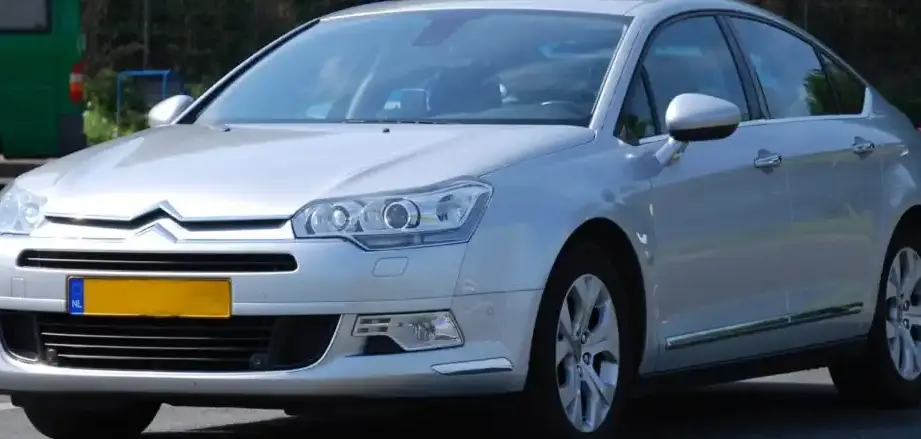
The Citroën C5 II, specifically the 2.7 HDi Biturbo V6 Automatic produced between 2008 and 2009, represents a sophisticated offering within the second generation of Citroën’s large family car. Introduced as part of the Phase I update of the C5 II (designated X7), this variant aimed to provide a blend of performance, comfort, and technology, appealing to buyers seeking a premium experience in the executive car segment. Positioned as a higher-end trim, it sat above the more economical diesel options and the petrol-powered versions in the C5 II lineup. The C5 II itself was built on the PSA Group’s Platform 2, also known as the 1HX0/A3 platform, shared with the Peugeot 607.
Technical Specifications
| Brand | Citroen |
| Model | C5 |
| Generation | C5 II (Phase I, 2008) |
| Type (Engine) | 2.7 HDi Biturbo V6 (204 Hp) Automatic |
| Start of production | 2008 |
| End of production | 2009 |
| Powertrain Architecture | Internal Combustion engine |
| Body type | Sedan |
| Seats | 5 |
| Doors | 4 |
| Fuel consumption (urban) | 11.8 l/100 km (19.9 US mpg, 23.9 UK mpg, 8.5 km/l) |
| Fuel consumption (extra urban) | 6.4 l/100 km (36.8 US mpg, 44.1 UK mpg, 15.6 km/l) |
| Fuel consumption (combined) | 8.4 l/100 km (28 US mpg, 33.6 UK mpg, 11.9 km/l) |
| CO2 emissions | 223 g/km |
| Fuel Type | Diesel |
| Acceleration 0 – 100 km/h | 9.6 sec |
| Acceleration 0 – 62 mph | 9.6 sec |
| Acceleration 0 – 60 mph | 9.1 sec |
| Maximum speed | 224 km/h (139.19 mph) |
| Emission standard | Euro 4 |
| Weight-to-power ratio | 8.7 kg/Hp, 115.5 Hp/tonne |
| Weight-to-torque ratio | 4 kg/Nm, 249.2 Nm/tonne |
| Power | 204 Hp @ 4000 rpm |
| Power per litre | 75 Hp/l |
| Torque | 440 Nm @ 1900 rpm (324.53 lb.-ft. @ 1900 rpm) |
| Engine layout | Front, Transverse |
| Engine Model/Code | DT17ED4 |
| Engine displacement | 2720 cm3 (165.98 cu. in.) |
| Number of cylinders | 6 |
| Engine configuration | V-engine |
| Cylinder Bore | 81 mm (3.19 in.) |
| Piston Stroke | 88 mm (3.46 in.) |
| Compression ratio | 17.3:1 |
| Number of valves per cylinder | 4 |
| Fuel injection system | Diesel Commonrail |
| Engine aspiration | BiTurbo, Intercooler |
| Valvetrain | DOHC |
| Engine oil capacity | 5.5 l (5.81 US qt, 4.84 UK qt) |
| Coolant | 10.6 l (11.2 US qt, 9.33 UK qt) |
| Kerb Weight | 1766 kg (3893.36 lbs.) |
| Max. weight | 2310 kg (5092.68 lbs.) |
| Max load | 544 kg (1199.31 lbs.) |
| Trunk (boot) space – minimum | 439 l (15.5 cu. ft.) |
| Fuel tank capacity | 71 l (18.76 US gal, 15.62 UK gal) |
| Max. roof load | 80 kg (176.37 lbs.) |
| Permitted trailer load with brakes (12%) | 1400 kg (3086.47 lbs.) |
| Permitted trailer load without brakes | 750 kg (1653.47 lbs.) |
| Permitted towbar download | 68 kg (149.91 lbs.) |
| Length | 4779 mm (188.15 in.) |
| Width | 1860 mm (73.23 in.) |
| Width including mirrors | 2096 mm (82.52 in.) |
| Height | 1451-1458 mm (57.13 – 57.4 in.) |
| Wheelbase | 2815 mm (110.83 in.) |
| Front track | 1586 mm (62.44 in.) |
| Rear (Back) track | 1557 mm (61.3 in.) |
| Front overhang | 1054 mm (41.5 in.) |
| Rear overhang | 910 mm (35.83 in.) |
| Minimum turning circle | 11.7 m (38.39 ft.) |
| Drivetrain Architecture | Front wheel drive |
| Number of gears and type of gearbox | 6 gears, automatic transmission |
| Front suspension | Double wishbone |
| Rear suspension | Independent multi-link suspension |
| Front brakes | Ventilated discs |
| Rear brakes | Disc |
| Assisting systems | ABS (Anti-lock braking system) |
| Steering type | Steering rack and pinion |
| Power steering | Hydraulic Steering |
| Tires size | 245/45 R18 |
| Wheel rims size | 18 |
Powertrain & Engine Architecture
The heart of this C5 variant is the DT17ED4, a 2.7-liter V6 diesel engine employing a biturbocharged configuration. This engine was a product of PSA’s collaboration with Ford, and it represented a significant step forward in diesel technology for the era. The engine utilizes a common rail direct injection system, delivering fuel at extremely high pressures for optimized combustion. The biturbo setup, featuring two turbochargers of differing sizes, aims to minimize turbo lag and provide a broad, flat torque curve. The engine also features a DOHC (Double Overhead Camshaft) valvetrain and an intercooler to further enhance performance. Paired with this engine is a six-speed automatic transmission, designed to provide smooth and efficient gear changes. This transmission, while not offering the outright speed of some contemporary gearboxes, was known for its reliability and comfort.
Driving Characteristics
The 2.7 HDi Biturbo V6 Automatic C5 offered a distinctly refined driving experience. The 440 Nm (324.53 lb-ft) of torque available from just 1900 rpm provided strong acceleration in everyday driving situations, making overtaking effortless. While the 0-60 mph time of around 9.1 seconds isn’t particularly quick by modern standards, the engine’s responsiveness and the smooth operation of the automatic transmission contributed to a feeling of relaxed power. The automatic transmission, while offering convenience, did slightly diminish the overall performance compared to the available manual transmission options. Gear ratios were tuned for comfort and fuel efficiency rather than outright sportiness. The C5’s hydropneumatic suspension, a Citroën hallmark, further enhanced ride quality, absorbing bumps and providing a comfortable and stable platform.
Equipment & Trim Levels
The 2.7 HDi Biturbo Automatic typically came well-equipped, reflecting its position as a premium trim level. Standard features often included climate control, power windows and mirrors, a CD stereo system, and alloy wheels. Higher-spec versions could be equipped with leather upholstery, a sunroof, and a more advanced navigation system. Safety features such as ABS, traction control, and multiple airbags were standard. The interior design focused on comfort and ergonomics, with supportive seats and a user-friendly dashboard layout.
Chassis & Braking
The C5 II utilized a double wishbone front suspension and an independent multi-link rear suspension, contributing to its excellent ride quality and handling. The braking system consisted of ventilated discs at the front and solid discs at the rear, providing adequate stopping power for the vehicle’s weight and performance. Hydraulic power steering offered precise and responsive control. The C5’s suspension was designed to prioritize comfort, and while it offered competent handling, it wasn’t geared towards aggressive driving.
Market Reception & Comparison
The 2.7 HDi Biturbo V6 Automatic C5 was generally well-received by automotive critics. It was praised for its comfortable ride, refined engine, and spacious interior. However, some reviewers noted that the automatic transmission could feel slightly sluggish at times, and the fuel economy, while respectable, wasn’t class-leading. Compared to the 2.0 HDi variants, the 2.7 offered significantly more power and refinement, but at a higher price point and with slightly increased running costs. Against competitors like the Audi A6 and BMW 5 Series, the C5 offered a unique blend of French flair and comfort, often at a more competitive price.
Legacy
The DT17ED4 engine, while generally reliable, is known to require diligent maintenance, particularly regarding the turbochargers and the diesel particulate filter (DPF). The automatic transmission, if properly serviced, is also considered durable. Today, the 2.7 HDi Biturbo C5 II represents an affordable entry point into the executive car segment. Well-maintained examples are still sought after by enthusiasts who appreciate the C5’s unique character and comfortable ride. However, potential buyers should be aware of the potential maintenance costs associated with a higher-mileage diesel engine and the importance of ensuring the DPF is functioning correctly.