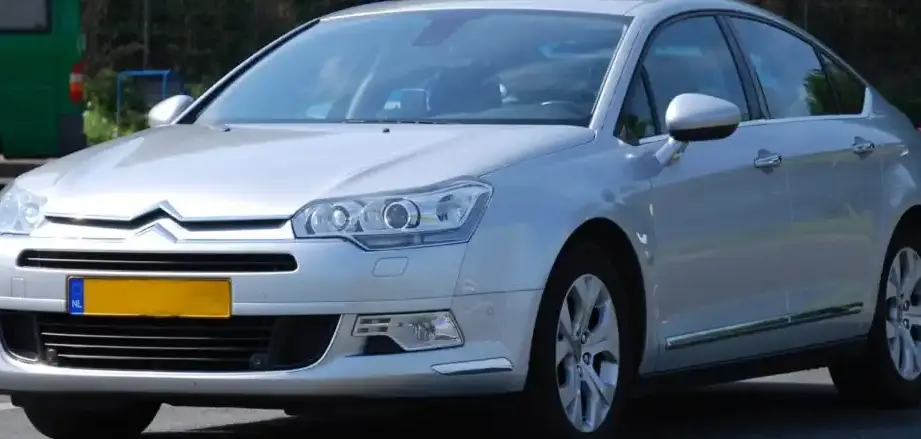
The Citroën C5 II, specifically the 3.0 HDi Biturbo V6 (241 hp) FAP Automatic variant produced between 2009 and 2012, represented the flagship powertrain option for the second-generation C5. Positioned as the premium trim level, this model aimed to combine luxury, performance, and fuel efficiency within the large family car segment. It was a key offering in the European market, where Citroën traditionally held a strong presence with its focus on comfort and innovative technology. This variant was built on the PSA Group’s Platform 2, also known as the 1HX0 platform, shared with the Peugeot 607.
Technical Specifications
| Brand | Citroen |
| Model | C5 |
| Generation | C5 II (Phase I, 2008) |
| Type (Engine) | 3.0 HDi Biturbo V6 (241 Hp) FAP Automatic |
| Start of production | 2009 |
| End of production | 2012 |
| Powertrain Architecture | Internal Combustion engine |
| Body type | Sedan |
| Seats | 5 |
| Doors | 4 |
| Fuel consumption (urban) | 10.2 l/100 km (23.1 US mpg, 27.7 UK mpg, 9.8 km/l) |
| Fuel consumption (extra urban) | 5.8 l/100 km (40.6 US mpg, 48.7 UK mpg, 17.2 km/l) |
| Fuel consumption (combined) | 7.4 l/100 km (31.8 US mpg, 38.2 UK mpg, 13.5 km/l) |
| CO2 emissions | 195 g/km |
| Fuel Type | Diesel |
| Acceleration 0 – 100 km/h | 7.9 sec |
| Acceleration 0 – 62 mph | 7.9 sec |
| Acceleration 0 – 60 mph | 7.5 sec |
| Maximum speed | 240 km/h (149.13 mph) |
| Emission standard | Euro 5 |
| Weight-to-power ratio | 7.3 kg/Hp, 136.5 Hp/tonne |
| Weight-to-torque ratio | 3.9 kg/Nm, 254.8 Nm/tonne |
| Power | 241 Hp @ 3800 rpm |
| Power per litre | 80.5 Hp/l |
| Torque | 450 Nm @ 1600 rpm (331.9 lb.-ft. @ 1600 rpm) |
| Engine layout | Front, Transverse |
| Engine Model/Code | DT20C |
| Engine displacement | 2993 cm3 (182.64 cu. in.) |
| Number of cylinders | 6 |
| Engine configuration | V-engine |
| Cylinder Bore | 84 mm (3.31 in.) |
| Piston Stroke | 90 mm (3.54 in.) |
| Compression ratio | 16:1 |
| Number of valves per cylinder | 4 |
| Fuel injection system | Diesel Commonrail |
| Engine aspiration | BiTurbo, Intercooler |
| Engine oil capacity | 6.3 l (6.66 US qt | 5.54 UK qt) |
| Coolant | 11 l (11.62 US qt | 9.68 UK qt) |
| Kerb Weight | 1766 kg (3893.36 lbs.) |
| Max. weight | 2276 kg (5017.72 lbs.) |
| Max load | 510 kg (1124.36 lbs.) |
| Trunk (boot) space – minimum | 439 l (15.5 cu. ft.) |
| Fuel tank capacity | 71 l (18.76 US gal | 15.62 UK gal) |
| Max. roof load | 80 kg (176.37 lbs.) |
| Permitted trailer load with brakes (12%) | 1400 kg (3086.47 lbs.) |
| Permitted trailer load without brakes | 750 kg (1653.47 lbs.) |
| Permitted towbar download | 67 kg (147.71 lbs.) |
| Length | 4779 mm (188.15 in.) |
| Width | 1860 mm (73.23 in.) |
| Width including mirrors | 2096 mm (82.52 in.) |
| Height | 1451-1458 mm (57.13 – 57.4 in.) |
| Wheelbase | 2815 mm (110.83 in.) |
| Front track | 1586 mm (62.44 in.) |
| Rear (Back) track | 1557 mm (61.3 in.) |
| Front overhang | 1054 mm (41.5 in.) |
| Rear overhang | 910 mm (35.83 in.) |
| Minimum turning circle | 11.7 m (38.39 ft.) |
| Drivetrain Architecture | Front wheel drive |
| Number of gears and type of gearbox | 6 gears, automatic transmission |
| Front suspension | Double wishbone |
| Rear suspension | Independent multi-link suspension |
| Front brakes | Ventilated discs |
| Rear brakes | Disc |
| Assisting systems | ABS (Anti-lock braking system) |
| Steering type | Steering rack and pinion |
| Power steering | Hydraulic Steering |
| Tires size | 245/45 R18 |
| Wheel rims size | 18 |
Powertrain & Engine Architecture
The heart of this C5 variant is the DT20C 3.0-liter V6 turbodiesel engine. This engine utilizes a biturbo setup, employing two turbochargers – one of variable geometry – to deliver a broad torque curve and minimize turbo lag. The engine features a common rail direct injection system, operating at a high pressure to ensure efficient fuel atomization and combustion. The cylinder head incorporates four valves per cylinder, enhancing volumetric efficiency. The FAP (Filtre à Particules) or Diesel Particulate Filter, was standard equipment to meet stringent Euro 5 emissions regulations. The six-speed automatic transmission, sourced from Aisin, was specifically calibrated to handle the engine’s substantial torque output. It featured a torque converter and offered a manual shift mode for greater driver control.
Driving Characteristics
The 3.0 HDi Biturbo V6 Automatic C5 offered a distinctly refined driving experience. The engine’s 450 Nm (331.9 lb-ft) of torque, available from just 1600 rpm, provided effortless acceleration and strong in-gear performance. While the 0-60 mph time of around 7.5 seconds wasn’t overtly sporty, it was more than adequate for comfortable highway cruising and overtaking. The automatic transmission, while smooth, wasn’t particularly quick to shift compared to more modern units. Compared to the base 1.6 HDi or even the 2.0 HDi models, this variant offered a significant performance advantage. The higher output engine and more robust transmission allowed for a more relaxed driving style, particularly when fully loaded or towing. Compared to a manual transmission equipped C5, the automatic offered convenience but slightly diminished fuel economy and a less engaging driving experience.
Equipment & Trim Levels
The 3.0 HDi Biturbo V6 Automatic typically came equipped with Citroën’s top-of-the-line trim level, often designated as “Exclusive.” Standard features included leather upholstery, automatic climate control, a premium audio system, front and rear parking sensors, and rain-sensing wipers. Optional extras included a panoramic sunroof, navigation system, and adaptive cruise control. Interior appointments were generally high quality, with a focus on comfort and refinement. The dashboard layout was typical of Citroën at the time, featuring a blend of analog gauges and a central multifunction display.
Chassis & Braking
The C5 II utilized a sophisticated suspension system designed to prioritize ride comfort. The front suspension employed a double wishbone setup, while the rear featured an independent multi-link arrangement. This configuration, combined with Citroën’s Hydractive III+ suspension (often standard on this trim), provided a remarkably smooth and controlled ride, even on uneven surfaces. Braking duties were handled by ventilated discs at the front and solid discs at the rear, equipped with ABS and electronic brakeforce distribution. The steering was a hydraulic power-assisted rack and pinion system, offering a good balance of feel and assistance.
Market Reception & Comparison
The 3.0 HDi Biturbo V6 Automatic C5 was generally well-received by automotive critics. It was praised for its refined engine, comfortable ride, and spacious interior. However, some reviewers noted the relatively high price compared to competitors and the slightly dated interior design. Fuel economy, while respectable for a vehicle of this size and performance, was not class-leading. Compared to the 2.0 HDi models, the V6 offered significantly more power and refinement, but at a higher purchase price and with slightly increased running costs. The V6 also offered a more luxurious alternative to rivals like the Ford Mondeo and Volkswagen Passat.
Legacy
The DT20C engine, while robust, is known to require diligent maintenance, particularly regarding the turbochargers and the FAP system. Regular oil changes and the use of high-quality diesel fuel are crucial for long-term reliability. The automatic transmission, if properly maintained, is generally reliable. Today, the 3.0 HDi Biturbo V6 C5 II represents a relatively rare and desirable variant in the used car market. Its combination of performance, comfort, and distinctive styling appeals to enthusiasts seeking a refined and capable grand tourer. However, potential buyers should be aware of the potential maintenance costs associated with a complex diesel engine and its associated systems.