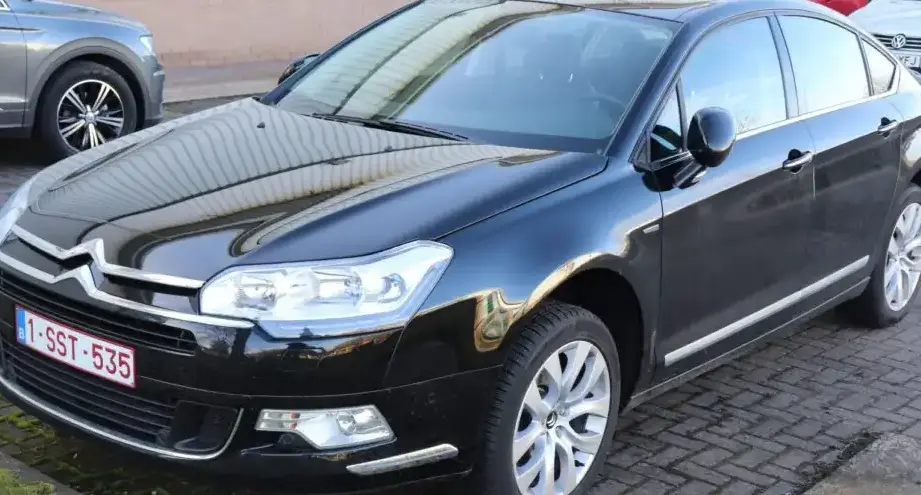
The Citroën C5 II (Phase II), specifically the 1.6 VTi 120 hp variant equipped with the electronically controlled gearbox (EGS), was a mid-size sedan produced from 2012 to 2015. Positioned as an entry-level to mid-range offering within the C5 II lineup, it aimed to provide a balance of comfort, fuel efficiency, and affordability. This iteration of the C5, built on the PF2 platform, represented a significant refresh of the second-generation C5, introducing updated styling and improved technology. The EGS transmission, while intended to offer the convenience of an automatic, was a somewhat controversial feature, often criticized for its shift quality compared to traditional torque-converter automatics.
Technical Specifications
| Brand | Citroen |
| Model | C5 |
| Generation | C5 II (Phase II, 2012) |
| Type (Engine) | 1.6 VTi (120 Hp) EGS |
| Start of production | 2012 |
| End of production | 2015 |
| Powertrain Architecture | Internal Combustion engine |
| Body type | Sedan |
| Seats | 5 |
| Doors | 4 |
| Fuel consumption (urban) | 8.3 l/100 km (28.3 US mpg, 34 UK mpg, 12 km/l) |
| Fuel consumption (extra urban) | 5 l/100 km (47 US mpg, 56.5 UK mpg, 20 km/l) |
| Fuel consumption (combined) | 6.2 l/100 km (37.9 US mpg, 45.6 UK mpg, 16.1 km/l) |
| CO2 emissions | 144 g/km |
| Fuel Type | Petrol (Gasoline) |
| Acceleration 0 – 100 km/h | 12.2 sec |
| Acceleration 0 – 62 mph | 12.2 sec |
| Acceleration 0 – 60 mph | 11.6 sec |
| Maximum speed | 198 km/h (123.03 mph) |
| Emission standard | Euro 5 |
| Weight-to-power ratio | 11.9 kg/Hp, 84.2 Hp/tonne |
| Weight-to-torque ratio | 8.9 kg/Nm, 112.3 Nm/tonne |
| Power | 120 Hp @ 6000 rpm |
| Power per litre | 75.1 Hp/l |
| Torque | 160 Nm @ 4250 rpm (118.01 lb.-ft. @ 4250 rpm) |
| Engine layout | Front, Transverse |
| Engine Model/Code | 5FS EP6C |
| Engine displacement | 1598 cm3 (97.52 cu. in.) |
| Number of cylinders | 4 |
| Engine configuration | Inline |
| Cylinder Bore | 77 mm (3.03 in.) |
| Piston Stroke | 85.8 mm (3.38 in.) |
| Compression ratio | 11:1 |
| Number of valves per cylinder | 4 |
| Fuel injection system | Multi-port manifold injection |
| Engine aspiration | Naturally aspirated engine |
| Valvetrain | DOHC |
| Engine oil capacity | 4.25 l (4.49 US qt | 3.74 UK qt) |
| Kerb Weight | 1425 kg (3141.59 lbs.) |
| Max. weight | 2018 kg (4448.93 lbs.) |
| Max load | 593 kg (1307.34 lbs.) |
| Trunk (boot) space – minimum | 439 l (15.5 cu. ft.) |
| Fuel tank capacity | 71 l (18.76 US gal | 15.62 UK gal) |
| Max. roof load | 80 kg (176.37 lbs.) |
| Permitted trailer load with brakes (12%) | 1300 kg (2866.01 lbs.) |
| Permitted trailer load without brakes | 750 kg (1653.47 lbs.) |
| Permitted towbar download | 64 kg (141.1 lbs.) |
| Length | 4779 mm (188.15 in.) |
| Width | 1860 mm (73.23 in.) |
| Width including mirrors | 2096 mm (82.52 in.) |
| Height | 1451-1458 mm (57.13 – 57.4 in.) |
| Wheelbase | 2815 mm (110.83 in.) |
| Front track | 1586 mm (62.44 in.) |
| Rear (Back) track | 1557 mm (61.3 in.) |
| Front overhang | 1054 mm (41.5 in.) |
| Rear overhang | 910 mm (35.83 in.) |
| Minimum turning circle (turning diameter) | 11.5 m (37.73 ft.) |
| Drivetrain Architecture | The Internal combustion engine (ICE) drives the front wheels of the vehicle. |
| Drive wheel | Front wheel drive |
| Number of gears and type of gearbox | 6 gears, automatic transmission EGS |
| Front suspension | Independent multi-link suspension |
| Rear suspension | Independent multi-link suspension |
| Front brakes | Ventilated discs |
| Rear brakes | Disc |
| Assisting systems | ABS (Anti-lock braking system) |
| Steering type | Steering rack and pinion |
| Power steering | Electric Steering |
| Tires size | 225/60 R16 |
| Wheel rims size | 16 |
Powertrain & Engine Architecture
The heart of this C5 variant is the 5FS EP6C engine, a 1.6-liter inline-four cylinder petrol engine. This engine is part of the Prince engine family, a collaborative development between PSA Peugeot Citroën and BMW. It features a double overhead camshaft (DOHC) valvetrain with four valves per cylinder, and multi-point fuel injection. The engine produces 120 horsepower at 6000 rpm and 160 Nm (118 lb-ft) of torque at 4250 rpm. The engine’s relatively high compression ratio of 11:1 contributes to its efficiency. The EGS (Electronically Controlled Gearbox) transmission is a six-speed automated manual transmission. Unlike a traditional automatic with a torque converter, the EGS uses actuators to shift gears, resulting in a more direct feel but often less smooth transitions than a conventional automatic.
Driving Characteristics
The 1.6 VTi EGS offered a comfortable, if not particularly exhilarating, driving experience. Acceleration from 0-100 km/h (0-62 mph) took around 12.2 seconds, making it noticeably slower than C5 models equipped with larger engines like the 2.0 HDi diesel or the 1.6 THP turbocharged petrol. The EGS transmission, while offering manual control via steering wheel-mounted paddles or a sequential shift mode, often exhibited hesitant shifts and a lack of refinement, especially at lower speeds. The gear ratios were tuned for fuel economy rather than performance, prioritizing smooth cruising over brisk acceleration. Compared to the manual transmission versions of the 1.6 VTi, the EGS offered convenience but sacrificed some responsiveness.
Equipment & Trim Levels
The 1.6 VTi EGS typically came with a reasonable level of standard equipment. This included air conditioning, electric front and rear windows, a CD/radio stereo system, and ABS brakes. Higher trim levels, such as Exclusive, added features like automatic climate control, alloy wheels, parking sensors, and a more luxurious interior trim. Interior upholstery was typically cloth, with options for leather upgrades. The dashboard layout was characteristic of the C5 II, featuring a minimalist design with a centrally mounted display screen for infotainment and vehicle information.
Chassis & Braking
The C5 II utilized an independent multi-link suspension system at both the front and rear, providing a comfortable ride quality. The front suspension featured ventilated disc brakes, while the rear brakes were solid discs. The steering was electrically assisted, offering a light and easy driving experience. The C5 II’s suspension was tuned for comfort, prioritizing ride quality over sporty handling. Stabilizer bars were fitted front and rear to reduce body roll during cornering.
Market Reception & Comparison
The 1.6 VTi EGS variant of the C5 II received mixed reviews. Critics generally praised the car’s comfort and fuel efficiency, but the EGS transmission was a common point of criticism. Many reviewers found the shifts to be jerky and slow, detracting from the overall driving experience. Compared to the 2.0 HDi diesel, the 1.6 VTi offered lower running costs in terms of fuel, but lacked the diesel’s superior torque and fuel economy on longer journeys. The 1.6 THP turbocharged petrol engine provided a more engaging driving experience, but at a higher price point.
Legacy
The 1.6 VTi EGS powertrain, while not known for exceptional performance or reliability, has proven to be reasonably durable in the long term. Common issues include wear and tear on the EGS transmission’s actuators and occasional oil leaks from the engine. However, with regular maintenance, these engines can reach high mileages. On the used car market, this variant of the C5 II represents an affordable entry point into Citroën ownership, appealing to buyers seeking a comfortable and economical family sedan. The EGS transmission, however, can be a deterrent for some buyers, who may prefer the smoother operation of a traditional automatic or the engagement of a manual gearbox.