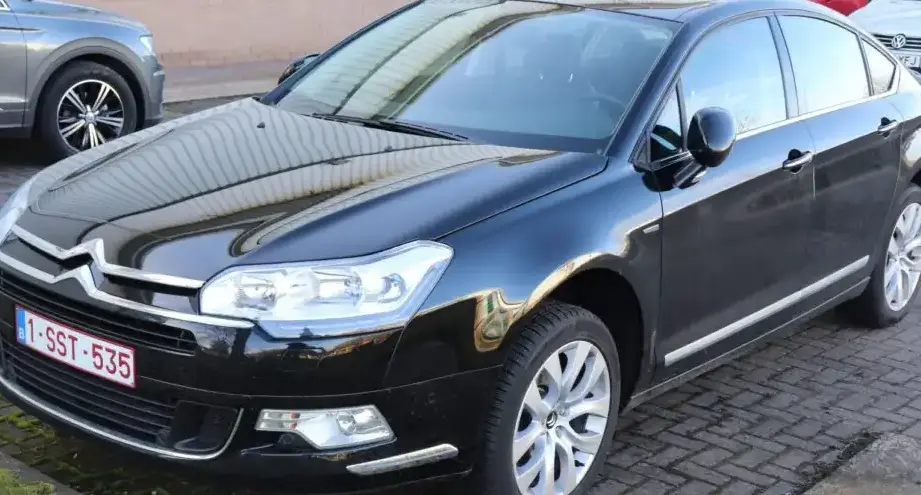
The Citroën C5 II (Phase II), specifically the 2.0 HDi 163 hp variant produced between 2012 and 2015, represents a refinement of the second-generation C5 large family car. Positioned as a mid-range offering within the C5 lineup, this model aimed to balance fuel efficiency, comfortable ride quality, and respectable performance for the European market. It built upon the foundation of the C5 II platform (internally designated as X7), which debuted in 2007, incorporating updates to styling, technology, and engine options during the Phase II refresh. This version was primarily sold in Europe, where large, comfortable sedans and wagons remained popular, offering a compelling alternative to German and domestic competitors.
Technical Specifications
| Brand | Citroën |
| Model | C5 |
| Generation | C5 II (Phase II, 2012) |
| Type (Engine) | 2.0 HDi (163 Hp) |
| Start of production | 2012 |
| End of production | 2015 |
| Powertrain Architecture | Internal Combustion engine |
| Body type | Sedan |
| Seats | 5 |
| Doors | 4 |
| Fuel consumption (urban) | 6.8 l/100 km (34.6 US mpg, 41.5 UK mpg, 14.7 km/l) |
| Fuel consumption (extra urban) | 4.4 l/100 km (53.5 US mpg, 64.2 UK mpg, 22.7 km/l) |
| Fuel consumption (combined) | 5.3 l/100 km (44.4 US mpg, 53.3 UK mpg, 18.9 km/l) |
| CO2 emissions | 139 g/km |
| Fuel Type | Diesel |
| Acceleration 0 – 100 km/h | 9.1 sec |
| Acceleration 0 – 62 mph | 9.1 sec |
| Acceleration 0 – 60 mph | 8.6 sec |
| Maximum speed | 210 km/h (130.49 mph) |
| Emission standard | Euro 5 |
| Weight-to-power ratio | 9.6 kg/Hp, 104.3 Hp/tonne |
| Weight-to-torque ratio | 4.6 kg/Nm, 217.5 Nm/tonne |
| Power | 163 Hp @ 3750 rpm |
| Power per litre | 81.6 Hp/l |
| Torque | 340 Nm @ 2000 rpm (250.77 lb.-ft. @ 2000 rpm) |
| Engine layout | Front, Transverse |
| Engine Model/Code | RHH DW10CTED4 |
| Engine displacement | 1997 cm3 (121.86 cu. in.) |
| Number of cylinders | 4 |
| Engine configuration | Inline |
| Cylinder Bore | 85 mm (3.35 in.) |
| Piston Stroke | 88 mm (3.46 in.) |
| Compression ratio | 16:1 |
| Number of valves per cylinder | 4 |
| Fuel injection system | Diesel Commonrail |
| Engine aspiration | Turbocharger, Intercooler |
| Valvetrain | DOHC |
| Engine oil capacity | 5 l (5.28 US qt | 4.4 UK qt) |
| Coolant | 10.8 l (11.41 US qt | 9.5 UK qt) |
| Kerb Weight | 1563 kg (3445.83 lbs.) |
| Max. weight | 2156 kg (4753.17 lbs.) |
| Max load | 593 kg (1307.34 lbs.) |
| Trunk (boot) space – minimum | 439 l (15.5 cu. ft.) |
| Fuel tank capacity | 71 l (18.76 US gal | 15.62 UK gal) |
| Max. roof load | 80 kg (176.37 lbs.) |
| Permitted trailer load with brakes (12%) | 1500 kg (3306.93 lbs.) |
| Permitted trailer load without brakes | 750 kg (1653.47 lbs.) |
| Permitted towbar download | 70 kg (154.32 lbs.) |
| Length | 4779 mm (188.15 in.) |
| Width | 1860 mm (73.23 in.) |
| Width including mirrors | 2096 mm (82.52 in.) |
| Height | 1451-1458 mm (57.13 – 57.4 in.) |
| Wheelbase | 2815 mm (110.83 in.) |
| Front track | 1586 mm (62.44 in.) |
| Rear (Back) track | 1557 mm (61.3 in.) |
| Front overhang | 1054 mm (41.5 in.) |
| Rear overhang | 910 mm (35.83 in.) |
| Minimum turning circle (turning diameter) | 11.7 m (38.39 ft.) |
| Drivetrain Architecture | The Internal combustion engine (ICE) drives the front wheels of the vehicle. |
| Drive wheel | Front wheel drive |
| Number of gears and type of gearbox | 6 gears, manual transmission |
| Front suspension | Independent multi-link suspension |
| Rear suspension | Independent multi-link suspension |
| Front brakes | Ventilated discs |
| Rear brakes | Disc |
| Assisting systems | ABS (Anti-lock braking system) |
| Steering type | Steering rack and pinion |
| Power steering | Electric Steering |
| Tires size | 225/55 R17 |
| Wheel rims size | 17 |
Powertrain & Engine Architecture
The heart of this C5 variant is the DW10CTED4, a 2.0-liter four-cylinder diesel engine. This engine, commonly found in PSA Group (Peugeot, Citroën, and later Vauxhall/Opel) vehicles, is a turbocharged common-rail direct injection diesel. The ‘RHH’ engine code specifically denotes a version compliant with Euro 5 emissions standards. The engine features a 16:1 compression ratio and a double overhead camshaft (DOHC) valvetrain with four valves per cylinder. The turbocharger, coupled with an intercooler, helps to boost power and torque while improving efficiency. The common-rail direct injection system, supplied by Bosch, delivers fuel at extremely high pressure, optimizing combustion and reducing emissions. This particular engine was known for its relatively quiet operation compared to some of its competitors. The 6-speed manual transmission was the standard offering, providing a balance between fuel economy and driver control.
Driving Characteristics
The 163 hp 2.0 HDi engine in the C5 II delivers adequate performance for everyday driving. Acceleration from 0-60 mph takes around 8.6 seconds, and the car has a top speed of 130 mph. While not a sports car, the engine provides sufficient torque (340 Nm or 250 lb-ft) for comfortable cruising and overtaking. The manual transmission offers precise shifts, and the gear ratios are well-suited for both city and highway driving. Compared to the more powerful 2.2 HDi variants, this engine prioritizes fuel economy over outright performance. The C5’s renowned hydropneumatic suspension (though increasingly replaced with conventional steel springs in later models) contributes to a remarkably smooth and comfortable ride, absorbing bumps and imperfections in the road with ease.
Equipment & Trim Levels
The 2.0 HDi 163 hp model typically came equipped with a reasonable level of standard features. These included air conditioning, power windows, central locking, a CD stereo system, and alloy wheels. Higher trim levels, such as Exclusive, added features like leather upholstery, automatic climate control, a navigation system, and parking sensors. Optional extras included a panoramic sunroof, xenon headlights, and a premium sound system. Interior upholstery was generally cloth on base models, with leather available as an upgrade. The dashboard layout was functional and ergonomically designed, with a focus on ease of use.
Chassis & Braking
The C5 II utilizes an independent suspension system on all four wheels, contributing to its comfortable ride. The front suspension consists of a multi-link setup, while the rear also employs a multi-link design. This configuration provides excellent handling and stability. Braking duties are handled by ventilated discs on the front wheels and solid discs on the rear. Anti-lock Braking System (ABS) is standard, enhancing safety during emergency braking situations. The steering is rack and pinion with electric power assistance, providing a light and responsive feel.
Market Reception & Comparison
The Citroën C5 II 2.0 HDi 163 hp was generally well-received by automotive critics. It was praised for its comfortable ride, fuel efficiency, and spacious interior. However, some critics noted that the engine could feel a bit underpowered when fully loaded or tackling steep hills. Compared to the more expensive 2.2 HDi models, the 2.0 HDi offered a more affordable entry point into the C5 range. It also competed with other large family cars such as the Ford Mondeo, Volkswagen Passat, and Peugeot 508. In terms of fuel economy, the 2.0 HDi consistently outperformed its petrol-powered rivals.
Legacy
The DW10CTED4 engine has proven to be a relatively reliable unit, although regular maintenance is crucial. Common issues include diesel particulate filter (DPF) clogging and potential problems with the turbocharger. The C5 II, in general, has a reputation for being a comfortable and practical family car. Today, these vehicles can be found on the used car market at affordable prices. While they may require some maintenance due to their age, they still offer a compelling combination of comfort, space, and fuel efficiency. The 2.0 HDi variant remains a popular choice for those seeking a reliable and economical long-distance cruiser.