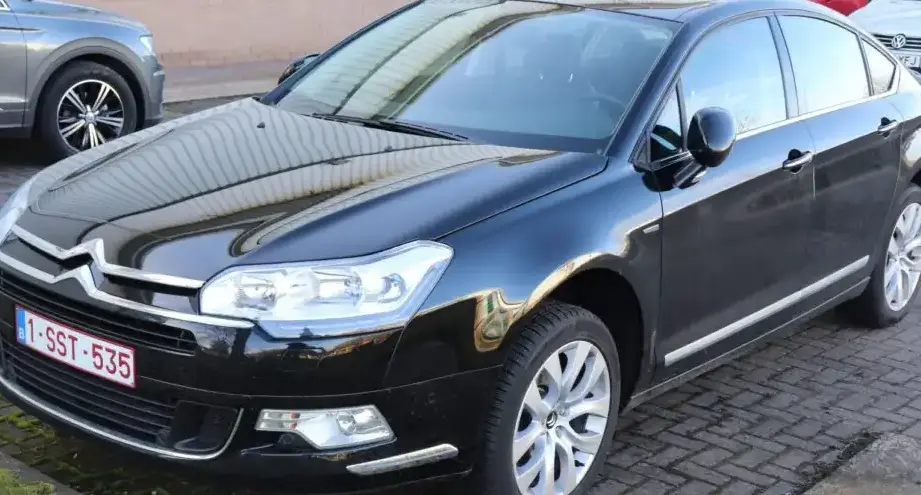
The Citroën C5 II (Phase II), specifically the 2.0 HDi 163 Automatic variant produced between 2012 and 2015, represented a refinement of the second-generation C5 large family car. Positioned as a mid-range offering within the C5 lineup, this model aimed to balance fuel efficiency, comfort, and practicality for European drivers. It built upon the foundation of the X7 platform (also known as the PSA PRV platform), shared with the Peugeot 607, offering a spacious interior and Citroën’s signature hydropneumatic suspension – though later models transitioned to a more conventional steel suspension. This version was primarily marketed in Europe, where diesel engines and automatic transmissions were increasingly popular for long-distance touring and daily commuting.
Technical Specifications
| Brand | Citroen |
| Model | C5 |
| Generation | C5 II (Phase II, 2012) |
| Type (Engine) | 2.0 HDi (163 Hp) Automatic |
| Start of production | 2012 |
| End of production | 2015 |
| Powertrain Architecture | Internal Combustion engine |
| Body type | Sedan |
| Seats | 5 |
| Doors | 4 |
| Fuel consumption (urban) | 8.9 l/100 km (26.4 US mpg, 31.7 UK mpg, 11.2 km/l) |
| Fuel consumption (extra urban) | 5.6 l/100 km (42 US mpg, 50.4 UK mpg, 17.9 km/l) |
| Fuel consumption (combined) | 6.8 l/100 km (34.6 US mpg, 41.5 UK mpg, 14.7 km/l) |
| CO2 emissions | 179 g/km |
| Fuel Type | Diesel |
| Acceleration 0 – 100 km/h | 10 sec |
| Acceleration 0 – 62 mph | 10 sec |
| Acceleration 0 – 60 mph | 9.5 sec |
| Maximum speed | 210 km/h (130.49 mph) |
| Emission standard | Euro 5 |
| Weight-to-power ratio | 9.9 kg/Hp, 101.3 Hp/tonne |
| Weight-to-torque ratio | 4.7 kg/Nm, 211.3 Nm/tonne |
| Power | 163 Hp @ 3750 rpm |
| Power per litre | 81.6 Hp/l |
| Torque | 340 Nm @ 2000 rpm (250.77 lb.-ft. @ 2000 rpm) |
| Engine layout | Front, Transverse |
| Engine Model/Code | RHH DW10CTED4 |
| Engine displacement | 1997 cm3 (121.86 cu. in.) |
| Number of cylinders | 4 |
| Engine configuration | Inline |
| Cylinder Bore | 85 mm (3.35 in.) |
| Piston Stroke | 88 mm (3.46 in.) |
| Compression ratio | 16:1 |
| Number of valves per cylinder | 4 |
| Fuel injection system | Diesel Commonrail |
| Engine aspiration | Turbocharger, Intercooler |
| Valvetrain | DOHC |
| Engine oil capacity | 5 l (5.28 US qt | 4.4 UK qt) |
| Coolant | 10.8 l (11.41 US qt | 9.5 UK qt) |
| Kerb Weight | 1609 kg (3547.24 lbs.) |
| Max. weight | 2190 kg (4828.12 lbs.) |
| Max load | 581 kg (1280.89 lbs.) |
| Trunk (boot) space – minimum | 439 l (15.5 cu. ft.) |
| Fuel tank capacity | 71 l (18.76 US gal | 15.62 UK gal) |
| Max. roof load | 80 kg (176.37 lbs.) |
| Permitted trailer load with brakes (12%) | 1100 kg (2425.08 lbs.) |
| Permitted trailer load without brakes | 750 kg (1653.47 lbs.) |
| Permitted towbar download | 57 kg (125.66 lbs.) |
| Length | 4779 mm (188.15 in.) |
| Width | 1860 mm (73.23 in.) |
| Width including mirrors | 2096 mm (82.52 in.) |
| Height | 1451-1458 mm (57.13 – 57.4 in.) |
| Wheelbase | 2815 mm (110.83 in.) |
| Front track | 1586 mm (62.44 in.) |
| Rear (Back) track | 1557 mm (61.3 in.) |
| Front overhang | 1054 mm (41.5 in.) |
| Rear overhang | 910 mm (35.83 in.) |
| Minimum turning circle | 11.7 m (38.39 ft.) |
| Drivetrain Architecture | Front wheel drive |
| Drive wheel | Front wheel drive |
| Number of gears and type of gearbox | 6 gears, automatic transmission |
| Front suspension | Independent multi-link suspension |
| Rear suspension | Independent multi-link suspension |
| Front brakes | Ventilated discs |
| Rear brakes | Disc |
| Assisting systems | ABS (Anti-lock braking system) |
| Steering type | Steering rack and pinion |
| Power steering | Electric Steering |
| Tires size | 225/55 R17 |
| Wheel rims size | 17 |
INTRODUCTION
The Citroën C5 II Phase II 2.0 HDi 163 Automatic, launched in 2012, was a key variant within the refreshed C5 range. The Phase II update brought styling revisions, improved interior materials, and enhanced technology compared to the original C5 II. This particular model combined a 2.0-liter four-cylinder turbodiesel engine with a six-speed automatic transmission, aiming to provide a comfortable and efficient driving experience. It was positioned as a practical and refined option for families and long-distance commuters, offering a compelling alternative to rivals like the Ford Mondeo, Volkswagen Passat, and Peugeot 508.
Powertrain & Engine Architecture
At the heart of the C5 II 2.0 HDi 163 Automatic lies the DW10CTED4 engine, a common rail direct injection diesel engine. This engine, part of the PSA Group’s HDi family, utilizes a turbocharger with an intercooler to boost power and efficiency. The engine produces 163 horsepower at 3750 rpm and 340 Nm (250.77 lb-ft) of torque at 2000 rpm. The common rail system, operating at very high pressures, ensures precise fuel delivery and optimized combustion. The engine features a double overhead camshaft (DOHC) valvetrain with four valves per cylinder. The six-speed automatic transmission, sourced from Aisin, was chosen for its smoothness and responsiveness. It features adaptive shift programming, adjusting gear changes based on driving style and road conditions.
Driving Characteristics
The 2.0 HDi 163 Automatic offered a relaxed and comfortable driving experience. While not particularly sporty, the engine provided ample torque for effortless cruising and overtaking. The automatic transmission shifted smoothly, although it could occasionally feel hesitant during quick acceleration. Compared to the manual transmission versions, the automatic offered greater convenience, especially in urban traffic. However, it did result in a slight decrease in fuel economy and a marginally slower 0-60 mph time of around 9.5 seconds. The C5’s suspension, even on later models without the full hydropneumatic system, provided a comfortable ride, absorbing bumps and imperfections in the road effectively.
Equipment & Trim Levels
The C5 II 2.0 HDi 163 Automatic typically came equipped with a generous level of standard features. These included air conditioning, electric windows and mirrors, a CD stereo system, and alloy wheels. Higher trim levels, such as Exclusive, added features like leather upholstery, a navigation system, parking sensors, and automatic headlights and wipers. Optional extras included a panoramic sunroof, heated seats, and a premium sound system. Interior upholstery was generally cloth on lower trims, with leather available as an upgrade. The dashboard layout was functional and user-friendly, with a clear instrument cluster and logically arranged controls.
Chassis & Braking
The C5 II featured independent multi-link suspension on both the front and rear axles, contributing to its comfortable ride quality. The front suspension utilized coil springs, while the rear suspension could be either coil springs or, on earlier models, Citroën’s hydropneumatic system. Braking duties were handled by ventilated discs on the front wheels and solid discs on the rear. Anti-lock Braking System (ABS) was standard, providing enhanced stopping power and stability. The steering was a power-assisted rack and pinion system, offering precise and responsive control.
Market Reception & Comparison
The Citroën C5 II 2.0 HDi 163 Automatic was generally well-received by automotive critics. It was praised for its comfortable ride, spacious interior, and fuel efficiency. However, some reviewers noted that the automatic transmission could feel sluggish at times, and the styling was considered somewhat conservative. Compared to other trims in the C5 lineup, the 2.0 HDi Automatic offered a good balance between performance and economy. The more powerful 2.2 HDi models provided greater performance, but at the expense of fuel efficiency. The 1.6 HDi variants were more economical but lacked the power and refinement of the 2.0-liter engine.
Legacy
The Citroën C5 II 2.0 HDi 163 Automatic has proven to be a relatively reliable vehicle, although, like all diesel engines, it’s susceptible to issues with the diesel particulate filter (DPF) if not driven on longer journeys regularly. The DW10CTED4 engine is known for its durability, but regular maintenance is crucial. In the used car market, these C5s represent a good value proposition, offering a comfortable and well-equipped vehicle at an affordable price. However, potential buyers should be aware of the potential maintenance costs associated with diesel engines and automatic transmissions. The C5 II, while not a sales leader, remains a respected and comfortable family car, appreciated by those seeking a refined and practical driving experience.