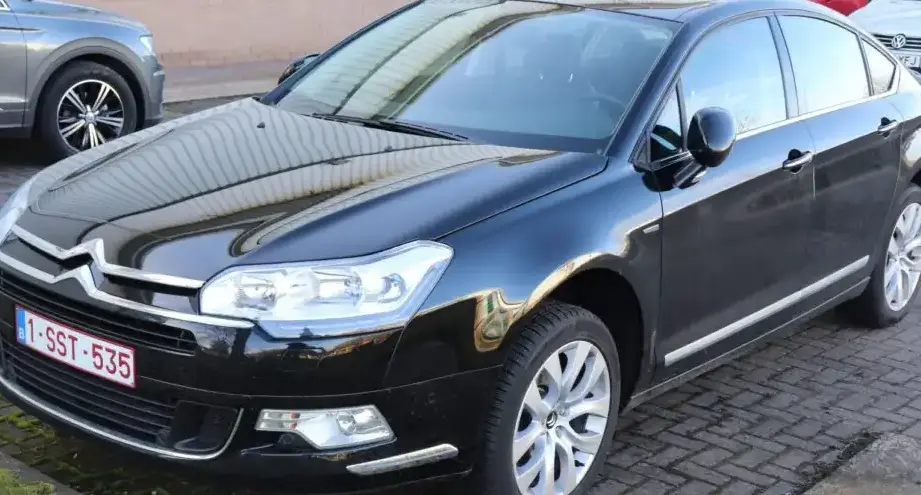
The Citroën C5 II (Phase II), specifically the 2.2 HDi 204 horsepower automatic variant produced between 2012 and 2015, represents a refinement of the second-generation C5 large family car. Positioned as a mid-to-upper trim level within the C5 range, this model aimed to deliver a blend of comfort, performance, and fuel efficiency. It built upon the foundation of the C5 II platform (internally designated as X7), which was known for its innovative Hydractive suspension system (though later iterations, like this one, often featured more conventional setups) and spacious interior. The Phase II update brought styling revisions and technological enhancements, solidifying the C5’s position as a competitor to vehicles like the Ford Mondeo, Volkswagen Passat, and Peugeot 508 in the European market.
Technical Specifications
| Brand | Citroen |
| Model | C5 |
| Generation | C5 II (Phase II, 2012) |
| Type (Engine) | 2.2 HDi (204 Hp) Automatic |
| Start of production | 2012 |
| End of production | 2015 |
| Powertrain Architecture | Internal Combustion engine |
| Body type | Sedan |
| Seats | 5 |
| Doors | 4 |
| Fuel consumption (urban) | 8 l/100 km (29.4 US mpg, 35.3 UK mpg, 12.5 km/l) |
| Fuel consumption (extra urban) | 4.7 l/100 km (50 US mpg, 60.1 UK mpg, 21.3 km/l) |
| Fuel consumption (combined) | 5.9 l/100 km (39.9 US mpg, 47.9 UK mpg, 16.9 km/l) |
| CO2 emissions | 155 g/km |
| Fuel Type | Diesel |
| Acceleration 0 – 100 km/h | 8.3 sec |
| Acceleration 0 – 62 mph | 8.3 sec |
| Acceleration 0 – 60 mph | 7.9 sec |
| Maximum speed | 230 km/h (142.92 mph) |
| Emission standard | Euro 5 |
| Weight-to-power ratio | 8.5 kg/Hp, 117.9 Hp/tonne |
| Weight-to-torque ratio | 3.9 kg/Nm, 254.2 Nm/tonne |
| Power | 204 Hp @ 3500 rpm |
| Power per litre | 93.6 Hp/l |
| Torque | 440 Nm @ 1900 rpm (324.53 lb.-ft. @ 1900 rpm) |
| Engine layout | Front, Transverse |
| Engine Model/Code | DW12C |
| Engine displacement | 2179 cm3 (132.97 cu. in.) |
| Number of cylinders | 4 |
| Engine configuration | Inline |
| Cylinder Bore | 85 mm (3.35 in.) |
| Piston Stroke | 96 mm (3.78 in.) |
| Compression ratio | 16.6:1 |
| Number of valves per cylinder | 4 |
| Fuel injection system | Diesel Commonrail |
| Engine aspiration | Turbocharger, Intercooler |
| Valvetrain | DOHC |
| Engine oil capacity | 5.3 l (5.6 US qt | 4.66 UK qt) |
| Coolant | 10.7 l (11.31 US qt | 9.41 UK qt) |
| Kerb Weight | 1731 kg (3816.2 lbs.) |
| Max. weight | 2231 kg (4918.51 lbs.) |
| Max load | 500 kg (1102.31 lbs.) |
| Trunk (boot) space – minimum | 439 l (15.5 cu. ft.) |
| Fuel tank capacity | 71 l (18.76 US gal | 15.62 UK gal) |
| Max. roof load | 80 kg (176.37 lbs.) |
| Permitted trailer load with brakes (12%) | 1600 kg (3527.4 lbs.) |
| Permitted trailer load without brakes | 750 kg (1653.47 lbs.) |
| Permitted towbar download | 73 kg (160.94 lbs.) |
| Length | 4779 mm (188.15 in.) |
| Width | 1860 mm (73.23 in.) |
| Width including mirrors | 2096 mm (82.52 in.) |
| Height | 1451-1458 mm (57.13 – 57.4 in.) |
| Wheelbase | 2815 mm (110.83 in.) |
| Front track | 1586 mm (62.44 in.) |
| Rear (Back) track | 1557 mm (61.3 in.) |
| Front overhang | 1054 mm (41.5 in.) |
| Rear overhang | 910 mm (35.83 in.) |
| Minimum turning circle (turning diameter) | 11.7 m (38.39 ft.) |
| Drivetrain Architecture | The Internal combustion engine (ICE) drives the front wheels of the vehicle. |
| Drive wheel | Front wheel drive |
| Number of gears and type of gearbox | 6 gears, automatic transmission |
| Front suspension | Independent multi-link suspension |
| Rear suspension | Independent multi-link suspension |
| Front brakes | Ventilated discs |
| Rear brakes | Disc |
| Assisting systems | ABS (Anti-lock braking system) |
| Steering type | Steering rack and pinion |
| Power steering | Electric Steering |
| Tires size | 225/45 R18 |
| Wheel rims size | 18 |
Powertrain & Engine Architecture
The heart of this C5 variant is the DW12C 2.2-liter four-cylinder diesel engine. This engine, a product of PSA Group (Peugeot Citroën), is a common-rail direct injection diesel, known for its relatively refined operation and good fuel economy. The DW12C utilizes a turbocharger with an intercooler to boost power output to 204 horsepower at 3500 rpm and 440 Nm (324.53 lb-ft) of torque at 1900 rpm. The engine features a double overhead camshaft (DOHC) valvetrain with four valves per cylinder. The automatic transmission paired with this engine is a six-speed automatic, designed to provide smooth shifts and enhance cruising comfort. While not a performance-oriented transmission, it was well-suited to the engine’s torque characteristics, offering adequate acceleration and responsiveness for everyday driving.
Driving Characteristics
The 2.2 HDi automatic C5 offers a comfortable and relaxed driving experience. The automatic transmission, while not particularly sporty, provides smooth gear changes and allows the engine to operate within its optimal torque band. Acceleration from 0-60 mph takes around 7.9 seconds, which is respectable for a large family car. The engine delivers strong low-end torque, making it easy to navigate city traffic and overtake on the highway. Compared to the manual transmission versions of the same engine, the automatic sacrifices some responsiveness, but gains in ease of use. Higher-output versions, such as those found in some Peugeot models, offered more outright performance, but at the expense of fuel economy. The C5’s suspension, while often a conventional setup in this phase, still prioritizes ride comfort, absorbing bumps and imperfections in the road effectively.
Equipment & Trim Levels
The 2.2 HDi automatic trim typically included features such as climate control, power windows, power mirrors, a CD/MP3 stereo system, and alloy wheels. Higher-spec versions could be equipped with leather upholstery, a navigation system, parking sensors, and a panoramic sunroof. Safety features included ABS, electronic stability control, and multiple airbags. The interior design was generally functional and well-built, with a focus on ergonomics and practicality. The dashboard layout was straightforward, with easy-to-read instruments and intuitive controls.
Chassis & Braking
The C5 II utilizes an independent multi-link suspension system at both the front and rear, providing a comfortable ride and good handling characteristics. The front brakes are ventilated discs, while the rear brakes are solid discs. ABS (Anti-lock Braking System) is standard, enhancing braking performance and stability. The steering is power-assisted, providing light and precise control. The chassis is designed to balance comfort and handling, offering a stable and predictable driving experience.
Market Reception & Comparison
The Citroën C5 II 2.2 HDi automatic was generally well-received by automotive critics. It was praised for its comfortable ride, spacious interior, and fuel efficiency. However, some critics noted that the automatic transmission could feel a bit sluggish at times, and the interior design was not as modern or stylish as some of its competitors. Compared to other trims in the C5 lineup, the 2.2 HDi automatic offered a good balance of performance and economy, making it a popular choice for drivers who prioritized comfort and practicality. Fuel economy figures of around 39.9 US mpg combined were competitive for its class.
Legacy
The DW12C engine, in general, has proven to be a relatively reliable unit, although regular maintenance is crucial. Common issues can include turbocharger wear and potential problems with the diesel particulate filter (DPF), particularly on vehicles that are primarily used for short journeys. The six-speed automatic transmission is also generally reliable, but may require servicing over time. Today, the C5 II 2.2 HDi automatic represents a good value proposition on the used car market, offering a comfortable and well-equipped large family car at an affordable price. However, potential buyers should be aware of the potential maintenance costs associated with a diesel engine and automatic transmission, and ensure that the vehicle has been properly maintained.