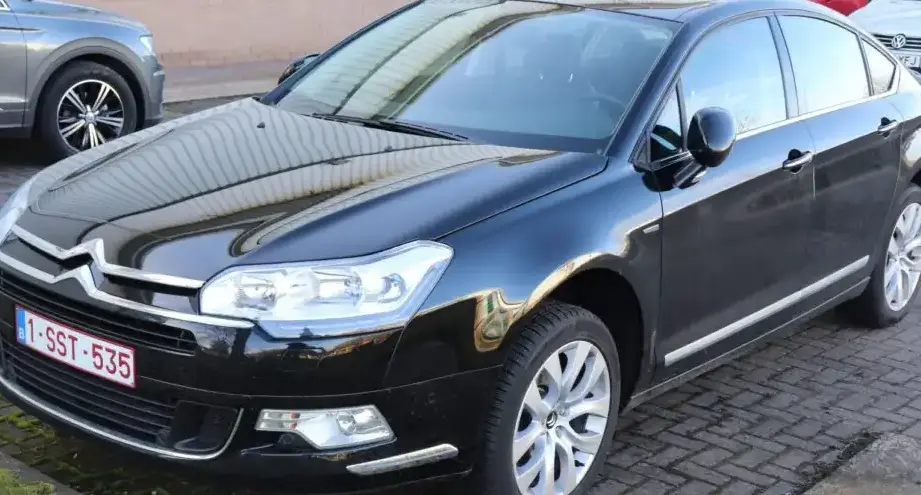
The Citroën C5 II Phase II 3.0 V6 HDi Automatic, produced from 2012 to 2014, represented the top-of-the-line engine offering for the second generation C5. Positioned as a premium variant within the C5 range, it aimed to provide a blend of luxury, performance, and long-distance comfort. This model was primarily marketed in Europe, where Citroën held a strong presence in the large family car segment. It built upon the foundation of the C5 II platform (internally designated as X7), which debuted in 2007, incorporating refinements and updated technology in the Phase II refresh.
Technical Specifications
| Brand | Citroen |
| Model | C5 |
| Generation | C5 II (Phase II, 2012) |
| Type (Engine) | 3.0 V6 HDi (241 Hp) Automatic |
| Start of production | 2012 |
| End of production | 2014 |
| Powertrain Architecture | Internal Combustion engine |
| Body type | Sedan |
| Seats | 5 |
| Doors | 4 |
| Fuel consumption (economy) – urban (NEDC) | 9.9 l/100 km (23.8 US mpg, 28.5 UK mpg, 10.1 km/l) |
| Fuel consumption (economy) – extra urban (NEDC) | 5.7 l/100 km (41.3 US mpg, 49.6 UK mpg, 17.5 km/l) |
| Fuel consumption (economy) – combined (NEDC) | 7.2 l/100 km (32.7 US mpg, 39.2 UK mpg, 13.9 km/l) |
| CO2 emissions (NEDC) | 189 g/km |
| Fuel Type | Diesel |
| Acceleration 0 – 100 km/h | 7.9 sec |
| Acceleration 0 – 62 mph | 7.9 sec |
| Acceleration 0 – 60 mph | 7.5 sec |
| Maximum speed | 240 km/h (149.13 mph) |
| Emission standard | Euro 5 |
| Weight-to-power ratio | 7.6 kg/Hp, 130.9 Hp/tonne |
| Weight-to-torque ratio | 4.1 kg/Nm, 244.4 Nm/tonne |
| Power | 241 Hp @ 3800 rpm |
| Power per litre | 80.5 Hp/l |
| Torque | 450 Nm @ 1600 rpm (331.9 lb.-ft. @ 1600 rpm) |
| Engine layout | Front, Transverse |
| Engine Model/Code | DT20C |
| Engine displacement | 2992 cm3 (182.58 cu. in.) |
| Number of cylinders | 6 |
| Engine configuration | V-engine |
| Cylinder Bore | 84 mm (3.31 in.) |
| Piston Stroke | 90 mm (3.54 in.) |
| Compression ratio | 16:1 |
| Number of valves per cylinder | 4 |
| Fuel injection system | Diesel Commonrail |
| Engine aspiration | BiTurbo, Intercooler |
| Valvetrain | DOHC |
| Engine oil capacity | 6.3 l (6.66 US qt | 5.54 UK qt) |
| Coolant | 11 l (11.62 US qt | 9.68 UK qt) |
| Kerb Weight | 1841 kg (4058.71 lbs.) |
| Max. weight | 2276 kg (5017.72 lbs.) |
| Max load | 435 kg (959.01 lbs.) |
| Trunk (boot) space – minimum | 467 l (16.49 cu. ft.) |
| Fuel tank capacity | 71 l (18.76 US gal | 15.62 UK gal) |
| Max. roof load | 80 kg (176.37 lbs.) |
| Permitted trailer load with brakes (12%) | 1650 kg (3637.63 lbs.) |
| Permitted trailer load without brakes | 750 kg (1653.47 lbs.) |
| Permitted towbar download | 67 kg (147.71 lbs.) |
| Length | 4779 mm (188.15 in.) |
| Width | 1860 mm (73.23 in.) |
| Width including mirrors | 2096 mm (82.52 in.) |
| Height | 1451 mm (57.13 in.) |
| Wheelbase | 2815 mm (110.83 in.) |
| Front track | 1584-1587 mm (62.36 – 62.48 in.) |
| Rear (Back) track | 1557-1564 mm (61.3 – 61.57 in.) |
| Front overhang | 1054 mm (41.5 in.) |
| Rear overhang | 910 mm (35.83 in.) |
| Minimum turning circle (turning diameter) | 11.7 m (38.39 ft.) |
| Drivetrain Architecture | The Internal combustion engine (ICE) drives the front wheels of the vehicle. |
| Drive wheel | Front wheel drive |
| Number of gears and type of gearbox | 6 gears, automatic transmission |
| Front suspension | Hydraulic elements, Double wishbone, Transverse stabilizer |
| Rear suspension | Hydraulic elements, Independent multi-link suspension, Transverse stabilizer |
| Front brakes | Ventilated discs, 340 mm |
| Rear brakes | Disc, 290 mm |
| Assisting systems | ABS (Anti-lock braking system) |
| Steering type | Steering rack and pinion |
| Power steering | Hydraulic Steering |
| Tires size | 245/45 R18; 245/40 R19 |
| Wheel rims size | 8J x 18; 8J x 19 |
INTRODUCTION
The Citroën C5 II Phase II 3.0 V6 HDi Automatic, launched in 2012, was the flagship powertrain option for the updated C5 range. Building on the already refined C5 II, the Phase II models benefited from styling tweaks, improved interior materials, and enhanced technology. This particular variant aimed to deliver a sophisticated driving experience, combining strong performance from its V6 diesel engine with the convenience of an automatic transmission. It was positioned above the 1.6 and 2.0 HDi models in terms of price and performance, targeting buyers seeking a comfortable and capable long-distance cruiser.
Powertrain & Engine Architecture
At the heart of this C5 variant lies the DT20C 3.0-liter V6 HDi engine. This engine is a common rail direct injection diesel, utilizing twin turbochargers and an intercooler to boost power and torque. The ‘HDi’ designation signifies Citroën’s diesel particulate filter (DPF) technology, designed to reduce emissions. The engine produces 241 horsepower at 3800 rpm and a substantial 450 Nm (331.9 lb-ft) of torque at just 1600 rpm. The engine features a double overhead camshaft (DOHC) valvetrain with four valves per cylinder. The automatic transmission is a six-speed unit, chosen for its smooth operation and suitability for long journeys. While not a dual-clutch transmission, it offered a comfortable and refined shift experience.
Driving Characteristics
The 3.0 V6 HDi Automatic C5 offered a distinctly different driving experience compared to its four-cylinder counterparts. The V6 engine provided ample power for effortless cruising and confident overtaking. The automatic transmission, while not particularly sporty, was well-matched to the engine’s torque curve, delivering smooth and predictable acceleration. Compared to the manual transmission versions, the automatic prioritized comfort over outright performance. The gear ratios were tuned for relaxed highway driving, with a focus on minimizing engine noise and maximizing fuel efficiency at cruising speeds. While the 0-60 mph time of around 7.5 seconds was respectable, the engine’s real strength lay in its mid-range punch and ability to maintain high speeds with ease.
Equipment & Trim Levels
The 3.0 V6 HDi Automatic typically came in higher trim levels, such as Exclusive or Platinum, depending on the specific market. Standard equipment often included leather upholstery, automatic climate control, a touchscreen infotainment system, rear parking sensors, and alloy wheels. Optional extras could include a panoramic sunroof, navigation system, premium audio system, and advanced driver-assistance systems like adaptive cruise control. Interior appointments were generally of a high quality, reflecting the C5’s positioning as a premium vehicle. The dashboard layout was functional and ergonomically designed, prioritizing ease of use.
Chassis & Braking
The C5 II featured Citroën’s renowned Hydractive suspension system, which utilized hydraulic elements to provide a remarkably smooth and comfortable ride. This system automatically adjusted the suspension damping based on road conditions and driving style. The front suspension employed a double wishbone setup with a transverse stabilizer, while the rear utilized an independent multi-link suspension, also with a stabilizer bar. Braking duties were handled by ventilated discs at the front and solid discs at the rear. Anti-lock braking system (ABS) was standard, providing enhanced stopping power and stability. The C5’s chassis was designed to prioritize ride comfort over sporty handling, resulting in a composed and stable driving experience.
Market Reception & Comparison
The Citroën C5 II 3.0 V6 HDi Automatic received generally positive reviews from automotive critics. It was praised for its comfortable ride, refined engine, and spacious interior. However, some reviewers noted that the automatic transmission could feel slightly sluggish at times, and the fuel economy, while respectable for a V6 diesel, was not as impressive as the smaller-engined models. Compared to rivals like the Ford Mondeo, Volkswagen Passat, and Peugeot 508, the C5 offered a unique blend of comfort and sophistication, with the Hydractive suspension setting it apart. The V6 HDi variant was more expensive than its competitors’ equivalent offerings, but it provided a more powerful and refined driving experience.
Legacy
The DT20C 3.0 V6 HDi engine proved to be a relatively reliable unit, although, like all modern diesels, it was susceptible to issues with the diesel particulate filter (DPF) if not properly maintained. Regular servicing and the use of high-quality diesel fuel were essential to ensure long-term reliability. On the used car market, the C5 II 3.0 V6 HDi Automatic remains a sought-after option for buyers seeking a comfortable and well-equipped long-distance cruiser. While not as common as the lower-powered variants, it offers a unique combination of performance, refinement, and value. Its distinctive Hydractive suspension and powerful V6 engine continue to appeal to those who prioritize comfort and a relaxed driving experience.