Technical Specifications
| Brand | Citroen |
| Model | C6 |
| Generation | C6 I |
| Type (Engine) | 3.0 HDi Biturbo V6 (241 Hp) Automatic |
| Start of production | 2009 year |
| End of production | 2012 year |
| Powertrain Architecture | Internal Combustion engine |
| Body type | Sedan |
| Seats | 5 |
| Doors | 4 |
| Fuel consumption (economy) – urban | 10.2 l/100 km (23.1 US mpg, 27.7 UK mpg, 9.8 km/l) |
| Fuel consumption (economy) – extra urban | 5.8 l/100 km (40.6 US mpg, 48.7 UK mpg, 17.2 km/l) |
| Fuel consumption (economy) – combined | 7.4 l/100 km (31.8 US mpg, 38.2 UK mpg, 13.5 km/l) |
| CO2 emissions | 195 g/km |
| Fuel Type | Diesel |
| Acceleration 0 – 100 km/h | 8.5 sec |
| Acceleration 0 – 62 mph | 8.5 sec |
| Acceleration 0 – 60 mph | 8.1 sec |
| Maximum speed | 235 km/h (146.02 mph) |
| Emission standard | Euro 4 |
| Weight-to-power ratio | 7.8 kg/Hp, 128.7 Hp/tonne |
| Weight-to-torque ratio | 4.2 kg/Nm, 240.3 Nm/tonne |
| Power | 241 Hp @ 3800 rpm |
| Power per litre | 80.5 Hp/l |
| Torque | 450 Nm @ 1600 rpm (331.9 lb.-ft. @ 1600 rpm) |
| Engine layout | Front, Transverse |
| Engine Model/Code | DT20C |
| Engine displacement | 2993 cm3 (182.64 cu. in.) |
| Number of cylinders | 6 |
| Engine configuration | V-engine |
| Cylinder Bore | 84 mm (3.31 in.) |
| Piston Stroke | 90 mm (3.54 in.) |
| Compression ratio | 16:1 |
| Number of valves per cylinder | 4 |
| Fuel injection system | Diesel Commonrail |
| Engine aspiration | BiTurbo, Intercooler |
| Valvetrain | DOHC |
| Engine oil capacity | 6.2 l (6.55 US qt | 5.46 UK qt) |
| Kerb Weight | 1873 kg (4129.26 lbs.) |
| Max. weight | 2340 kg (5158.82 lbs.) |
| Max load | 467 kg (1029.56 lbs.) |
| Trunk (boot) space – minimum | 407 l (14.37 cu. ft.) |
| Fuel tank capacity | 72 l (19.02 US gal | 15.84 UK gal) |
| Max. roof load | 80 kg (176.37 lbs.) |
| Permitted trailer load with brakes (12%) | 1620 kg (3571.49 lbs.) |
| Permitted trailer load without brakes | 750 kg (1653.47 lbs.) |
| Permitted towbar download | 70 kg (154.32 lbs.) |
| Length | 4908 mm (193.23 in.) |
| Width | 1860 mm (73.23 in.) |
| Width including mirrors | 2081 mm (81.93 in.) |
| Height | 1464 mm (57.64 in.) |
| Wheelbase | 2900 mm (114.17 in.) |
| Front track | 1586 mm (62.44 in.) |
| Rear (Back) track | 1558 mm (61.34 in.) |
| Front overhang | 1124 mm (44.25 in.) |
| Rear overhang | 884 mm (34.8 in.) |
| Minimum turning circle | 12.43 m (40.78 ft.) |
| Drivetrain Architecture | The Internal combustion engine (ICE) drives the front wheels of the vehicle. |
| Drive wheel | Front wheel drive |
| Number of gears and type of gearbox | 6 gears, automatic transmission |
| Front suspension | Independent multi-link suspension |
| Rear suspension | Independent multi-link suspension |
| Front brakes | Ventilated discs |
| Rear brakes | Ventilated discs |
| Assisting systems | ABS (Anti-lock braking system) |
| Steering type | Steering rack and pinion |
| Power steering | Hydraulic Steering |
| Tires size | 245/45 R18 |
| Wheel rims size | 18 |
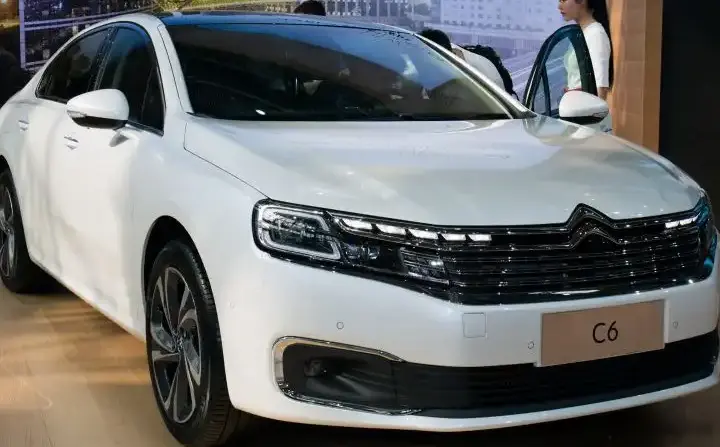
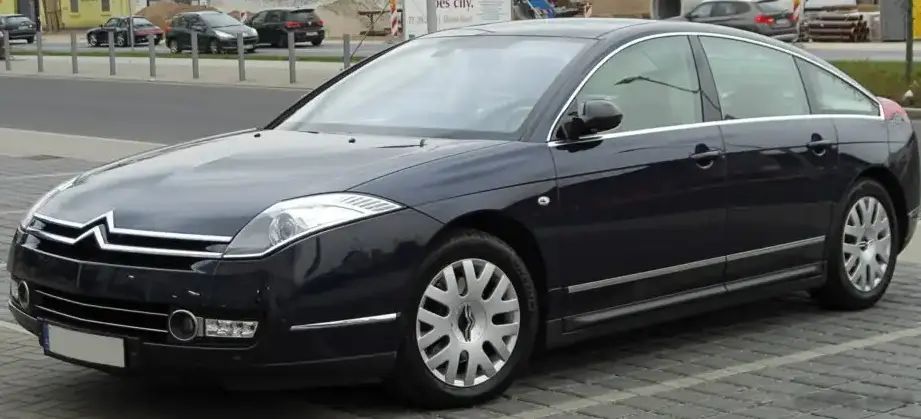
The Citroën C6 I 3.0 HDi Biturbo V6 Automatic, produced between 2009 and 2012, represented the flagship powertrain option for Citroën’s ambitious executive sedan. Positioned as a premium offering within the first generation C6 (2007-2012), this variant aimed to blend sophisticated French design with robust diesel performance. The C6 itself was a unique vehicle, attempting to fill a gap in the market between mainstream sedans and traditional luxury cars, offering a distinctive alternative to German competitors. This particular engine and transmission combination was intended to provide a balance of power, refinement, and fuel efficiency for discerning buyers.
Powertrain & Engine Architecture
The heart of this C6 variant is the DT20C 3.0-liter V6 turbodiesel engine. This engine utilizes a biturbo setup, employing two turbochargers – typically a smaller, quicker-spooling turbo for low-end response and a larger turbo for high-end power. This configuration, coupled with an intercooler, helps to mitigate turbo lag and deliver a broad torque curve. The engine features a common rail direct injection system, allowing for precise fuel delivery and optimized combustion. The DOHC (Double Overhead Camshaft) valvetrain, with four valves per cylinder, further enhances breathing and contributes to the engine’s power output. The six-speed automatic transmission, while providing convenience, was a conventional torque-converter type, prioritizing smooth shifts over outright performance.
Driving Characteristics
The 3.0 HDi Biturbo V6 Automatic C6 offered a distinctly different driving experience compared to lower-powered versions. The 450 Nm (331.9 lb-ft) of torque, available from a relatively low 1600 rpm, provided strong acceleration and effortless cruising. While the 0-60 mph time of around 8.1 seconds wasn’t particularly quick by modern standards, it was respectable for a large, luxurious sedan of its era. The automatic transmission, while smooth, could feel somewhat hesitant during quick downshifts. Compared to the manual transmission options, the automatic sacrificed some responsiveness. The C6’s hydropneumatic suspension, a Citroën hallmark, provided an exceptionally comfortable ride, absorbing bumps and imperfections in the road with ease. However, this system also contributed to a somewhat detached and isolated driving feel.
Equipment & Trim Levels
The 3.0 HDi Biturbo V6 Automatic typically came equipped with a high level of standard features. These included leather upholstery, automatic climate control, a premium audio system, and parking sensors. Optional extras often included a panoramic sunroof, navigation system, and upgraded interior trim materials. The C6 aimed for a luxurious experience, and this top-tier engine option was often paired with the most opulent trim packages available. The interior design emphasized spaciousness and comfort, with a focus on high-quality materials and a sophisticated aesthetic.
Chassis & Braking
The C6 I featured an independent multi-link suspension on both the front and rear axles, contributing to its exceptional ride quality. The braking system consisted of ventilated discs on all four wheels, providing ample stopping power. ABS (Anti-lock Braking System) was standard. The C6’s hydropneumatic suspension allowed for adjustable ride height, further enhancing its versatility and comfort. The steering was a hydraulic rack and pinion system, offering a reasonable level of feedback and precision.
Market Reception & Comparison
The Citroën C6, in general, received mixed reviews. Critics praised its innovative design, luxurious interior, and exceptional ride comfort. However, it was often criticized for its complex technology, which could be prone to reliability issues. The 3.0 HDi Biturbo V6 Automatic was generally well-regarded for its performance and refinement, but its fuel economy, while decent for a V6, wasn’t significantly better than that of the four-cylinder diesel options. Compared to its German rivals (Audi A6, BMW 5 Series, Mercedes-Benz E-Class), the C6 offered a more distinctive and unconventional experience, but it lacked the brand prestige and established reliability of its competitors.
Legacy
The Citroën C6 I, while not a commercial success, remains a fascinating and unique vehicle. The 3.0 HDi Biturbo V6 Automatic powertrain, while complex, proved to be relatively durable when properly maintained. On the used car market, these models are sought after by enthusiasts who appreciate their distinctive character and luxurious features. However, potential buyers should be aware of the potential for maintenance issues related to the hydropneumatic suspension and the complex engine management system. The C6 represents a bold attempt by Citroën to redefine the executive sedan segment, and its legacy continues to inspire automotive designers and enthusiasts today.