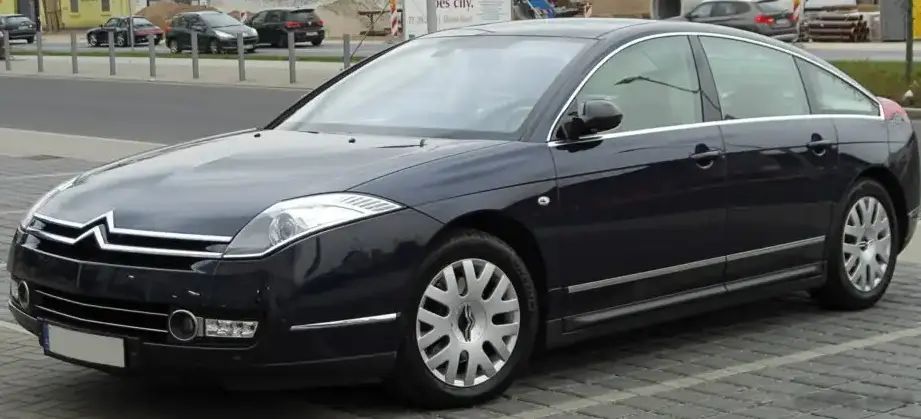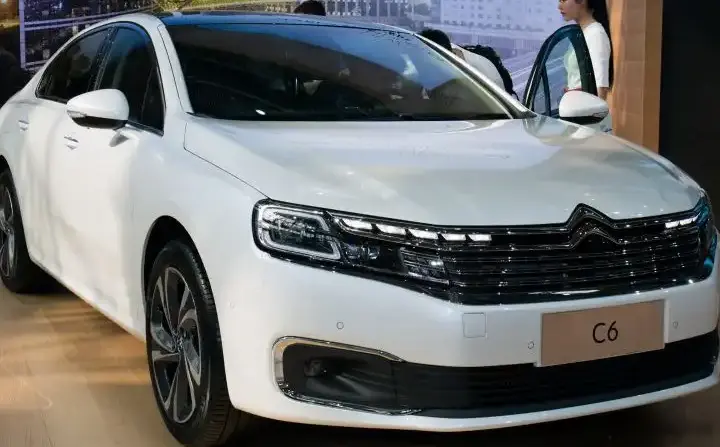
The Citroen C6 II 380 THP, produced from 2016 onwards, represents the second generation of Citroen’s flagship sedan. Positioned as a premium offering, this variant featured a 1.8-liter turbocharged gasoline engine producing 204 horsepower, paired with a six-speed Tiptronic automatic transmission. It aimed to blend French comfort with a degree of performance, competing with executive sedans from German manufacturers. The C6 II, built on the EMP2 platform, sought to revive the spirit of the original C6, known for its innovative suspension and distinctive styling, while appealing to a more modern, international clientele.
Technical Specifications
| Brand | Citroen |
| Model | C6 |
| Generation | C6 II |
| Type (Engine) | 380 THP (204 Hp) Tiptronic |
| Start of production | 2016 |
| Powertrain Architecture | Internal Combustion engine |
| Body type | Sedan |
| Seats | 5 |
| Doors | 4 |
| Fuel consumption (extra urban) | 5.7 l/100 km (41.3 US mpg, 49.6 UK mpg, 17.5 km/l) |
| Fuel consumption (combined) | 6.6 l/100 km (35.6 US mpg, 42.8 UK mpg, 15.2 km/l) |
| Fuel Type | Petrol (Gasoline) |
| Acceleration 0 – 100 km/h | 8.9 sec |
| Acceleration 0 – 62 mph | 8.9 sec |
| Acceleration 0 – 60 mph | 8.5 sec |
| Maximum speed | 235 km/h (146.02 mph) |
| Weight-to-power ratio | 8.1 kg/Hp, 123.3 Hp/tonne |
| Weight-to-torque ratio | 5.9 kg/Nm, 169.2 Nm/tonne |
| Power | 204 Hp @ 5500 rpm |
| Power per litre | 116.5 Hp/l |
| Torque | 280 Nm @ 1400-4000 rpm (206.52 lb.-ft. @ 1400-4000 rpm) |
| Engine layout | Front, Transverse |
| Engine displacement | 1751 cm3 (106.85 cu. in.) |
| Number of cylinders | 4 |
| Engine configuration | Inline |
| Number of valves per cylinder | 4 |
| Fuel injection system | Direct injection |
| Engine aspiration | Turbocharger, Intercooler |
| Valvetrain | DOHC, CVVT |
| Engine oil capacity | 4.3 l (4.54 US qt | 3.78 UK qt) |
| Kerb Weight | 1655 kg (3648.65 lbs.) |
| Trunk (boot) space – minimum | 409 l (14.44 cu. ft.) |
| Fuel tank capacity | 70 l (18.49 US gal | 15.4 UK gal) |
| Length | 4980 mm (196.06 in.) |
| Width | 1858 mm (73.15 in.) |
| Height | 1475 mm (58.07 in.) |
| Wheelbase | 2900 mm (114.17 in.) |
| Front track | 1599 mm (62.95 in.) |
| Rear (Back) track | 1573 mm (61.93 in.) |
| Drivetrain Architecture | The Internal combustion engine (ICE) drives the front wheels of the vehicle. |
| Drive wheel | Front wheel drive |
| Number of gears and type of gearbox | 6 gears, automatic transmission Tiptronic |
| Front suspension | Independent type McPherson |
| Rear suspension | Independent multi-link suspension |
| Front brakes | Ventilated discs |
| Rear brakes | Disc |
| Assisting systems | ABS (Anti-lock braking system) |
| Steering type | Steering rack and pinion |
| Power steering | Electric Steering |
| Tires size | 245/45 R18 |
| Wheel rims size | 18 |
Powertrain & Engine Architecture
The heart of the C6 II 380 THP is the EP6CDT engine, a 1.8-liter inline-four cylinder gasoline engine. This engine belongs to the Prince engine family, a collaborative development between PSA Peugeot Citroën and BMW. It features direct fuel injection, a twin-scroll turbocharger, and variable valve timing (CVVT) on both intake and exhaust camshafts. The direct injection system, operating at pressures up to 200 bar, optimizes fuel atomization for improved combustion efficiency and reduced emissions. The six-speed Tiptronic automatic transmission, sourced from Aisin, provides smooth and responsive gear changes. The ‘Tiptronic’ function allows the driver to manually select gears, offering a degree of control over the powertrain. This engine code is known for its relatively good balance of power and fuel economy, though it’s not without its potential maintenance concerns.
Driving Characteristics
The 204 horsepower and 280 Nm (206 lb-ft) of torque delivered by the 1.8 THP engine provide adequate performance for the C6 II. Acceleration from 0 to 60 mph takes around 8.5 seconds, and the car feels reasonably responsive in everyday driving situations. However, compared to higher-output versions of the C6, or those equipped with larger engines, this variant feels less eager to accelerate. The Tiptronic transmission generally shifts smoothly, but can sometimes feel hesitant during quick downshifts. The gear ratios are tuned for fuel efficiency rather than outright performance. The C6’s focus on comfort means the driving experience is more relaxed and refined than sporty, with a noticeable emphasis on absorbing bumps and providing a quiet cabin.
Equipment & Trim Levels
The 380 THP variant typically came equipped with a generous level of standard features. These included automatic climate control, a touchscreen infotainment system with navigation, leather upholstery, and parking sensors. Higher trim levels offered additional features such as a panoramic sunroof, premium audio system, and advanced driver-assistance systems like adaptive cruise control and lane departure warning. Interior upholstery was generally a mix of leather and high-quality fabric, and the dashboard layout was designed to be both functional and aesthetically pleasing. Optional extras included metallic paint finishes, upgraded wheel designs, and a rear-seat entertainment system.
Chassis & Braking
The C6 II utilizes an independent suspension system on both the front and rear axles. The front suspension employs a McPherson strut design, while the rear features a multi-link setup. This configuration provides a comfortable ride and good handling characteristics. The C6 II 380 THP is equipped with ventilated disc brakes at the front and solid disc brakes at the rear. Anti-lock braking system (ABS) is standard, providing enhanced braking performance and stability. The steering is electrically assisted, offering a light and precise feel. The suspension tuning is geared towards comfort, prioritizing ride quality over sharp handling.
Market Reception & Comparison
The Citroen C6 II 380 THP received mixed reviews from automotive critics. While praised for its comfortable ride, spacious interior, and distinctive styling, it was often criticized for its relatively modest performance and somewhat unrefined engine. Compared to its rivals from Audi, BMW, and Mercedes-Benz, the C6 II offered a different proposition – one focused on comfort and affordability rather than outright performance and prestige. Fuel economy was generally considered good for a car of its size and class, and the Tiptronic transmission contributed to a relaxed driving experience. However, some reviewers noted that the engine could feel strained when pushed hard.
Legacy
The 1.8 THP engine, while offering a good balance of power and efficiency, has been known to exhibit some reliability issues, particularly related to the carbon buildup on the intake valves. Regular maintenance, including the use of high-quality fuel and oil, is crucial to mitigate these problems. The C6 II, as a whole, didn’t achieve the same sales success as some of its competitors. However, it remains a distinctive and appealing option for those seeking a comfortable and stylish executive sedan. On the used car market, the 380 THP variant represents a relatively affordable entry point into the C6 II range, but potential buyers should be aware of the engine’s potential maintenance requirements. Its unique blend of French flair and modern technology continues to attract a dedicated following.