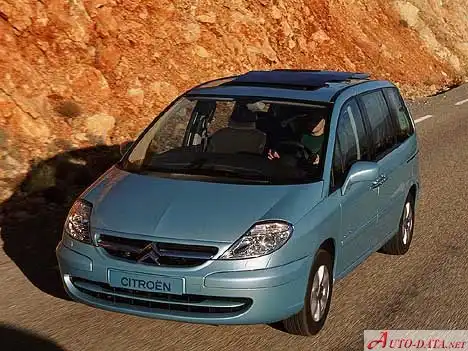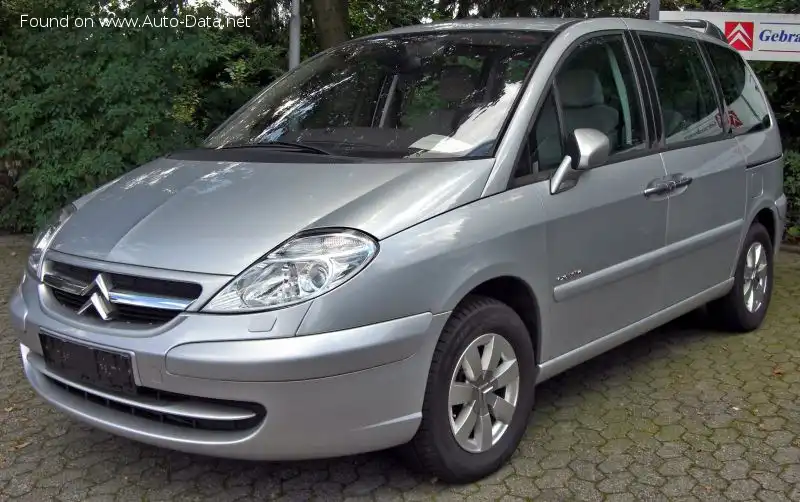
The Citroen C8, specifically the Phase II model produced from 2011 to 2014, represented Citroen’s entry into the large MPV (Multi-Purpose Vehicle) segment. This iteration of the C8, built in collaboration with Peugeot and Fiat (resulting in the Peugeot 807 and Fiat Ulysse respectively), aimed to provide a spacious and comfortable family vehicle. The 2.0 HDi variant, producing 163 horsepower, was a key offering within the C8 lineup, positioned as a balance between fuel efficiency and acceptable performance for the vehicle’s size and intended use. It was part of the second generation of the C8, which brought styling updates and improvements to the interior and equipment levels.
Technical Specifications
| Brand | Citroen |
| Model | C8 |
| Generation | C8 (Phase II, 2008) |
| Type (Engine) | 2.0 HDi (163 Hp) |
| Start of production | 2011 |
| End of production | 2014 |
| Powertrain Architecture | Internal Combustion engine |
| Body type | Minivan, MPV |
| Seats | 7 |
| Doors | 5 |
| Fuel consumption (urban) | 7.4 l/100 km (31.8 US mpg) |
| Fuel consumption (extra urban) | 5 l/100 km (47 US mpg) |
| Fuel consumption (combined) | 5.9 l/100 km (39.9 US mpg) |
| CO2 emissions | 155 g/km |
| Fuel Type | Diesel |
| Acceleration 0 – 100 km/h | 11.2 sec |
| Acceleration 0 – 62 mph | 11.2 sec |
| Acceleration 0 – 60 mph | 10.6 sec |
| Maximum speed | 203 km/h (126.14 mph) |
| Emission standard | Euro 5 |
| Weight-to-power ratio | 10.8 kg/Hp |
| Weight-to-torque ratio | 5.5 kg/Nm |
| Power | 163 Hp @ 3750 rpm |
| Torque | 320 Nm @ 2000 rpm (236.02 lb.-ft. @ 2000 rpm) |
| Engine layout | Front, Transverse |
| Engine Model/Code | RHH DW10CTED4 |
| Engine displacement | 1997 cm3 (121.86 cu. in.) |
| Number of cylinders | 4 |
| Engine configuration | Inline |
| Cylinder Bore | 85 mm (3.35 in.) |
| Piston Stroke | 88 mm (3.46 in.) |
| Compression ratio | 17.6:1 |
| Number of valves per cylinder | 4 |
| Fuel injection system | Diesel Commonrail |
| Engine aspiration | Turbocharger, Intercooler |
| Valvetrain | DOHC |
| Engine oil capacity | 5 l (5.28 US qt | 4.4 UK qt) |
| Coolant | 8 l (8.45 US qt | 7.04 UK qt) |
| Kerb Weight | 1763 kg (3886.75 lbs.) |
| Max. weight | 2530 kg (5577.7 lbs.) |
| Max load | 767 kg (1690.95 lbs.) |
| Trunk (boot) space – minimum | 225 l (7.95 cu. ft.) |
| Trunk (boot) space – maximum | 2948 l (104.11 cu. ft.) |
| Fuel tank capacity | 80 l (21.13 US gal | 17.6 UK gal) |
| Max. roof load | 100 kg (220.46 lbs.) |
| Permitted trailer load with brakes (12%) | 1850 kg (4078.55 lbs.) |
| Permitted trailer load without brakes | 750 kg (1653.47 lbs.) |
| Permitted towbar download | 76 kg (167.55 lbs.) |
| Length | 4727 mm (186.1 in.) |
| Width | 1854 mm (72.99 in.) |
| Width including mirrors | 2194 mm (86.38 in.) |
| Height | 1752-1856 mm (68.98 – 73.07 in.) |
| Wheelbase | 2823 mm (111.14 in.) |
| Front track | 1570 mm (61.81 in.) |
| Rear (Back) track | 1548 mm (60.94 in.) |
| Front overhang | 1013 mm (39.88 in.) |
| Rear overhang | 891 mm (35.08 in.) |
| Minimum turning circle | 11.71 m (38.42 ft.) |
| Drivetrain Architecture | Front wheel drive |
| Number of gears and type of gearbox | 6 gears, manual transmission |
| Front suspension | Independent, type McPherson with coil spring and anti-roll bar |
| Rear suspension | Semi-independent, coil spring |
| Front brakes | Ventilated discs |
| Rear brakes | Disc |
| Assisting systems | ABS (Anti-lock braking system) |
| Steering type | Steering rack and pinion |
| Power steering | Hydraulic Steering |
| Tires size | 205/60 R16 |
| Wheel rims size | 6.5J x 16 |
Powertrain & Engine Architecture
The heart of the C8 2.0 HDi was the DW10CTED4 engine, a 1997cc four-cylinder diesel. This engine, a product of PSA’s (Peugeot Citroen) diesel engine development, utilized a common rail direct injection system, delivering fuel at extremely high pressure for optimized combustion. The RHH engine code specifically denotes a version compliant with Euro 5 emissions standards. A turbocharger with an intercooler was employed to boost power output and improve torque delivery. The engine featured a double overhead camshaft (DOHC) valvetrain with four valves per cylinder, contributing to its relatively high specific output. The 6-speed manual transmission was the standard offering, chosen for its balance of fuel efficiency and driver control. While an automatic transmission was available on other C8 variants, it wasn’t typically paired with this specific 163hp engine.
Driving Characteristics
The 2.0 HDi engine in the C8 provided adequate, though not exhilarating, performance. With 163 horsepower and 320 Nm (236 lb-ft) of torque, the C8 could achieve a 0-60 mph time of around 10.6 seconds and a top speed of 126 mph. The torque curve was relatively flat, providing good pulling power from low engine speeds, which was beneficial for carrying a full load of passengers and luggage. Compared to the more powerful 2.2 HDi variants, the 2.0 HDi felt less responsive, particularly during overtaking maneuvers. However, the 2.0 HDi offered significantly better fuel economy than its higher-powered siblings. The manual transmission, while offering more driver engagement than an automatic, had a slightly long throw, but was generally precise.
Equipment & Trim Levels
The C8 2.0 HDi typically came with a reasonable level of standard equipment. This included air conditioning, electric front windows, central locking, and an audio system with CD player. Higher trim levels, such as the Exclusive, added features like automatic climate control, rear parking sensors, alloy wheels, and upgraded interior trim. Optional extras included a panoramic sunroof, leather upholstery, and a DVD entertainment system for rear passengers. The interior was designed with practicality in mind, featuring modular seating arrangements that allowed for flexible cargo space. The dashboard layout was functional, though not particularly stylish.
Chassis & Braking
The C8’s chassis was designed to prioritize ride comfort. It utilized an independent McPherson strut suspension at the front and a semi-independent coil spring suspension at the rear. The suspension setup was tuned to absorb bumps and provide a smooth ride, even when the vehicle was fully loaded. The C8 2.0 HDi was equipped with ventilated disc brakes at the front and solid discs at the rear. Anti-lock Braking System (ABS) was standard. The steering was hydraulic power-assisted, providing a light and easy steering feel. The C8’s weight, exceeding 1760 kg (3886 lbs), meant that the braking system needed to work effectively to provide adequate stopping power.
Market Reception & Comparison
The Citroen C8 2.0 HDi was generally well-received by critics as a practical and comfortable family vehicle. It was praised for its spacious interior, flexible seating arrangements, and good fuel economy. However, it was also criticized for its somewhat uninspired styling and lack of driving excitement. Compared to rivals like the Renault Espace and Volkswagen Sharan, the C8 offered a competitive package in terms of price and features. The 2.0 HDi engine was seen as a good compromise between performance and economy, making it a popular choice for buyers who prioritized fuel efficiency. The higher-powered variants offered more performance, but at the cost of increased fuel consumption and a higher purchase price.
Legacy
The Citroen C8 2.0 HDi, while not a particularly groundbreaking vehicle, proved to be a reliable and practical MPV. The DW10CTED4 engine, in particular, has a reputation for durability, provided it is properly maintained. In the used car market, the C8 2.0 HDi represents a relatively affordable option for those seeking a spacious and comfortable family vehicle. Common issues include wear and tear on suspension components and potential problems with the electronic parking brake. However, overall, the C8 2.0 HDi remains a viable option for buyers looking for a well-rounded MPV.