
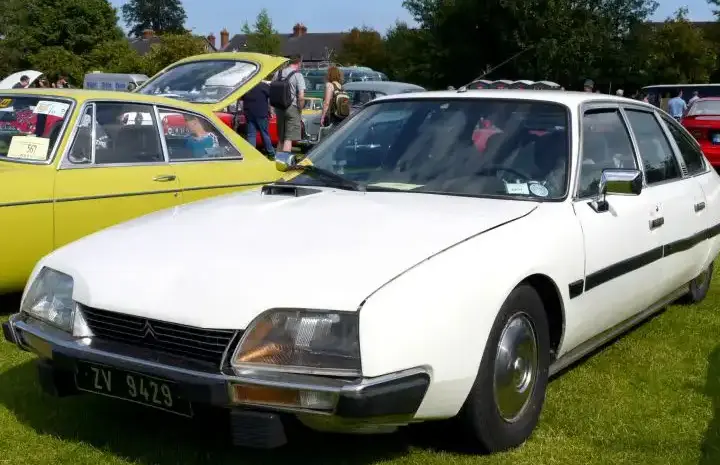
The Citroën CX 2400 Automatic, produced between 1980 and 1982, represented a compelling blend of Citroën’s innovative hydropneumatic suspension technology with a more accessible powertrain option. Positioned as a mid-range offering within the CX series (the first generation, known as CX I), it aimed to broaden the appeal of the CX beyond the more performance-focused or technologically advanced trims. The CX itself was a significant vehicle for Citroën, intended to replace the aging DS and ID models, continuing the tradition of comfortable, technologically advanced family cars. This 2400 Automatic variant offered a balance between performance and ease of driving, appealing to buyers who prioritized comfort and refinement over outright speed.
Technical Specifications
| Brand | Citroen |
| Model | CX |
| Generation | CX I |
| Type (Engine) | 2400 (120 Hp) Automatic |
| Start of production | 1980 |
| End of production | 1982 |
| Powertrain Architecture | Internal Combustion engine |
| Body type | Hatchback |
| Seats | 5 |
| Doors | 5 |
| Fuel Type | Petrol (Gasoline) |
| Acceleration 0 – 100 km/h | 12.8 sec |
| Acceleration 0 – 62 mph | 12.8 sec |
| Acceleration 0 – 60 mph | 12.2 sec |
| Maximum speed | 181 km/h (112.47 mph) |
| Weight-to-power ratio | 11 kg/Hp, 90.6 Hp/tonne |
| Weight-to-torque ratio | 6.8 kg/Nm, 147.9 Nm/tonne |
| Power | 120 Hp @ 5500 rpm |
| Power per litre | 51.1 Hp/l |
| Torque | 196 Nm @ 2750 rpm (144.56 lb.-ft. @ 2750 rpm) |
| Engine layout | Front, Transverse |
| Engine Model/Code | M23.639 |
| Engine displacement | 2347 cm3 (143.22 cu. in.) |
| Number of cylinders | 4 |
| Engine configuration | Inline |
| Cylinder Bore | 93.5 mm (3.68 in.) |
| Piston Stroke | 85.5 mm (3.37 in.) |
| Compression ratio | 8.75:1 |
| Number of valves per cylinder | 2 |
| Fuel injection system | Carburettor |
| Engine aspiration | Naturally aspirated |
| Engine oil capacity | 5.3 l (5.6 US qt | 4.66 UK qt) |
| Coolant | 11 l (11.62 US qt | 9.68 UK qt) |
| Kerb Weight | 1325 kg (2921.12 lbs.) |
| Max. weight | 1840 kg (4056.51 lbs.) |
| Max load | 515 kg (1135.38 lbs.) |
| Trunk (boot) space – minimum | 325 l (11.48 cu. ft.) |
| Fuel tank capacity | 68 l (17.96 US gal | 14.96 UK gal) |
| Permitted trailer load with brakes (12%) | 1300 kg (2866.01 lbs.) |
| Length | 4659 mm (183.43 in.) |
| Width | 1734 mm (68.27 in.) |
| Height | 1360 mm (53.54 in.) |
| Wheelbase | 2845 mm (112.01 in.) |
| Front track | 1474 mm (58.03 in.) |
| Rear (Back) track | 1360 mm (53.54 in.) |
| Front overhang | 1050 mm (41.34 in.) |
| Rear overhang | 764 mm (30.08 in.) |
| Ride height (ground clearance) | 155 mm (6.1 in.) |
| Drag coefficient (Cd) | 0.37 |
| Minimum turning circle | 11.80 m (38.71 ft.) |
| Drivetrain Architecture | The Internal combustion engine (ICE) drives the front wheels. |
| Drive wheel | Front wheel drive |
| Number of gears and type of gearbox | 3 gears, automatic transmission |
| Front brakes | Ventilated discs |
| Rear brakes | Disc |
| Steering type | Steering rack and pinion |
| Wheel rims size | 5.5J x 14 |
Powertrain & Engine Architecture
The Citroën CX 2400 Automatic was powered by the M23.639 engine, a 2.4-liter (2347 cc) inline-four cylinder petrol engine. This engine, while not the most powerful in the CX lineup, was known for its smoothness and relative reliability. It utilized a single overhead camshaft (SOHC) valvetrain with two valves per cylinder. Fuel delivery was managed by a Solex C35 PHH carburetor, a common setup for European cars of the era. The engine produced 120 horsepower at 5500 rpm and 196 Nm (144.56 lb-ft) of torque at 2750 rpm. The engine’s transverse mounting within the front-wheel-drive layout contributed to the CX’s relatively compact engine bay.
The automatic transmission was a three-speed unit, designed to provide comfortable and effortless shifting. While not offering the performance of a manual gearbox, it suited the CX 2400 Automatic’s intended role as a comfortable cruiser. The transmission’s gear ratios were optimized for relaxed highway driving and smooth acceleration in urban environments.
Driving Characteristics
The CX 2400 Automatic offered a distinctly different driving experience compared to its manual counterparts or the more powerful CX 2500 or Prestige models. The automatic transmission, while convenient, resulted in slightly slower acceleration – approximately 12.8 seconds to 62 mph. The engine’s torque delivery was relatively flat, providing adequate power for everyday driving but lacking the punch of higher-output versions. However, the CX’s signature hydropneumatic suspension system largely compensated for any performance shortcomings. This system provided an exceptionally smooth and comfortable ride, absorbing bumps and imperfections in the road with remarkable ease. The steering, also hydraulically assisted, was light and precise, making the CX easy to maneuver.
Equipment & Trim Levels
The CX 2400 Automatic typically came equipped with a reasonable level of standard features for its time. These included comfortable cloth upholstery, a well-appointed dashboard with analog gauges, and power-assisted steering. Optional extras included air conditioning, a sunroof, and upgraded audio systems. The interior design was characteristically Citroën, with a focus on ergonomics and functionality. The dashboard featured a unique array of switches and controls, reflecting the car’s advanced technology. The trim level was generally considered mid-range, offering a step up in comfort and convenience compared to the base CX models.
Chassis & Braking
The CX 2400 Automatic utilized an independent suspension system on all four wheels, employing Citroën’s renowned hydropneumatic technology. This system allowed for self-leveling and adjustable ride height, further enhancing the car’s comfort and handling. The front brakes were ventilated discs, providing ample stopping power, while the rear brakes were solid discs. The steering system was a rack-and-pinion setup with hydraulic assistance. The car’s relatively low weight (1325 kg / 2921.12 lbs) contributed to its nimble handling characteristics.
Market Reception & Comparison
The CX 2400 Automatic was generally well-received by automotive critics, who praised its comfortable ride, innovative suspension system, and refined interior. However, some critics noted that the automatic transmission detracted from the car’s overall performance. Compared to the manual transmission versions of the CX 2400, the automatic offered less engaging driving experience. The CX 2500 and Prestige models, with their more powerful engines, were favored by drivers seeking greater performance. In terms of fuel economy, the CX 2400 Automatic was reasonably efficient for its time, but not class-leading. Reliability was generally good, although the hydropneumatic suspension system required periodic maintenance.
Legacy
The Citroën CX 2400 Automatic remains a fondly remembered classic car, appreciated for its unique blend of comfort, innovation, and style. The M23 engine, while not known for being exceptionally durable, is generally considered reliable with proper maintenance. The hydropneumatic suspension system, however, requires specialized knowledge and care. Today, the CX 2400 Automatic is a sought-after vehicle among Citroën enthusiasts and collectors. Its relatively affordable price and comfortable driving experience make it an appealing choice for those seeking a classic car with a difference. Parts availability can be a challenge, but a dedicated network of specialists and suppliers exists to support CX owners.
